
Filter
1229
Text search:
audit
Featured
94
382
Language
Document type
716
186
165
85
36
16
14
7
2
1
1
Countries
80
52
52
38
37
36
35
35
35
24
22
22
21
20
19
19
18
17
17
14
14
14
14
14
13
13
10
9
8
7
7
7
6
6
6
6
5
5
5
5
4
4
4
3
3
3
3
3
3
3
3
3
3
2
2
2
2
2
2
2
2
1
1
1
1
1
1
1
1
1
1
1
1
1
1
1
1
1
1
1
1
1
1
1
1
1
1
1
1
1
1
1
1
Authors & Publishers
Publication Years
Category
649
103
79
57
50
26
12
Toolboxes
71
65
61
49
47
39
32
31
29
24
24
23
16
15
15
14
13
12
11
9
8
4
4
4
2

Chronic kidney disease (CKD) is an important contributor to mortality from noncommunicable diseases. No decrease has been seen for CKD mortality contrary to many other important non-communicable diseases (e.g., cardiovascular disease). The prevalence of CKD and kidney failure are increasing all over
...

Care for persons with noncommunicable diseases (NCDs), such as cardiovascular disease, diabetes, cancer, and chronic obstructive pulmonary disease, is a major health priority for most countries worldwide, particularly for low-middle income countries where the problem seems to be worsening. Globally,
...

The article is a scoping review that explores the challenges in diagnosing asthma in children in three sub-Saharan African countries: Nigeria, South Africa, and Uganda. It identifies key barriers, such as a lack of community awareness, inadequate healthcare access, limited diagnostic tools like spir
...

The article outlines the prioritized research agenda for the prevention and control of chronic respiratory diseases (CRDs) as part of the World Health Organization's (WHO) action plan on noncommunicable diseases (NCDs) from 2008 to 2013. It highlights the significant global impact of CRDs, including
...

Asthma is the most common non-communicable disease in children and remains one of the most common throughout the life course. The great majority of the burden of this disease is seen in low-income and middle-income countries (LMICs), which have disproportionately high asthma-related mortality relati
...

Asthma is the commonest chronic childhood disease and encompasses a spectrum of airway diseases with similar symptoms. Inaccurate diagnosis remains common, especially in younger children, with failure to characterize the different “asthmas.” Children worldwide repeatedly suffer symptoms which se
...
Silicosis is not a new disease; the impact of silica dust on respiratory function was observed by Hippocrates in 430 B.C. and in the 16th century by Agricol. In 1713, Rammazini described silicotic nodules in post-mortems of stone cutters presenting with respiratory symptoms. In the mid-late 1800s,
...

As Uganda builds back from the COVID-19 shock, the Ugandan government is strengthening its commitment to a more gender-inclusive and sustainable economy. This report supports these efforts by describing the gendered impacts of COVID-19 and provides recommendations for Ugandan policy makers and World
...

The Global Action Plan on Antimicrobial Resistance (AMR) calls for making AMR a core component of professional education and training. In 2018, the World Health Organization (WHO) published Competency framework for health workers’ education and training on AMR to ensure that academic institutions
...

The Guidance on global monitoring for diabetes prevention and control by WHO provides a comprehensive framework to support countries in tracking and managing diabetes prevention, care, and outcomes. This document outlines indicators across 4 domains: health system determinants, service delivery, ris
...

Evidence- and rights-based national policies, guidelines and legislation play a key role in improving sexual, reproductive, maternal, newborn, child and adolescent health (SRMNCAH), framing the enabling environment for equitable provision and accessibility of quality services. The SRMNCAH policy sur
...

An estimated 1.3 billion people globally experience significant disability. This figure has grown over the last decade and will continue to rise due to demographic and epidemiological changes. In 2022, the World Health Organization launched the Global report on health equity for persons with disabil
...

The Haiti Earthquake and Cholera Emergency appeal (MDRHT018) was implemented by the International Federation of Red Cross and Red Crescent Societies (IFRC) in collaboration with the Haitian Red Cross Society (HRCS) following the devastating earthquake on 14 August 2021, and the cholera outbreak on 2
...

This purpose of this guide is to inform robust evaluations of the WHO training package – a package aimed at personnel whose primary role in health-care facilities is environmental cleaning, hereafter referred to as cleaners.
The WHO training package – Environmental cleaning and infection prev
...

BMC Infectious Diseases volume 23, Article number: 342 (2023).
Tuberculosis (TB) is among the leading causes of death globally. The disease has a huge burden in Namibia, with a case notification rate of at least 442 per 100,000. To date, Namibia is among the countries with the highest global TB bur
...

Reprod Health 19, 143 (2022). https://doi.org/10.1186/s12978-022-01452-4.
Delivery of quality reproductive health services has been documented to depend on the availability of healthcare workers who are adequately supported with appropriate training. However, unmet training needs among healthcare
...
Long-term polio vaccine security – the timely, sustained, and uninterrupted supply of suitable types of affordable, quality-assured polio vaccines – is essential in the global effort to achieve and maintain a polio free world. However, fragmented approaches and short-term planning pose considera
...

Addressing comorbidities and risk factors for tuberculosis (TB) is a crucial component of the World Health Organization (WHO)’s End TB Strategy. This WHO operational handbook on tuberculosis. Module 6: tuberculosis and comorbidities aims to support countries in scaling up people-centred care, base
...

The Ministry of Health through the National AIDS Secretariat, has developed the Strategic Operational Plan for Condom Programming in Sierra Leone with a focus on reinvigorating condom use to ensure “uninterrupted access to male and female condoms and lubricants for Key Populations, young people an
...
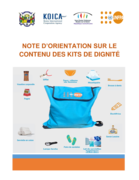
n temps de crise, les femmes et les jeunes filles ont souvent du mal à satisfaire leurs besoins matériels essentiels. Elles manquent d'articles qui améliorent leur sécurité, facilitent l'hygiène de base, permettent l'accès aux services humanitaires et favorisent leur mobilité et leur présen
...
