
Filter
282
Text search:
bibliography
Featured
18
63
Language
Document type
197
28
26
22
5
2
1
1
Countries
11
7
6
6
6
6
6
5
5
4
4
4
4
3
3
3
2
2
2
2
2
2
2
1
1
1
1
1
1
1
1
1
1
1
1
1
1
1
1
1
1
1
1
1
1
1
1
1
Authors & Publishers
Publication Years
Category
79
29
19
19
12
8
1
Toolboxes
69
19
11
10
10
9
7
7
6
6
6
5
5
4
4
4
3
3
3
2
1
1


Q 12: In children and adolescents with anxiety disorders, what is the effectiveness and safety, considering system issues in low- and middle-income countries, of using pharmacological interventions in non-specialist settings?
Q10: Are antidepressants (Tricyclic antidepressants (TCA), Selective serotonin reuptake inhibitors (SSRIs)) effective and safe in children 6-12 years of age with depressive episode/disorder?
Q8: What is the effectiveness, safety and role of pharmacological interventions, by non-specialized health care providers, for the broad category of Disruptive Behaviour Disorders (DBDs), Conduct Disorder (CD), Oppositional Defiant Disorder (ODD) and comorbid (but not exclusively) Attention-Deficit
...
Q7: What is the effectiveness, safety and role of pharmacological and non-pharmacological interventions, within non- specialist health care for children with a diagnosis of Attention-deficit hyperactivity disorder (ADHD)?
Managing Sexual Violence against Aid Workers aims to support aid agencies in preventing, being prepared for and responding to incidents of sexual violence against their staff. It is intended as a good practice guide to help strengthen existing processes and support organisations as they set up their
...

All health-care workers require clear and comprehensive training and education on the importance of hand hygiene, the "My 5 Moments for Hand Hygiene" approach and the correct procedures for handrubbing and handwashing. The following tools and resources are meant to support bridging the knowledge gap
...

Q 4: Is behavioural activation better (more effective than/as safe as) than treatment as usual in adults with depressive episode/disorder?brief, structured psychological treatment in non-specialist health care settings better (more effective than/as safe as) than treatment as usual in people with de
...

Q6: Is advice on physical activity better (more effective than/as safe as) than treatment as usual in adults with depressive episode/disorder with inactive lifestyles

Q1: In individuals with psychotic disorders (including schizophrenia), are antipsychotic drugs safe and effective?
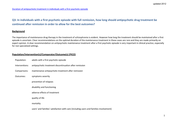
Q3: In individuals with a first psychotic episode with full remission, how long should antipsychotic drug treatment be continued after remission in order to allow for the best outcomes?

This literature review summarizes the link between psychological well-being and entrepreneurial outcomes for small and medium-size enterprises in fragile, conflict, and violence–affected contexts. It identifies potentially promising, scalable psychosocial training interventions, based on cognitive
...

Second-generation antipsychotic medications for psychotic disorders (including schizophrenia)
recommended
Q14. SCOPING QUESTION: In adults with psychotic disorders (including schizophrenia), what is the comparative effectiveness and safety of second-generation antipsychotic medications?

This document adopts a health determinants framework for examining the evidence related to women’s poor mental health. From this perspective, public policy including economic policy, socio-cultural and environmental factors, community and social support, stressors and life events, personal behavio
...
Zambia Report for 2017
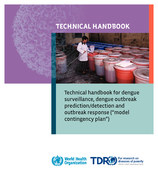
The aim of this “model contingency plan” is to assist programme managers and planners in devel-oping a national, context-specific, dengue outbreak response plan in order to: (a) detect a dengue outbreak at an early stage through clearly defined and validated alarm signals; (b) precisely define w
...
Best Practices Guidelines
Accessed: 06.11.2019
Chapter 1 of the WHO manual for male circumcision as an HIV prevention strategy
provides an overview of how medical male circumcision (VMMC) can reduce the risk of female-to-male HIV transmission. It explains that VMMC is an effective and safe risk-reduction method that, according to three randomiz
...
