
Filter
1173
Text search:
hospitalization
Featured
156
244
Language
Document type
520
250
192
80
45
35
26
12
5
5
2
Countries
96
45
42
25
23
22
22
15
15
14
14
13
13
12
12
11
11
11
11
11
11
10
9
8
8
6
6
6
6
6
5
5
5
5
5
4
4
4
4
4
4
4
4
4
4
3
3
3
3
3
3
3
3
3
3
3
3
3
2
2
2
2
2
2
2
2
2
2
2
1
1
1
1
1
1
1
1
1
1
1
1
1
1
1
1
1
1
1
1
1
Authors & Publishers
Publication Years
Category
384
131
71
47
35
16
8
1
Toolboxes
209
114
110
41
40
37
31
30
29
27
27
25
24
21
20
19
17
11
10
8
6
5
4
4
3
The WHO publication “Surveillance, case investigation and contact tracing for mpox: interim guidance” provides updated global technical guidance on monitoring and responding to mpox (formerly known as monkeypox). It explains how countries should conduct surveillance to detect new outbreaks, car
...
The document “Outbreak Investigation, Response and Control – Module 8” is a training module from the Integrated Disease Surveillance Project (IDSP) designed to guide health officials in investigating and managing disease outbreaks. It explains the basic principles and steps of outbreak investi
...

This guideline document is a publication of the National AIDS & STI Control Program, Ministry of Health
Kenya

As countries presented their epidemiological and programmatic situations, and WHO summarized the global status of HAT, the central message was one of satisfaction with the remarkable progress towards elimination. A historically low number of cases was reported, despite maintaining high levels of act
...

This tool enables a rapid, systematic review of pharmacy curricula at the national or institutional level to evaluate their robustness in delivering the expected content and competencies. It can also assist institutions in designing strategies to strengthen AMR curricular content, and to facilitate
...

This report developed by UNAIDS and the United for Global Mental Health reviews and maps Global Fund investments in priority HIV and TB comorbidities in Grant Cycle 7 (GC7), including key non-communicable diseases (NCDs), cervical, anorectal and other cancers, and mental health and substance use co
...

It provides comprehensive guidance for logistics planners in humanitarian responses to pandemics, covering preparedness, response strategies, assessment methodologies, and operational planning.

In the face of rapid increases in the number of hospitalizations due to COVID-19 in Latin America and the Caribbean, coupled with shortages of human and material resources, including medical equipment and gases, there is a need to redesign models of care in the Region to optimize available resources
...

Good primary care may lead to fewer avoidable hospitalizations, but unsafe primary care can cause avoidable illness and injury, leading to unnecessary hospitalizations, and in some cases, disability and even death.Implementing system changes and practices are crucial to improve safety at all levels
...

Em vista do aumento repentino do número de hospitalizações causadas pela pandemia de COVID-19 na América Latina e no Caribe, bem como da escassez de recursos humanos e materiais, como equipes médicas e gases medicinais, é necessário reformular os modelos de atenção na Região de modo a otim
...
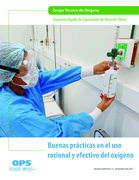
El oxígeno está incluido dentro de la lista de medicamentos esenciales de la OMS y es utilizado para atender pacientes en todos los niveles de las redes integradas de servicios de salud. Dado que la eficacia del uso de oxígeno ya está probada en el tratamiento de pacientes con afecciones respira
...

Avec l’augmentation soudaine du nombre d’hospitalisations causées par la pandémie de COVID-19 en Amérique latine et dans les Caraïbes, et étant donné la rareté des ressources humaines et matérielles telles que les équipements médicaux et les gaz médicaux, il est devenu nécessaire de
...
