
Filter
1836
Text search:
Stigma
and
discrimination
Featured
185
477
Language
Document type
1106
259
199
93
66
45
44
5
5
4
3
1
Countries
92
65
51
42
41
40
38
37
36
35
32
31
29
29
28
27
26
24
23
19
18
16
15
15
15
15
13
12
11
10
10
10
9
9
8
8
7
7
7
6
6
6
6
6
5
5
5
5
5
5
5
5
5
5
4
4
4
4
4
3
3
3
3
2
2
2
2
2
2
2
2
2
2
2
2
2
2
2
1
1
1
1
1
1
1
1
1
1
1
1
1
1
1
1
1
1
1
1
1
1
1
1
1
1
Authors & Publishers
Publication Years
Category
692
90
70
69
62
48
2
Toolboxes
294
211
206
155
107
47
46
42
36
20
19
12
11
9
8
6
5
4
3
3
3
2
2
1
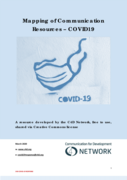
Mapping of Communication Resources COVID-19
recommended
This resource mapping contains signposting and direct links to a range of resource sites and content online; this includes information about the main sources for trustworthy information about the pa
...
This note provides information and practical guidance to support gender-based violence (GBV) practitioners to integrate attention to disability into GBV prevention, risk mitigation and response effo
...
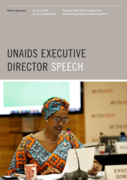
2020 is a critical year for our Joint Programme as we collectively define the path to getting back on track to ending the AIDS epidemic by 2030. Our revised timelines for adoption of the next strategy are highly ambitious. We need the full support of all the tremendously dedicated people in UNAIDS-w
...

Despite being a curable and preventable disease, tuberculosis (TB) remains as one of the major challenges for health systems, globally. Every year, TB affects more than 10 million people and kills m
...

Background paper 11
The Independent Panel for Pandemic Preparedness and Response
May 2021

national programmes for occupational health and safety for health workers: lessons learned from countries: summary report of the WHO online workshop, 15 July 2020

Member States of the Region have initiated processes to strengthen leadership and governance for mental health. Several countries have developed and implemented mental health plans, strategies
...

This UNAIDS 2024 report brings together new data and case studies which demonstrate that the decisions and policy choices taken by world leaders this year will decide the fate of millions of lives
...

To meet our Strategy objectives and get within reach
of the 2030 SDG 3 target related to the three diseases,
the Global Fund needs to raise US$18 billion for the
Eighth Replenishment. That sum is essential to drive the
required pace of progress
...
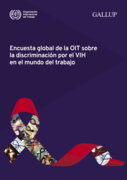
La OIT ha unido fuerzas con Gallup para llevar a cabo una innovadora encuesta mundial que abarca 50 países y que arroja más luz sobre las causas de la persistencia del estigma y la discriminación relacionados con el VIH en el mundo del trabajo.
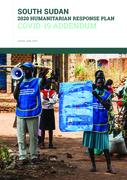
This document summarizes preparedness and response activities to address the coronavirus disease (COVID-19) outbreak in South Sudan through the end of 2020. The addendum includes the activities and
...

This World Health Organization (WHO) and the International Labour Organization (ILO) joint guidelines production aims at harnessing the contribution of employers and workers towards the control of T
...

The Child Protection handbook provides a synthesis of good practice and learning and enables better advocacy and communication on child protection
...
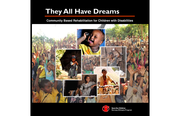
Community Based Rehabilitation for Children with Disabilities: Good Practices and Lessons from Save the Children Norway Ethiopia Programme Intervention
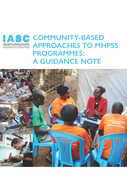
Community-based approaches to Mental Health and Psychosocial Support (CB MHPSS) in emergencies are based on the understanding that communities can be drivers for their own care and change
...

New research exposes how women and children are disproportionally affected by climate migration, which puts them at greater risk of gender-based violence, child labour and exploitation.
Governmen
...
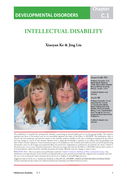
This publication seeks to describe the best treatments and practices based on the scientific evidence available at the time of writing as evaluated by the authors and may change as a result of new r
...

Recommendations on the initiation and continuing use of nine common types of contraceptive methods are covered by the tool. In addition to looking at individual medical conditions or characteristics, users may also easily combine multiple conditions
...

Globally, over two million women live with obstetric fistula with the majority of the cases
being from Africa. In low-resource settings such as Zambia, obstetric fistula (OF) is a visible indicator of
gaps in maternal health care resulting in failure to provide adequate, accessible
...

Produced by UNICEF and IRC, with the support of the German Corporation for International Cooperation GmbH (GIZ) and the generous funding from the German Federal Ministry of Economic Cooperation
...
