
Filter
2552
Text search:
World
Health
Organization
African
Region
Featured
231
621
Language
2485
61
37
31
24
19
17
7
2
2
2
1
1
1
1
1
1
1
1
1
Document type
1270
658
261
129
117
41
27
24
14
5
2
2
1
Countries / Regions
160
110
96
87
82
76
66
61
61
54
54
42
39
38
37
37
34
31
29
29
28
28
27
26
22
22
21
20
18
16
15
14
13
13
13
13
11
11
11
10
10
9
9
8
8
8
8
8
8
7
7
6
6
6
6
6
6
5
5
5
5
5
4
4
4
4
4
4
3
3
3
3
3
3
3
3
3
3
3
2
2
2
2
2
2
2
2
2
2
2
2
1
1
1
1
1
1
1
1
1
1
1
1
1
1
1
1
1
1
1
1
1
1
1
1
1
1
1
1
1
Authors & Publishers
399
149
104
101
84
48
47
46
42
33
22
18
18
17
14
14
13
12
11
11
11
11
10
10
10
10
9
9
9
9
8
8
8
8
7
7
7
7
7
7
7
6
6
6
6
6
6
6
6
6
6
6
6
6
5
5
5
5
5
5
5
5
5
5
5
5
5
5
5
5
5
5
5
4
4
4
4
4
4
4
4
4
4
4
4
4
4
4
4
4
4
4
4
4
4
4
4
4
3
3
3
3
3
3
3
3
3
3
3
3
3
3
3
3
3
3
3
3
3
3
3
3
3
3
3
3
3
3
3
3
3
3
3
3
3
3
3
3
3
3
3
3
3
2
2
2
2
2
2
2
2
2
2
2
2
2
2
2
2
2
2
2
2
2
2
2
2
2
2
2
2
2
2
2
2
2
2
2
2
2
2
2
2
2
2
2
2
2
2
2
2
2
2
2
2
2
2
2
2
2
2
2
2
2
2
2
2
2
2
2
2
2
2
2
2
2
2
2
2
2
2
2
2
2
2
2
2
2
2
2
2
2
2
2
2
2
2
2
2
2
2
2
2
2
2
2
2
2
2
2
2
2
2
2
2
2
2
2
2
2
2
2
2
2
2
2
2
2
2
2
2
2
2
1
1
1
1
1
1
1
1
1
1
1
1
1
1
1
1
1
1
1
1
1
1
1
1
1
1
1
1
1
1
1
1
1
1
1
1
1
1
1
1
1
1
1
1
1
1
1
1
1
1
1
1
1
1
1
1
1
1
1
1
1
1
1
1
1
1
1
1
1
1
1
1
1
1
1
1
1
1
1
1
1
1
1
1
1
1
1
1
1
1
1
1
1
1
1
1
1
1
1
1
1
1
1
1
1
1
1
1
1
1
1
1
1
1
1
1
1
1
1
1
1
1
1
1
1
1
1
1
1
1
1
1
1
1
1
1
1
1
1
1
1
1
1
1
1
1
1
1
1
1
1
1
1
1
1
1
1
1
1
1
1
1
1
1
1
1
1
1
1
1
1
1
1
1
1
1
1
1
1
1
1
1
1
1
1
1
1
1
1
1
1
1
1
1
1
1
1
1
1
1
1
1
1
1
1
1
1
1
1
1
1
1
1
1
1
1
1
1
1
1
1
1
1
1
1
1
1
1
1
1
1
1
1
1
1
1
1
1
1
1
1
1
1
1
1
1
1
1
1
1
1
1
1
1
1
1
1
1
1
1
1
1
1
1
1
1
1
1
1
1
1
1
1
1
1
1
1
1
1
1
1
1
1
1
1
1
1
1
1
1
1
1
1
1
1
1
1
1
1
1
1
1
1
1
1
1
1
1
1
1
1
1
1
1
1
1
1
1
1
1
1
1
1
1
1
1
1
1
1
1
1
1
1
1
1
1
1
1
1
1
1
1
1
1
1
1
1
1
1
1
1
1
1
1
1
1
1
1
1
1
1
1
1
1
1
1
1
1
1
1
1
1
1
1
1
1
1
1
1
1
1
1
1
1
1
1
1
1
1
1
1
1
1
1
1
1
1
1
1
1
1
1
1
1
1
1
1
1
1
1
1
1
1
1
1
1
1
1
1
1
1
1
1
1
1
1
1
1
1
1
1
1
1
1
1
1
1
1
1
1
1
1
1
1
1
1
1
1
1
1
1
1
1
1
1
1
1
1
1
1
1
1
1
1
1
1
1
1
1
1
1
1
1
1
1
1
1
1
1
1
1
1
1
1
1
1
1
1
1
1
1
1
1
1
1
1
1
1
1
1
1
1
1
1
1
1
1
1
1
1
1
1
1
1
1
1
1
1
1
1
1
1
1
1
1
1
1
1
1
1
1
1
1
1
1
1
1
1
1
1
1
1
1
1
1
1
1
1
1
1
1
1
1
1
1
1
1
1
1
1
1
1
1
1
1
1
1
1
1
1
1
1
1
1
1
1
1
1
1
1
1
1
1
1
1
1
1
1
1
1
1
1
1
1
1
1
1
1
1
1
1
1
1
1
1
1
1
1
1
1
1
1
1
1
1
1
1
1
1
1
1
1
1
1
1
1
1
1
1
1
1
1
1
1
1
1
1
1
1
1
1
1
1
1
1
1
1
1
1
1
1
1
1
1
1
1
1
1
1
1
1
1
1
1
1
1
1
1
1
1
1
1
1
1
1
1
1
1
1
1
1
1
1
1
1
1
1
1
1
1
1
1
1
1
1
1
1
1
1
1
1
1
1
1
1
1
1
1
1
1
1
1
1
1
1
1
1
1
1
1
1
1
1
1
1
1
1
1
1
1
1
1
1
1
1
1
1
1
1
1
1
1
1
1
1
1
1
1
1
1
1
1
1
1
1
1
1
1
1
1
1
1
1
1
1
1
1
1
1
1
1
1
1
1
1
1
1
1
1
1
1
1
1
1
1
1
1
1
1
1
1
1
1
1
1
1
1
1
1
1
1
1
1
1
1
1
1
1
1
1
1
1
1
1
1
1
1
1
1
1
1
1
1
1
1
1
1
1
1
1
1
1
1
1
1
1
1
1
1
1
1
1
1
1
1
1
1
1
1
1
1
1
1
1
1
1
1
1
1
1
1
1
1
1
1
1
1
1
1
1
1
1
1
1
1
1
1
1
1
1
1
1
1
1
1
1
1
1
1
1
1
1
1
1
1
1
1
1
1
1
1
1
1
1
1
1
1
1
1
1
1
1
1
1
1
1
1
1
1
1
1
1
1
1
1
1
1
1
1
1
1
1
1
1
1
1
1
1
1
1
1
1
1
1
1
1
1
1
1
1
1
1
1
1
1
1
1
1
1
1
1
1
1
1
1
1
1
1
1
1
1
1
1
1
1
1
1
1
1
1
1
1
1
1
1
1
1
1
1
1
1
1
1
1
1
1
1
1
1
1
1
1
1
1
1
1
1
1
1
1
1
1
1
1
1
1
1
1
1
1
1
1
1
1
1
1
1
1
1
1
1
1
1
1
1
1
1
1
1
1
1
1
1
1
1
1
1
1
1
1
1
1
1
1
1
1
1
1
1
1
1
1
1
1
1
1
1
1
1
1
1
1
1
1
1
1
1
1
1
1
1
1
1
1
1
1
1
1
1
1
1
1
1
1
1
1
1
1
1
1
1
1
1
1
1
1
1
1
1
1
1
1
1
1
1
1
1
1
1
1
1
1
1
1
1
1
1
1
1
1
1
1
1
1
1
1
1
1
1
1
1
1
1
1
1
1
1
1
1
1
1
1
1
1
1
1
1
1
1
1
1
1
1
1
1
1
1
1
1
1
1
1
1
1
1
1
1
1
1
1
1
1
1
1
1
1
1
1
1
1
1
1
1
1
1
1
1
1
1
1
1
1
1
1
1
1
1
1
1
1
1
1
1
1
1
1
1
1
1
1
1
1
1
1
1
1
1
1
1
1
1
1
1
1
1
1
1
1
1
1
1
1
1
1
1
1
1
1
1
1
1
1
1
1
1
1
1
1
1
1
1
1
1
1
1
1
1
1
1
1
1
1
1
1
1
1
1
1
1
1
1
1
1
1
1
1
1
1
1
1
1
1
1
1
1
1
1
1
1
1
1
1
1
1
1
1
1
1
1
1
1
1
1
1
1
1
1
1
1
1
1
1
1
1
1
1
1
1
1
1
1
1
1
1
1
1
1
1
1
1
1
1
1
1
1
1
1
1
1
1
1
1
1
1
1
1
1
1
1
1
1
1
1
1
1
1
1
1
1
1
1
1
1
1
1
1
1
1
1
1
1
1
1
1
1
1
1
1
1
1
1
1
1
1
1
1
1
1
1
1
1
1
1
1
1
1
1
1
1
1
1
1
1
1
1
1
1
1
1
1
1
1
1
1
1
1
1
1
1
1
1
1
1
1
1
1
1
1
1
1
1
1
1
1
1
1
1
1
1
1
1
1
1
1
1
1
1
1
1
1
1
1
1
1
1
1
1
1
1
1
1
1
1
1
1
1
1
1
1
1
1
1
1
1
1
1
1
1
1
1
1
1
1
1
1
1
1
1
1
1
1
1
1
1
1
1
1
1
1
1
1
1
1
1
1
1
1
1
1
1
1
1
1
1
1
1
1
1
1
1
1
1
1
1
1
1
1
1
1
1
1
1
1
1
1
1
1
1
1
1
1
1
1
1
1
1
1
1
1
1
1
1
1
1
1
1
1
1
1
1
1
1
1
1
1
1
1
1
1
1
1
1
1
1
1
1
1
1
1
1
1
1
1
1
1
1
1
1
1
1
1
1
1
1
1
1
1
1
1
1
1
1
1
1
1
1
1
1
1
1
1
1
1
1
1
1
1
1
1
1
1
1
1
1
1
1
1
1
1
1
1
1
1
1
1
1
1
1
1
1
1
1
1
1
1
1
1
1
1
1
1
1
1
1
1
1
1
1
1
1
1
1
1
1
1
1
1
1
1
1
1
1
1
1
1
1
1
1
1
1
1
1
1
1
1
1
1
1
1
1
1
1
1
1
1
1
1
1
1
1
1
1
1
1
1
1
1
1
1
1
1
1
1
1
1
1
1
1
1
1
1
1
1
1
1
1
1
1
1
1
1
1
1
1
1
1
1
1
1
1
1
1
1
1
1
1
1
1
1
1
1
1
1
1
1
1
1
1
1
1
1
1
1
1
1
1
1
1
1
1
1
1
1
1
1
1
1
1
1
1
1
1
1
1
1
1
1
1
1
1
1
1
1
1
1
1
1
1
1
1
1
1
1
1
1
1
1
1
1
1
1
1
1
1
1
1
1
1
1
1
1
1
1
1
1
1
1
1
1
1
1
1
1
1
1
1
1
1
1
1
1
1
1
1
1
1
1
1
1
1
1
1
1
1
1
1
1
1
1
1
1
1
1
1
1
1
1
1
1
1
1
1
1
1
1
1
1
1
1
1
1
1
1
1
1
1
1
1
1
1
1
1
1
1
1
1
1
1
1
1
1
1
1
1
1
1
1
1
1
1
1
1
1
1
1
1
1
1
1
1
1
1
1
1
1
1
1
1
1
1
1
1
1
1
1
1
1
1
1
1
1
1
1
1
1
1
1
1
Publication Years
851
1496
189
15
1
Category
870
204
173
139
136
41
30
Toolboxes
176
173
150
146
127
113
112
94
75
72
70
64
53
51
50
48
46
45
34
21
17
17
15
6
5
2
1

The document is a comprehensive practical guide for managing cholera epidemics. It includes detailed instructions on outbreak investigation, control measures, case management, and the organization of treatment facilities. It emphasizes strategies su
...
ch as rehydration therapy, water sanitation, hygiene promotion, and vaccination to prevent the spread of cholera. The guide serves as a resource for healthcare professionals, logisticians, and public health officials to respond effectively to cholera outbreaks.
more

This regional advocacy strategy on HIV and AIDS, tuberculosis (TB) and sexually transmitted infetions (STIs) is intended for use by Southern African Development Community (SADC) Member States at a national level. This is an overall advocacy strategy
...
highlighting the most important issues relating to HIV and AIDS, TB and STIs in the Southern African region. It provides a broad advocacy framework for each of the issues identied, along with key targets, messages, and interventions
more
Management of Diabetes Mellitus-Tuberculosis
recommended
1st edition
This resource provides practical guidance for front line health workers responsible for the diagnosis, management and care of patients with these two diseases. Published in collaboration with the
...
World Diabetes Foundation
more

This comprehensive reference document is intended for those responsible for training in SMC (Seasonal Malaria Chemoprevention). It assumes that SMC will be implemented using the Community Health Worker strategy.
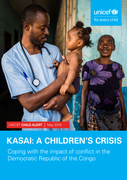
UNICEF CHILD ALERT May 2018
As part of a UNICEF series highlighting the challenges faced by children in current crisis situations, this Child Alert examines the situation of children affected by violent conflict in Kasai region, Democratic Repu ... blic of the Congo. The alert outlines what UNICEF and its partners have achieved to date in providing humanitarian assistance to children in Kasai affected by malnutrition and lack of access to health care, safe water and education. It calls upon all parties to the conflict – and the international community – to take urgent action protecting the lives and futures of children at risk, before it is too late. more
As part of a UNICEF series highlighting the challenges faced by children in current crisis situations, this Child Alert examines the situation of children affected by violent conflict in Kasai region, Democratic Repu ... blic of the Congo. The alert outlines what UNICEF and its partners have achieved to date in providing humanitarian assistance to children in Kasai affected by malnutrition and lack of access to health care, safe water and education. It calls upon all parties to the conflict – and the international community – to take urgent action protecting the lives and futures of children at risk, before it is too late. more
The spread of COVID-19 poses a challenge for emerging markets such as those in Africa and Latin America. While governments around the world are suffering from a shortage of ventilators, hospital beds, and personal protective equipment, availability
...
of these items is already extremely limited in some countries. In Africa, countries including Mali, Liberia, and Burkina Faso have only a few ventilators available to aid their populations, and there is also a lack of reliable oxygen supplies, ICUs, and healthcare workers to treat the sick. Additionally, many countries in Africa are already suffering from food insecurity and weak economies, which will worsen the long-term effects of coronavirus.
Keeping these factors in mind, GeoPoll conducted a remote study in 12 countries in sub-Saharan Africa on the effects coronavirus is already having on people throughout the region.
more

Internationally, there is a growing concern over antimicro-bial resistance (AMR) which is currently estimated to ac-count for more than 700,000 deaths per year worldwide. If no appropriate measures are taken to halt its pro-gress, AMR will cost approximately 10 million lives andabout US$100 trillion
...
per year by 2050. In contrast tosome other health issues, AMR is a problem that con-cerns every country irrespective of its level of incomeand development as resistant pathogens do not respect borders.Despite the threat presented by AMR, the 2014 WorldHealth Organization (WHO) and the recent O’Neill re-port describe significant gaps in surveillance, standardmethodologies and data sharing. The 2014 WHOreport identified Africa and South East Asia as the regions without established AMR surveillance systems.
Tadesseet al. BMC Infectious Diseases (2017) 17:616 DOI 10.1186/s12879-017-2713-1
more
Antimicrobial resistant (AMR) organisms are increasing globally, threatening to render existing treatments ineffective against many infectious diseases. In Africa, AMR has already been documented to be a problem for HIV and the pathogens that cause malaria, tuberculosis, typhoid, cholera, meningitis
...
, gonorrhea, and dysentery. Recognizing the urgent need for action, the World Health Assembly adopted the Global Action Plan on Antimicrobial Resistance in May 2015. In accordance with the Global Action Plan and to meet needs specific to Africa, Africa CDC will establish the Anti-Microbial Resistance Surveillance Network (AMRSNET). AMRSNET is a network of public health institutions and leaders from human and animal health sectors who will collaborate to measure, prevent, and mitigate harms from AMR organisms.
more
The report reviews progress with the task of planning and implementing measures necessary to secure a completely polio-free world. It also examines actions aimed at ensuring successful transfer of polio assets, innovations developed and lessons lear
...
ned to countries’ public health programmes and other global health priorities
more

One of the most important ways we feel we can help to reduce the burden of cancer in Africa is to work with African cancer advocacy organisations to help educate and advocate about cancer in their countries. To this end in 2010 we designed with our
...
partners, 13 posters for use in Africa
giving health and lifestyle tips on how to avoid cancer and highlighting the early warning sign and symptoms of common cancers in Africa
more
BMC Infectious Diseases (2019) 19:832
Intestinal schistosomiasis is highly endemic in Tanzania and mass drug administration (MDA) using
praziquantel is the mainstay of the control program. However, the MDA program covers only school aged children
and does not include neither adult individuals nor
...
other public health measures. The Ijinga schistosomiasis project
examines the impact of an intensified treatment protocol with praziquantel MDA in combination with additional
public health interventions. It aims to investigate the feasibility of eliminating intestinal schistosomiasis in a highly
endemic African setting using an integrated community-based approach.
more
Global HIV control funding falls short of need. To maximize health outcomes, it is critical that national governments sustain reasonable commitments, and that international donor assistance be distributed according to country needs and funding gaps.
...
We develop a country classification framework in terms of actual versus expected national domestic funding, considering resource needs and donor financing. With UNAIDS and World Bank data, we examine domestic and donor HIV program funding in relation to need in 84 low- and middle-income countries. We estimate expected domestic contributions per person living with HIV (PLWH) as a function of per capita income, relative size of the health sector, and per capita foreign debt service.
more
Social Science in Humanitarian Action Key considerations: Ebola preparedness and readiness in Goma, DRC
Peyton, D.; I. Gercama and J. Bedford
Social Science in Humanitarian Action: A Communication for Development Platform
(2019)
C1
This brief summarises key considerations about the social, political and economic context of Goma in relation to the outbreak of Ebola in the DRC as of March 2019. Goma is the administrative capital of North Kivu province and a major urban centre in the Great Lakes
...
Region. The city is home to an estimated 1.5 million people and serves as an important economic and transportation hub that links eastern Congo to the broader East African sub-region. The arrival of Ebola in Goma would substantially increase the at-risk population and heighten the potential for cross-border transmission to neighbouring countries, particularly Rwanda. This brief therefore focuses on local social and political structures that can be leveraged to promote preparedness and readiness actions.
more
A joint FAO/WFP update for the United Nations Security Council, January 2018. ISSUE N.3. Six months on from the last joint report for the United
Nations Security Council (UNSC), this report by the
Food and Agriculture Organization of the United
...
Nations (FAO) and the World Food Programme (WFP)
provides an update on the acute food insecurity
situation in most of the conflict-affected countries
currently being monitored by the UNSC.
more

Asthma is the most common chronic respiratory disease (CRD) worldwide and is estimated to affect 262 million causing significant mortality and morbidity, and has emerged as an important public health problem in many Latin American (LA) countries ove
...
r the last 30 or so years. LA is a highly diverse region in terms of geography, climate, wealth, and ethnicity including 20 different countries with 639 million inhabitants, where 40 million are estimated to have asthma. A common feature of LA countries is the high level of social inequalities3 (Figure 1). In LA, asthma prevalence in both children and adults is highly variable and, where high, is among the highest worldwide, particularly in coastal tropical cities.
more

The United Nations Children's Fund (UNICEF), the International Organization for Migration (IOM), Georgetown University, and the United Nations University have today launched new guidelines to provide the first-ever global policy framework that will
...
help protect, include, and empower children on the move in the context of climate change.
The Guiding Principles for Children on the Move in the Context of Climate Change provides a set of 9 principles that address the unique and layered vulnerabilities of children on the move both internally and across borders as a result of the adverse impacts of climate change. Currently, most child-related migration policies do not consider climate and environmental factors, while most climate change policies overlook the unique needs of children.
The guidelines note that climate change is intersecting with existing environmental, social, political, economic, and demographic conditions contributing to people’s decisions to move. In 2020 alone, nearly 10 million children were displaced in the aftermath of weather-related shocks. With around one billion children – nearly half of the world’s 2.2 billion children – living in 33 countries at high risk of the impacts of climate change, millions more children could be on the move in the coming years.
Developed in collaboration with young climate and migration activists, academics, experts, policymakers, practitioners, and UN agencies, the guiding principles are based on the globally ratified Convention on the Rights of the Child and are further informed by existing operational guidelines and frameworks.
Recommendations for safeguarding the rights and well-being of children regardless of their location or migration status.
The guiding principles provide national and local governments, international organizations and civil society groups with a foundation to build policies that protect children’s rights. The organizations and institutions are calling on governments, local and regional actors, international organizations, and civil society groups to embrace the guiding principles to help protect, include, and empower children on the move in the context of climate change.
more

The importance of robust mortality surveillance systems cannot be overstated in an era marked by increasing global health challenges where health threats loom large and population dynamics continue
...
to evolve. Accurate and timely mortality data is essential for identifying trends and detecting emerging health threats, evaluating the impact of interventions, and guiding evidence-based policy decisions.
This framework outlines a holistic approach to strengthening routine mortality surveillance systems, considering the unique contextual factors and challenges faced by African countries. It emphasizes the importance of establishing efficient data collection mechanisms, enhancing data quality and completeness, and promoting data sharing and collaboration among stakeholders.
Moreover, the framework recognizes the pivotal role of technology in the integration of data from fragmented mortality data sources. It highlights the potential of innovative data capture methods, advanced analytics, and real-time reporting systems to enhance mortality data’s accuracy, efficiency, and timeliness.
The continental framework for mortality surveillance aligns with Africa CDC’s mission and strategic goal by serving as a fundamental component in strengthening public health systems, enhancing disease surveillance capacities and capabilities, informing evidence-based policies and interventions, and promoting collaboration and coordination among African countries to address health challenges and improve health outcomes on the continent.
The successful implementation of this framework requires collective commitment and concerted efforts from governments, health institutions, and the international community. We hope this document will serve as a catalyst for transformative change, enabling countries to build resilient mortality surveillance systems that protect public health, save lives, and contribute to evidence-based decision-making.
more
Ending Cholera. A global roadmap to 2030
recommended
Ending Cholera—A Global Roadmap to 2030 operationalises the new global strategy for cholera control at the country level and provides a concrete path toward a world in which cholera is no longer a threat to public
...
health
more
April 2022 Volume 35 Issue 2 e00152-21
Population movements have turned Chagas disease (CD) into a global public health problem. Despite the successful implementation of subregional initiatives to control vectorial and transfusional Trypanosoma cr
...
uzi transmission in Latin American settings where the disease is endemic, congenital CD (cCD) remains a significant challenge. In countries where the disease is not endemic, vertical transmission plays a key role in CD expansion and is the main focus of its control. Although several health organizations provide general protocols for cCD control, its management in each geopolitical region depends on local authorities, which has resulted in a multitude of approaches. The aims of this review are to (i) describe the current global situation in CD management, with emphasis on congenital infection, and (ii) summarize the spectrum of available strategies, both official and unofficial, for cCD prevention and control in countries of endemicity and nonendemicity. From an economic point of view, the early detection and treatment of cCD are cost-effective. However, in countries where the disease is not endemic, national health policies for cCD control are nonexistent, and official regional protocols are scarce and restricted to Europe. Countries of endemicity have more protocols in place, but the implementation of diagnostic methods is hampered by economic constraints. Moreover, most protocols in both countries where the disease is endemic and those where it is not endemic have yet to incorporate recently developed technologies. The wide methodological diversity in cCD diagnostic algorithms reflects the lack of a consensus. This review may represent a first step toward the development of a common strategy, which will require the collaboration of health organizations, governments, and experts in the field.
more

In one of his final essays, statesman and former United Nations secretary general Kofi Annan said, ‘Snakebite is the most important tropical disease you’ve never heard of’. Mr. Annan firmly believed that victims of snakebite envenoming should be recognised and afforded greater efforts at impro
...
ved prevention, treatment, and rehabilitation. During the last years of his life, he advocated strongly for the World Health Organisation (WHO) and the global community to give greater priority to this disease of poverty and its victims.
more
