
Filter
2012
Text search:
public
commitments
Featured
129
565
Language
Document type
992
540
175
141
76
39
20
14
3
2
1
1
1
Countries
184
54
52
52
47
44
43
41
36
35
35
35
32
30
29
29
27
26
25
23
21
19
18
18
18
17
17
16
16
16
15
15
13
13
13
12
12
11
10
10
9
9
9
8
8
8
8
8
7
7
7
7
7
7
6
5
5
5
5
5
4
4
4
4
4
4
4
3
3
3
3
3
3
2
2
2
2
2
2
2
2
2
2
2
2
2
2
2
2
2
1
1
1
1
1
1
1
1
1
1
1
1
1
1
1
1
1
1
1
1
1
1
1
1
1
1
1
1
1
1
1
1
1
1
1
1
1
1
1
1
1
1
Authors & Publishers
Publication Years
Category
754
175
127
125
76
19
9
Toolboxes
143
131
110
108
108
92
88
72
65
55
44
41
37
35
33
30
27
22
16
12
12
11
9
8
1
1
The Mtoto Mwerevu Stunting Reduction Toolkit is a resource for government and organisations involved in addressing stunting and broader nutrition issues in Tanzania. The toolkit was developed in conjunction with the Government of Tanzania (GoT) with funding from UK Aid as part of the Addressing Stun
...
To help trainers to create awareness,attitude and skills in waste handlers in day to day management of medical waste in health care settings.

The meningitis road map has been designated as a flagship global strategy of the WHO’s Thirteenth General Programme of Work, 2019–2023 and is an essential component in achieving universal health coverage.
The road map will reinforce and combine with wider initiatives, such as those aimed at s
...

Amoris laetitia: Post-Synodal Apostolic Exhortation on love in the family (19 March 2016)
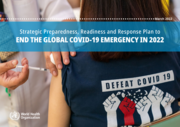
More than two years since the first SARS-CoV-2 infections were reported, the COVID-19 pandemic remains an acute global emergency. In this Strategic Preparedness, Readiness and Response plan for 2022, WHO sets out a number of key strategic adjustments that, if implemented rapidly and consistently at
...

Every country has been affected by COVID-19, with nearly a quarter
of a billion cases and almost 5 million deaths reported globally as of
end of September 2021. Despite the stunning speed with which highly
effective and safe vaccines have been developed, new waves of disease
are still pushin
...

One of the most important ways we feel we can help to reduce the burden of cancer in Africa is to work with African cancer advocacy organisations to help educate and advocate about cancer in their countries. To this end in 2010 we designed with our partners, 13 posters for use in Africa
giving heal
...

The African Development Bank has launched a consultation process with health ministers and other partners as it develops a strategy to drive enhanced access to health services across Africa through 2030.
Input from ministers in the Bank’s 54 regional member countries, development partners and c
...
Urbanization, land use, global trade and industrialization have led to profound and negative impacts on nature, biodiversity and ecosystems across the world. The ongoing depletion of natural resources not only afects environmental conditions but also has an enormous impact on the well-being and secu
...
English Analysis on World about Agriculture, Climate Change and Environment and more; published on 29 Sep 2021 by FAO and NEPAD

The World Health Organization and the Global Fund to Fight AIDS, Tuberculosis and Malaria are part of a group of agencies working together to accelerate progress towards the health-related SDGs through the Global Action Plan for Healthy Lives and Well-being for All. Understanding patterns of inequal
...

New funding requirements: CHF 2.8 billion IFRC-wide of which CHF 670 million is channelled through the IFRC Emergency Appeal in support of National Societies
Training Modules for climate change and Health - WHO
The Lancet Countdown is an international collaboration that independently monitors the health consequences of a changing climate. Publishing updated, new, and improved indicators each year, the Lancet Countdown represents the
consensus of leading researchers from 43 academic institutions and UN ag
...
Available in English, French, Spanish and Russian from the website https://apps.who.int/iris/handle/10665/344562
The road map sets global targets and milestones to prevent, control, eliminate or eradicate 20 diseases and disease groups as well as cross-cutting targets aligned with the Sustainable Development Goals. Three foundational pillars will support global efforts to achieve the targets: accelerate progra
...
Issues & Regulations Regarding Pharmaceutical Waste Management
The COVID-19 pandemic has led to large increases in healthcare waste, straining under resourced healthcare facilities and exacerbating environmental impacts from solid waste. This report quantifies the additional COVID-19 healthcare waste generated, describes current healthcare waste management syst
...
