Filter
1305
Text search:
American
Research
Foundation,
Featured
127
256
Language
Document type
678
267
147
112
42
31
12
6
5
1
1
1
1
Countries
71
34
26
25
22
18
18
15
15
15
14
14
13
12
12
12
11
10
9
9
9
9
9
8
7
7
7
7
6
6
6
5
5
5
5
5
5
4
4
4
4
4
4
4
4
3
3
3
3
3
3
3
3
3
2
2
2
2
2
2
2
2
2
2
2
2
2
2
2
2
2
2
2
2
2
1
1
1
1
1
1
1
1
1
1
1
1
1
1
1
1
1
1
1
1
1
1
1
1
1
1
1
1
1
1
1
1
1
1
1
1
1
1
1
1
1
Authors & Publishers
Publication Years
Category
282
127
101
99
84
33
14
1
Toolboxes
231
78
70
67
65
62
50
49
43
33
32
26
22
22
21
17
15
14
13
13
12
11
8
1
1
Accessed 4 March 2019.
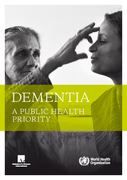
The report “Dementia: a public health priority” has been jointly developed by WHO and Alzheimer's Disease International. The purpose of this report is to raise awareness of dementia as a public health priority, to articulate a public health approach and to advocate for action at international a
...
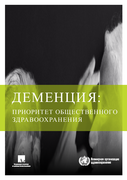
Цель настоящего доклада — повысить осведомленность о деменции как
одной из приоритетных проблем общественного здравоохранения, сформу-
лировать подход к этой пÑ
...
tool for monitoring, documenting and reporting human rights violations in Nigeria

The adoption and the entry into force of the Convention on the Rights of Persons with Disabilities and its Optional Protocol challenge such attitudes and mark a profound shift in existing approaches towards disability.
Building laboratory testing capacity
Addressing comorbidity between mental disorders and major noncommunicable diseases (Russian Version)
Доклад ВОЗ о глобальной табачной эпидемии, 2009 год: Создание среды, свободной от табачного дыма, – второй из серии докладов ВОЗ, в которых определяется состояние таб
...
Accessed: 28.03.2019
Trastornos externalizantes
Capítulo D.3
Edición: Matías Irarrázaval & Andres Martin
Traducción: Fernanda Prieto Tagle, Sofía Hacohen Domené
Otros Trastornos
Capítulo H.1
Edición 2016
Edición: Matías Irarrázaval & Andres Martin
Revisión: Fernanda Prieto-Tagle & Jasna Raventós

Haiti, one of the poorest countries in the world, was devastated by an earthquake in 2010. The disaster uncovered the realities of a non-existent mental health care system with only ten psychiatrists nationwide. Attempts were made to assess the increased prevalence of mental illness, likely due to t
...

Cerebrum. 2016 Jul-Aug; 2016: cer-10-16.
Published online 2016 Jul 1.
Dignity in Mental Health
Guiding Principles and Recommendations
Reporting on Climate Change and Sustainable Development in Asia and the Pacific: A Handbook for Journalists.
UNESCO Series on Journalism education.
It explores the essential aspects of climate change, including its injustices to vulnerable communities, especially women and girls and least develope
...
Руководство по осуществлению mhGAP
recommended
The WHO Mental Health Gap Action Programme (mhGAP) aims at scaling up mental health services in non-specialized health settings to achieve universal health coverage. The mhGAP operations manual is an integral component of the mhGAP package and supports district health managers and others responsible
...