Filter
2499
Text search:
Global
Drug
Facility
Featured
265
812
Language
2411
47
42
33
20
11
9
4
4
2
2
1
1
1
1
1
1
1
1
1
1
1
1
1
1
1
1
Document type
1452
361
347
136
109
40
26
13
8
2
1
1
Countries / Regions
133
96
86
83
81
76
74
67
56
55
54
52
49
48
41
38
38
30
27
24
24
23
23
22
22
19
16
16
15
15
14
14
14
13
12
12
10
10
10
9
8
6
6
6
6
6
5
5
5
5
5
5
5
5
4
4
4
4
3
3
3
3
3
3
3
3
3
3
2
2
2
2
2
2
2
2
2
2
2
2
2
1
1
1
1
1
1
1
1
1
1
1
1
1
1
1
1
1
1
1
1
1
1
1
1
1
1
1
1
1
Authors & Publishers
353
127
85
63
60
57
47
35
29
28
27
19
18
18
17
17
15
15
13
13
13
12
12
11
11
11
10
10
10
10
9
9
9
9
9
8
8
8
8
7
7
7
7
7
7
7
6
6
6
6
6
6
6
6
6
6
6
6
6
6
6
6
6
6
6
6
5
5
5
5
5
5
5
5
5
5
5
5
5
5
5
5
5
5
5
5
5
4
4
4
4
4
4
4
4
4
4
4
4
4
4
4
4
4
4
4
4
4
4
4
4
4
4
3
3
3
3
3
3
3
3
3
3
3
3
3
3
3
3
3
3
3
3
3
3
3
3
3
3
3
3
3
3
3
3
3
3
3
3
3
3
3
3
3
3
3
3
3
3
3
3
3
3
3
3
3
3
3
3
3
3
2
2
2
2
2
2
2
2
2
2
2
2
2
2
2
2
2
2
2
2
2
2
2
2
2
2
2
2
2
2
2
2
2
2
2
2
2
2
2
2
2
2
2
2
2
2
2
2
2
2
2
2
2
2
2
2
2
2
2
2
2
2
2
2
2
2
2
2
2
2
2
2
2
2
2
2
2
2
2
2
2
2
2
2
2
2
2
2
2
2
2
2
2
2
2
2
2
2
2
2
2
2
2
2
2
2
2
2
2
2
2
2
2
2
2
2
2
2
2
2
2
2
2
2
2
2
2
2
2
2
2
2
2
2
2
2
2
2
2
2
2
2
2
2
2
2
2
2
2
2
2
2
2
2
2
2
2
2
2
2
2
2
2
1
1
1
1
1
1
1
1
1
1
1
1
1
1
1
1
1
1
1
1
1
1
1
1
1
1
1
1
1
1
1
1
1
1
1
1
1
1
1
1
1
1
1
1
1
1
1
1
1
1
1
1
1
1
1
1
1
1
1
1
1
1
1
1
1
1
1
1
1
1
1
1
1
1
1
1
1
1
1
1
1
1
1
1
1
1
1
1
1
1
1
1
1
1
1
1
1
1
1
1
1
1
1
1
1
1
1
1
1
1
1
1
1
1
1
1
1
1
1
1
1
1
1
1
1
1
1
1
1
1
1
1
1
1
1
1
1
1
1
1
1
1
1
1
1
1
1
1
1
1
1
1
1
1
1
1
1
1
1
1
1
1
1
1
1
1
1
1
1
1
1
1
1
1
1
1
1
1
1
1
1
1
1
1
1
1
1
1
1
1
1
1
1
1
1
1
1
1
1
1
1
1
1
1
1
1
1
1
1
1
1
1
1
1
1
1
1
1
1
1
1
1
1
1
1
1
1
1
1
1
1
1
1
1
1
1
1
1
1
1
1
1
1
1
1
1
1
1
1
1
1
1
1
1
1
1
1
1
1
1
1
1
1
1
1
1
1
1
1
1
1
1
1
1
1
1
1
1
1
1
1
1
1
1
1
1
1
1
1
1
1
1
1
1
1
1
1
1
1
1
1
1
1
1
1
1
1
1
1
1
1
1
1
1
1
1
1
1
1
1
1
1
1
1
1
1
1
1
1
1
1
1
1
1
1
1
1
1
1
1
1
1
1
1
1
1
1
1
1
1
1
1
1
1
1
1
1
1
1
1
1
1
1
1
1
1
1
1
1
1
1
1
1
1
1
1
1
1
1
1
1
1
1
1
1
1
1
1
1
1
1
1
1
1
1
1
1
1
1
1
1
1
1
1
1
1
1
1
1
1
1
1
1
1
1
1
1
1
1
1
1
1
1
1
1
1
1
1
1
1
1
1
1
1
1
1
1
1
1
1
1
1
1
1
1
1
1
1
1
1
1
1
1
1
1
1
1
1
1
1
1
1
1
1
1
1
1
1
1
1
1
1
1
1
1
1
1
1
1
1
1
1
1
1
1
1
1
1
1
1
1
1
1
1
1
1
1
1
1
1
1
1
1
1
1
1
1
1
1
1
1
1
1
1
1
1
1
1
1
1
1
1
1
1
1
1
1
1
1
1
1
1
1
1
1
1
1
1
1
1
1
1
1
1
1
1
1
1
1
1
1
1
1
1
1
1
1
1
1
1
1
1
1
1
1
1
1
1
1
1
1
1
1
1
1
1
1
1
1
1
1
1
1
1
1
1
1
1
1
1
1
1
1
1
1
1
1
1
1
1
1
1
1
1
1
1
1
1
1
1
1
1
1
1
1
1
1
1
1
1
1
1
1
1
1
1
1
1
1
1
1
1
1
1
1
1
1
1
1
1
1
1
1
1
1
1
1
1
1
1
1
1
1
1
1
1
1
1
1
1
1
1
1
1
1
1
1
1
1
1
1
1
1
1
1
1
1
1
1
1
1
1
1
1
1
1
1
1
1
1
1
1
1
1
1
1
1
1
1
1
1
1
1
1
1
1
1
1
1
1
1
1
1
1
1
1
1
1
1
1
1
1
1
1
1
1
1
1
1
1
1
1
1
1
1
1
1
1
1
1
1
1
1
1
1
1
1
1
1
1
1
1
1
1
1
1
1
1
1
1
1
1
1
1
1
1
1
1
1
1
1
1
1
1
1
1
1
1
1
1
1
1
1
1
1
1
1
1
1
1
1
1
1
1
1
1
1
1
1
1
1
1
1
1
1
1
1
1
1
1
1
1
1
1
1
1
1
1
1
1
1
1
1
1
1
1
1
1
1
1
1
1
1
1
1
1
1
1
1
1
1
1
1
1
1
1
1
1
1
1
1
1
1
1
1
1
1
1
1
1
1
1
1
1
1
1
1
1
1
1
1
1
1
1
1
1
1
1
1
1
1
1
1
1
1
1
1
1
1
1
1
1
1
1
1
1
1
1
1
1
1
1
1
1
1
1
1
1
1
1
1
1
1
1
1
1
1
1
1
1
1
1
1
1
1
1
1
1
1
1
1
1
1
1
1
1
1
1
1
1
1
1
1
1
1
1
1
1
1
1
1
1
1
1
1
1
1
1
1
1
1
1
1
1
1
1
1
1
1
1
1
1
1
1
1
1
1
1
1
1
1
1
1
1
1
1
1
1
1
1
1
1
1
1
1
1
1
1
1
1
1
1
1
1
1
1
1
1
1
1
1
1
1
1
1
1
1
1
1
1
1
1
1
1
1
1
1
1
1
1
1
1
1
1
1
1
1
1
1
1
1
1
1
1
1
1
1
1
1
1
1
1
1
1
1
1
1
1
1
1
1
1
1
1
1
1
1
1
1
1
1
1
1
1
1
1
1
1
1
1
1
1
1
1
1
1
1
1
1
1
1
1
1
1
1
1
1
1
1
1
1
1
1
1
1
1
1
1
1
1
1
1
1
1
1
1
1
1
1
1
1
1
1
1
1
1
1
1
1
1
1
1
1
1
1
1
1
1
1
1
1
1
1
1
1
1
1
1
1
1
1
1
1
1
1
1
1
1
1
1
1
1
1
1
1
1
1
1
1
1
1
1
1
1
1
1
1
1
1
1
1
1
1
1
1
1
1
1
1
1
1
1
1
1
1
1
1
1
1
1
1
1
1
1
1
1
1
1
1
1
1
1
1
1
1
1
1
1
1
1
1
1
1
1
1
1
1
1
1
1
1
1
1
1
1
1
1
1
1
1
1
1
1
1
1
1
1
1
1
1
1
1
1
1
1
1
1
1
1
1
1
1
1
1
1
1
1
1
1
1
1
1
1
1
1
1
1
1
1
1
1
1
1
1
1
1
1
1
1
1
1
1
1
1
1
1
1
1
1
1
1
1
1
1
1
1
1
1
1
1
1
1
1
1
1
1
1
1
1
1
1
1
1
1
1
1
1
1
1
1
1
1
1
1
1
1
1
1
1
1
1
1
1
1
1
1
1
1
1
1
1
1
1
1
1
1
1
1
1
1
1
1
1
1
1
1
1
1
1
1
1
1
1
1
1
1
1
1
1
1
1
1
1
1
1
1
1
1
1
1
1
1
1
1
1
1
1
1
1
1
1
1
1
1
1
1
1
1
1
1
1
1
1
1
1
1
1
1
1
1
1
1
1
1
1
1
1
1
1
1
1
1
1
1
1
1
1
1
1
1
1
1
1
1
1
1
1
1
1
1
1
1
1
1
1
1
1
1
1
1
1
1
1
1
1
1
1
1
1
1
1
1
1
1
1
1
1
1
1
1
1
1
1
1
1
1
1
1
1
1
1
1
1
1
1
1
1
1
1
1
1
1
1
1
1
1
1
1
1
1
1
1
1
1
1
1
1
1
1
1
1
1
1
1
1
1
1
1
1
1
1
1
1
1
1
1
1
1
1
1
1
1
1
1
1
1
1
1
1
1
1
1
1
1
1
1
1
1
1
1
1
1
1
1
1
1
1
1
1
1
1
1
1
1
1
1
1
1
1
1
1
1
1
1
1
1
1
1
1
1
1
1
1
1
1
1
1
1
1
1
1
1
1
1
1
1
1
1
1
1
1
1
1
1
1
1
1
1
1
1
1
1
1
1
1
1
1
1
1
1
1
1
1
1
1
1
1
1
1
1
1
1
1
1
1
1
1
1
1
1
1
1
1
1
1
1
1
1
1
1
1
1
1
1
1
1
1
1
1
1
1
1
1
1
1
1
1
1
1
1
1
1
1
1
1
1
1
1
1
1
1
1
1
1
1
1
1
1
1
1
1
1
1
1
1
1
1
1
1
1
1
1
1
1
1
Publication Years
602
1648
242
6
1
Category
1188
204
118
105
105
49
33
Toolboxes
317
213
149
114
94
73
71
57
56
41
35
32
31
29
24
23
20
20
19
14
11
8
6
4
2
Buruli ulcer : management of Mycobacterium ulcerans disease : a manual for health care providers
recommended
This manual is addressed to health care providers dealing with Mycobacterium ulcerans disease (Buruli ulcer). The manual aims to achieve a better understanding of the disease, its clinical presentation and its surgical management. The manual is aimed particularly at district health care providers. A
...
comprehensive protocol, adapted to each form and stage of the disease, is presented together with comments on the levels of resources and capabilities necessary
to shorten the length of treatment, to prevent complications and to minimize undesired sequelae and thus to obtain the best possible outcome for each patient. Some sections include advice relevant to surgeons (e.g. relating to bone infection). However, the level to which particular comments are intended to apply should be clear from the context.
more

Uganda hosts approximately 1.1 million refugees making it Africa’s largest refugee hosting country and one of the five largest refugee hosting countries in the world. Most recently, throughout 2016- 2018, Uganda was impacted by three parallel emergencies from South Sudan, the Democratic Republic o
...
f the Congo (DRC), and Burundi. In view of the on-going conflicts and famine
vulnerabilities in the Great Lakes Region, more refugee influxes and protracted refugee situations are anticipated in the foreseeable future. The unprecedented mass influx of refugees into Uganda in 2016-2018 has put enormous pressure on
the country’s basic service provision, in particular health and education services. Refugees share all social services with the local host communities. The refugee hosting districts are among the least developed districts in the country, and thus the additional refugee population is putting a high strain on already limited resources.
more

A qualitative assessment of knowledge gaps about female genital schistosomiasis among communities living in Schistosoma haematobium endemic districts of Zanzibar and Northwestern Tanzania.
PloS Neglected Tropical Diseases September 30, 2021 https://doi.org/10.1371/journal.pntd.0009789
Schistosoma
...
haematobium causes urogenital schistosomiasis and is widely distributed in Tanzania. In girls and women, the parasite can cause Female Genital Schistosomiasis (FGS), a gynecological manifestation of schistosomiasis that is highly neglected and overlooked by public health professionals and policy makers. This study explored community members’ knowledge, attitudes and perceptions (KAP) on and health seeking behavior for FGS.
more

2nd edition. The Event-based Surveillance Framework is intended to be used by authorities and agencies responsible for surveillance and response. This framework serves as an outline to guide stakeholders interested in implementing event-based surveillance (EBS) using a multisectoral, One Health appr
...
oach. You can download the Training Manual and Framework in Arabic, English, French, and Portuguese
more

This report highlights the work of the World Health Organization (WHO) in Zimbabwe towards contributing to the triple billion targets in the context of the Sustainable Development Goals (SDGs
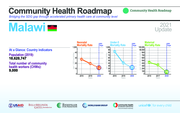
Summary of National Priorities - Malawi
Community Health Roadmap
United States Agency for International Development; Bill & Melinda Gates Foundation; The Rockefeller Foundation; World Bank Group; community health acceleration partnership; unicef
(2021)
CC
Malawi’s first National Community Health Strategy (NCHS, 2017-2022) defines a new community health system in which community health cadres, both formal and non-formal, deliver services of the Essential Health Package, with a focus on child and maternal health. It envisages an integrated approach t
...
o service delivery and is embedded in Malawi’s Health Sector Strategic Plan (HSSPII).
more

Antimicrobial resistance (AMR) is occurring everywhere in the world, compromising the ability to treat infectious diseases, as well as undermining many other advances in health and medicine. Underlying factors that drive AMR include; weak or absent surveillance and monitoring systems, inadequate sys
...
tems to ensure quality and uninterrupted supply of medicines, inappropriate and irrational use of medicines including in animal husbandry, poor infection prevention and control practices, and depleted arsenals of diagnostics, medicines and vaccines as well as insufficient research and development of new products.
more

PLoS Med 16(3): e1002768. https://doi.org/10.1371/journal.pmed.1002768
Home delivery and late and infrequent attendance at antenatal care (ANC) are responsible for substantial avoidable maternal and pediatric morbidity and mortality in sub-Saharan Africa. This cluster-randomized trial aimed to de
...
termine the impact of a community health worker (CHW) intervention on the proportion of women who visit ANC fewer than 4 times during their pregnancy and deliver at home.
more

2nd edition. This second edition builds on the experience of more than 10 years of SMC deployment, and reflects changes introduced in the WHO guidelines for malaria, 3 June 2022. The goal of this publication is to share these best practices to improve SMC implementation, coverage, and monitoring and
...
evaluation. Examples of materials and tools as well as links to resources are included to support managers and health workers in their efforts to conduct successful SMC activities and prevent malaria among vulnerable children.
more
Mozambique was the first country outside of the Sahel to successfully implement seasonal malaria chemoprevention (SMC) on a large scale. This learning paper captures some of the lessons drawn from the implementation process.

Community led-monitoring is based on the principle that «Nothing that is done for us should
be done without us”. The combination of this principle with evidence shows that community-led
monitoring is an important driver of improved service delivery and health outcomes that needs to
be re-empha
...
sized. Thus, the community must participate at all stages of the fight against malaria.
This guide will be useful to CSOs working in the field of malaria in the conduct of community-led
monitoring of activities efficiently and allow these CSOs to know their role and responsibilities in this
exercise at each key stage. This guide will also provide CSOs and communities affected by malaria
with templates of monitoring tools adapted to key malaria programs.
more

The framework recommends expanded coverage of malaria diagnostic and treatment services, intensified vector control to drive down transmission, strengthened malaria surveillance, and increased transborder collaboration, especially in terms of efforts to control the sale and use of artemisinin monoth
...
erapies. Since it is unlikely that national malaria control programs will be able to implement all the activities described in this framework simultaneously, a list of suggested priority activities has been included in the Annex.
more

Consolidated guidelines on person-centred HIV strategic information: strengthening routine data for impact
recommended
These guidelines focus on the collection and use of person-centred data across the HIV cascade – from prevention, testing and treatment to longer-term health care – building upon 2017 and 2020 strategic information guidelines. The updated guidelines present a standard minimum dataset, priority i
...
ndicators and recommendations to strengthen data use across HIV prevention, testing and treatment, and linkages to services for sexually transmitted infections, viral hepatitis, tuberculosis and cervical cancer. The guidelines also cover the use of routinely collected data for HIV surveillance (including measurement of HIV prevalence and incidence) and emphasize the use of data from different sources to gain a better picture of epidemiologic trends.
more

Technical Document
Guidance for Orphans and Vulnerable Children Programs
Recent suspensions and reductions in official development assistance (ODA) have posed significant challenges to HIV programme continuity in several countries. These funding disruptions have impacted people living with HIV and other vulnerable populations
who rely on these essential services, like a
...
ntiretroviral treatment, particularly in settings reliant on external financing . In some cases, governments are stepping in to reestablish services that were previously provided through other sources of funding.
more

National Policy