
Filter
1471
Text search:
registration
of
drugs
Featured
135
499
Language
Document type
938
186
167
71
62
20
11
10
4
2
Countries
156
67
46
46
41
40
39
39
34
32
30
30
29
29
27
27
26
24
23
18
17
17
15
15
14
14
13
12
12
11
11
9
9
8
7
6
5
5
4
4
4
4
4
3
3
3
3
3
3
3
2
2
2
2
2
2
2
2
2
2
2
2
2
2
2
2
2
2
2
1
1
1
1
1
1
1
1
1
1
1
1
1
1
1
1
1
1
1
1
1
1
1
1
1
1
1
1
1
1
1
1
1
1
1
1
1
Authors & Publishers
Publication Years
Category
808
117
60
59
50
26
21
Toolboxes
149
69
67
64
50
42
39
38
33
25
22
22
21
13
12
10
10
9
8
7
6
3
3
2
1
1
Member States have requested WHO policy guidance on how to facilitate the implementation of national AMS activities in an integrated and programmatic approach. This policy guidance responds to that demand from Member States and is anchored in public
...
Operational guidance for managing programme quality.
These guidelines are about implementing the programme-quality standards of the Core Humanitarian Standard in limited access humanitarian response. They have been developed using approaches and to
...

This document provides a systematic approach in developing a coordinated, standardized, reliable, efficient, cost-effective, and sustainable specimen transport and referral system to support IVHD and VL testing networks. This document provides technical and programmatic recommendations on the approp
...

Women and Health Initiative Working Paper No. 1. Women and Health Initiative
Improving maternal health in the context of the sub-Saharan African HIV epidemic requires greater understanding of the ...
Improving maternal health in the context of the sub-Saharan African HIV epidemic requires greater understanding of the ...

Access to NCD medicines: emergent issues during the COVID-19 pandemic and key structural factors
recommended
The coronavirus disease (COVID-19) pandemic exacerbated pre-existing inequalities in the treatment and care of noncommunicable diseases (NCDs). This report examines the effect of the COVID-19 pandem
...

The coronavirus disease (COVID-19) pandemic exacerbated pre-existing inequalities in the treatment and care of noncommunicable diseases (NCDs). This report examines the effect of the COVID-19 pandem
...

Ghana is attracting global attention for efforts to provide health insurance to all citizens through the National Health Insurance Scheme (NHIS). With the program’s strong emphasis on maternal and child health, an expectation of the program is tha
...
Findings from this report reveal that, rates of early marriage are high, a significant percentage of children contribute to the household’s income or are its main source
...
It highlights how proven digital innovation can be replicated to curb the spread of COVID-19 in Africa. It also estimates investment required to implement such high impact solutions.
22 December 2020
The COVID-19 vaccine safety guidance manual has been developed upon recommendation and guidance of GACVS members, as well as by experts incorporating current and available information critical to all stakeholders when COVID-19 vac
...
WHO invites Member States, health facilities and other entities to participate in the global effort to collect anonymized clinical data relating to suspected or confirmed cases of monkeypox and contribute data to the WHO Global Clinical Platform.
...

South Africa has faced many challenges over the past two decades, accomplishing profound positive changes in the social structure and government of the nation. This has not yet fully translated into better health for the population, howeve
...
Cryptococcal disease, particularly cryptococcal meningitis is a significant cause of morbidity and mortality among people living with HIV with advanced HIV disease. It is estimated that it is responsible for nearly 19%
...

Guidelines for Diagnosing and Managing Disseminated Histoplasmosis among People Living with HIV
recommended
Histoplasmosis is a disease caused by the fungus Histoplasma capsulatum. This disease is highly endemic in some regions of North America, Central America, and South America and is also reported in certain countries
...
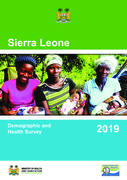
The 2019 SLDHS is a national sample survey that provides up-to-date information on demographic and health indicators. The sample was selected using a stratified, two-stage cluster design, with enumeration areas (EAs) as the sampling units for the first stage. The second stage was a complete listing
...

The military offensive by the Russian Federation in Ukraine which began February 2022 has triggered one of the world’s fastest-growing displacement and humanitarian crisis, with geopolitical and economic ripples felt across the globe. The ongoing
...
As the culminating volume in the DCP3 series, volume 9 will provide an overview of DCP3 findings and methods, a summary of messages and substantive lessons to be taken from DCP3, and a further discu
...
This guide is strongly practice -oriented and intended as an open resource when replicating similar methods of psychosocial care in other projects. It describes the steps in the development of
...

As a public good, antimicrobial medicines require rational use if their effectiveness is to be preserved. However, up to 50% of antibiotic use is inappropriate, adding considerable costs to patient care, and increasing morbidity and mortality. In ad
...

In India, in response to the above and guided by our counterparts in the government of India, the UN agencies have developed the Novel Coronavirus Disease Joint Health Response Plan by UN Agencies and Partners, led by WHO-India, in close collaborati
...
