
Filter
1249
Text search:
drug
utilization
Featured
112
493
Language
Document type
790
190
144
51
40
12
9
8
3
1
Countries
121
69
65
62
48
43
34
34
33
32
32
28
27
27
24
19
16
16
16
14
12
12
12
11
11
10
10
10
8
6
6
6
5
5
5
5
5
4
4
4
4
4
3
3
3
3
3
2
2
2
2
2
2
1
1
1
1
1
1
1
1
1
1
1
1
1
1
1
1
1
1
1
1
1
1
1
1
Authors & Publishers
Publication Years
Category
753
65
64
37
29
12
8
Toolboxes
83
77
71
47
43
41
30
20
18
17
14
14
12
10
9
8
8
6
5
4
3
3
3
1

Intensive Care Med (2009) 35:9–29DOI 10.1007/s00134-008-1336-9
Although thousands of papers have been devoted tohospital-acquired pneumonia (HAP), many controversiesremain, and management of HAP is probably often sub-optimal. Several reviews or guidelines have been pub-lished rec
...
The guidelines are to be used to guide the management of adults with lower respiratory tract infection (LRTI). As will be seen in the following text, this diagnosis, and the other clinical syndromes within this grouping, can be difficult to make accurately. In the absence of agreed definitions of th
...

Antibiotic stewardship refers to coordinated efforts and activities that seek to measure and improve use of antibiotics. Implementation of ASPs has demonstrated positive public health and clinical impacts including reducing costs, lengths of hospital stays, and the burden of antibiotic resistance wh
...

In Kenya, the bacterial infections that contribute most to human disease are often those in which re-‐sistance is most evident. Examples are multidrug-‐resistant enteric bacterial pathogens such as typhoid,
...

Antimicrobial resistance (AMR) has become a global public health concern and Lebanon is of no exception to this issue. The spread of antimicrobial-resistant bacteria is considered an alarming public health threat, with a potential extent similar to global warming and other social and environmental t
...

The National Department of Health and Department of Agriculture, Forestry and Fisheries have collectively engaged to determine the key interventions that will form the basis for this strategy taking into account the recommendations from the WHO and OIE.
The development and implementation of a Natio
...

The goals and objectives of the Sudan National Action Plan on AMR can only be achieved through implementing strategic interventions and activities with all concerned ministries and departments joining hands with other stakeholders to collaboratively tackle these challenges.
4th Edition 2018
National Malaria Elimination & Aedes Transmitted Disease Control Program
Disease Control Unit Directorate General of Health Services
This document compiles best practices in emergency supply chain preparedness so that countries
can respond rapidly and effectively to epidemic and pandemic threats. Such a response requires a well-functioning supply chain

Community-based health care, including outreach and campaigns,in the context of the COVID-19 pandemic
recommended
The COVID-19 pandemic is challenging health systems across the world. Rapidly increasing demand for care of people with COVID-19 is compounded by fear, misinformation and limitations on the movement of people and supplies that disrupt the delivery of frontline health care for all people...
This g
...
In the current absence of vaccine for COVID-19, public health response target breaking the chain of infection by focusing on the mode of transmission. This paper summarizes current evidence-base around the transmission dynamics, pathogenic, and clinical features of COVID-19, to critically identify i
...

1 June 2020
Countries around the world are facing the challenge of increased demand for care of people with COVID-19, compounded by fear, misinformation and limitations on movement that disrupt the delivery of health care for all conditions. Maintaining essential health services: operational guidan
...

While many of the countries hit by the COVID-19 in the first few months of the year are now beginning to relax lockdown measures as infection and death rates fall, in the regions most affected by HIV, TB and malaria, such as Africa, South Asia and Latin America, the pandemic continues to accelerate.
...
Prevention, early diagnosis, and effective treatment are essential for the control and elimination of Neisseria gonorrhoeae as a public health problem. Currently, in Latin America and the Caribbean, treatment for gonorrhea infection is largely empiric and based on clinical diagnosis. In the Americas
...

India is experiencing rapid demographic and epidemiological transitions with NCDs causing significant disability, morbidity and mortality both in urban and rural populations and across all socioeconomic strata. According to the ICMR State Level Disease Burden Initiative, in 2016, NCDs accounted to a
...

As part of our commitment to the fight against NCDs, Nigeria was signatory to the political declaration at the UN General Assembly High Level Meeting on NCDs in September 2011. Thus, the purpose of this document is to develop and ensure the implementation of policies and p
...
Facilitator's Guide
Refresher Training Module for Health Care Providers implementing the MISP
Inter-agency Working Group on Reproductive Health in Crises Training Partnership
Sepsis contributes significantly to preventable mortality and is the final common pathway to death for severe infectious diseases; it can also arise as a complication of injuries and non-communicable diseases.
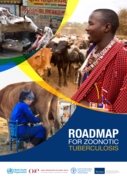
Zoonotic tuberculosis (TB) is a form of TB in people predominantly caused by the bacterial species, Mycobacterium bovis, which belongs to the M. tuberculosis complex. The implications of zoonotic TB go beyond human health. The organism is host-adapted to cattle, where it is refer
...

Integrated Management of Acute Malnutrition National Guidelines
