
Filter
1430
Text search:
inclusion
of
children
with
disabilities
Featured
111
323
Language
Document type
908
208
117
81
67
16
16
11
2
1
1
1
Countries
51
40
39
38
38
32
31
31
29
26
25
25
24
22
21
18
18
17
17
16
15
14
14
13
12
12
12
11
9
9
9
8
8
8
8
7
7
7
7
7
7
7
6
6
6
6
5
5
5
4
4
4
4
4
3
3
3
3
3
3
3
3
2
2
2
2
2
2
2
2
2
2
2
2
2
2
1
1
1
1
1
1
1
1
1
1
1
1
1
1
1
1
1
1
1
1
1
1
1
1
1
1
Authors & Publishers
Publication Years
Category
531
89
82
69
37
17
2
Toolboxes
439
160
115
73
38
37
36
33
23
15
15
13
10
8
7
7
4
4
4
4
4
3
1
1
Distributing immediate, lifesaving assistance is one of the most urgent actions in an emergency response and can significantly improve the safety and wellbeing of individuals. Non-Food Items (NFI
...

The Government of Republic of Zambia reported the first confirmed cases of COVID-19 on 18th March 2020. As
...
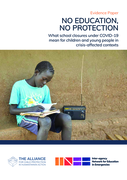
What school closures under COVID-19 mean for children and young people in
crisis-affected contexts

The development of this Operational Roadmap has been driven by a growing consensus in Ukraine on the need to prioritize activities that are urgently required to address the mental health and psychosocial needs
...

The health impact of radiological and nuclear emergencies can last for decades. Lessons learned from past radiological and nuclear accidents have demonstrated that the mental health and psychosocial consequences can outweigh the direct physical heal
...
Transforming Health Systems: Achieving Universal Health Coverage by 2022. The development of the Kenya Health Sector Strategic Plan 2018–2023 is guided by the Constitution of 2010, the Kenya Visio
...
Updated 8 June 2021. Coronavirus is spreading globally. How can individuals, communities, humanitarian actors, local and national authorities best respond to uphold the rights of all affected people?

Guide to national implementation of the Shanghai Declaration describes policy orientations and approaches that can unlock the transformative potential of health promotion for sustainable development
...

This annual report gives an overview of WHO lesotho Country office's undertakings and achievements in the context of an extraordinary health emergency. As we walk another mile this year, may we embr
...
The World Health Organization Disability Assessment Schedule (WHODAS 2.0) is a generic assessment instrument developed by WHO to provide a standardized method for measuring health and disability across cultures. It was developed from a comprehensive set of
...
Oral health is defined as the absence of disease and a status that ensures optimal functioning of the mouth and its tissues in a manner preserving the highest level
...
This document presents a brief overview of how UNHCR adapts its activities for mental health and psychosocial support (MHPSS) to the changing context of the pandemic. Staff
...
Following flood levels of the hydrological stations monitored in Niamey (Niger Republic) and Malan Ville (Benin Republic) reaching the red alert zone, torrential rainfall and ensuing floods affected 91,254 people or 15,209 households in Jigawa, Kebb
...

An essential component of the return process is counselling, which aims to support counselling beneficiaries to make an informed decision on their future migration pathways. Counselling provides the space for migrants to exert their agency, suppo
...
This guide is intended to support teams working directly with communities during the Covid-19 pandemic. It provides general guidance on community engagement during outbreak responses, including how to support an integrated response, as well as outbr
...
Available in: English, French, Chinese, Spanish, Russian, Arabic, Thai, Korean, Tajik, Vietnamese, Uzbek
http://www.who.int/disabilities/cbr/guidelines/en/
This revised and fully updated edition of the
International technical guidance on sexuality education
benefits from a new review of the current evidence, and reaffirms the position
...
The Global Campaign Against Epilepsy “Out of the Shadows”
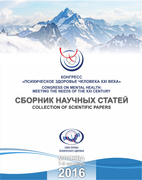
В сборнике представлены статьи специалистов в сфере охраны психического здоровья по различным академическим дисциплинам, включая общую медицину, психиатрию, псиÑ
...

RMRP 2020 - Regional Refugee and Migrant Response Plan for Refugees and Migrants from Venezuela 2020
The Venezuelan refugee and migrant crisis is one of the biggest external displacement crises in the world today. The COVID-19 pandemic has compounded an already desperate situation for many refugees and migrants, as well as their hosts, sorely testi
...
