
Filter
1111
Text search:
foundations
Featured
87
293
Language
Document type
540
255
100
87
75
19
17
8
3
3
2
1
Countries
94
36
23
22
20
18
16
14
14
13
13
13
12
11
10
10
10
10
9
9
9
9
9
9
8
7
7
7
7
6
6
6
5
5
5
5
5
5
5
5
4
4
4
3
3
3
3
3
3
3
2
2
2
2
2
2
2
2
2
2
2
2
2
2
2
2
2
2
2
1
1
1
1
1
1
1
1
1
1
1
1
1
1
1
1
1
1
1
1
1
1
1
1
1
Authors & Publishers
Publication Years
Category
311
91
88
52
38
17
2
Toolboxes
103
72
71
66
45
41
40
40
35
32
30
30
28
28
23
21
21
20
11
10
8
8
6
3
2
The 2019-2023 Strategy for UNU-IIGH, developed in
2018, built on UNU-IIGH’s strategic advantage and
position vis-à-vis the UN and global health ecosystem.
The Strategy set a goal to advance evidencebased policy on key issues related to sustainable
development and health and shifted the Instit
...

Humanitarian crises exacerbate nutritional risks and often lead to an increase in acute malnutrition. Emergencies include both manmade (conflict) and natural disasters (floods, drought, cyclones, typhoons, earthquakes, volcanic eruptions, etc.). Complex emergencies are combinations of both manmade a
...
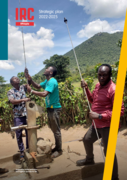
After introducing Ethiopia's WASH sector challenges and trends, the plan describes IRC Ethiopia's vision and strategy which draws from IRC and Water For People's joint framework - Destination 2030. It then details the organisational changes and business development needed to implement the strategic
...

Mental health problems are common and cause great suffering to individuals and communities around the world. They have a significant impact not only on the physical and mental health of those affected but also on their families and the communities they live in. At the same time, all communities have
...
The Global Burden of Disease Study (GBD) began 30 years ago with the goal of providing timely, valid and relevant assessments of critical health outcomes. Over this period, the GBD has become progressively more granular. The latest iteration provides assessments of thousands of outcomes for diseases
...

The purpose of this workbook is to assist ministries of health, health managers and practitioners in engaging with the private sector on delivery of quality maternal, newborn and child health (MNCH) services in lower- and middle-income countries. Private health care is one of the fastest growing seg
...

Evidence-based psychological interventions are an important part of health, social, protection and education services and can help increase access to effective mental health treatments and progression towards universal health coverage.
This manual provides managers and others responsible for plan
...

Diabetes is a serious, chronic disease that occurs either when the pancreas does not produce enough insulin (a hormone that regulates blood sugar, or glucose), or when the body cannot effectively use the insulin it produces. Diabetes is an important public health problem, one of four priority noncom
...

To survive and thrive, children and adolescents need good health, adequate nutrition, security, safety and a supportive clean environment, opportunities for early learning and education, responsive relationships and connectedness, and opportunities for personal autonomy and self-realization. To prom
...

The document "Global Report on Diabetes" by the World Health Organization (WHO) provides an in-depth analysis of diabetes as a global health challenge. It covers the rising prevalence of the disease, the associated risk factors, and the increasing burden on healthcare systems, particularly in low- a
...

Diabetes is a serious, chronic disease that occurs either when the pancreas does not produce enough insulin (a hormone that regulates blood sugar, or glucose), or when the body cannot effectively use the insulin it produces. Diabetes is an important public health problem, one of four priority noncom
...
The document "Diabetes and Ramadan: Practical Guidelines 2021," published by Elsevier, provides updated guidance for managing diabetes during Ramadan fasting. Developed by the International Diabetes Federation (IDF) and the Diabetes and Ramadan (DAR) International Alliance, the guidelines address ke
...

The risk communication and community engagement (RCCE) competency framework is a resource that details the essential behaviours and activities necessary for effective communication and engagement with communities before, during and after public health emergencies. The purpose of this framework is to
...
The article "Time to Align: Development Cooperation for the Prevention and Control of Non-Communicable Diseases" argues for greater international cooperation and investment in addressing non-communicable diseases (NCDs), especially in low- and middle-income countries. Traditionally, global health fu
...

The Global Action Plan for the Prevention and Control of Noncommunicable Diseases 2013-2020 by the World Health Organization (WHO) outlines a comprehensive strategy to address the global rise in noncommunicable diseases (NCDs), including cardiovascular diseases, cancer, chronic respiratory diseases,
...

The document, "Progress on the Prevention and Control of Non-Communicable Diseases," reports on global efforts to reduce the impact of NCDs, such as heart disease, cancer, diabetes, and chronic respiratory diseases, following the commitments made at high-level United Nations meetings. It highlights
...

This document highlights landmarks and key milestones in the development and implementation of the global agenda for noncommunicable diseases (NCDs) over the last two decades. It summarizes where the world was in 2000, where it is in 2022, and where the world wants to be in terms of NCD prevention a
...

Care for persons with noncommunicable diseases (NCDs), such as cardiovascular disease, diabetes, cancer, and chronic obstructive pulmonary disease, is a major health priority for most countries worldwide, particularly for low-middle income countries where the problem seems to be worsening. Globally,
...
Health system resilience is not an inevitable byproduct of any investment in health but must be intentionally programmed and developed with necessary input, investment and contextualization. This technical product aims to guide national, subnational, and global health actors to operationalize the co
...
Risk factors for asthma among schoolchildren who participated in a casecontrol study in urban Uganda
Data on asthma aetiology in Africa are scarce. We investigated the risk factors for asthma among schoolchildren (5–17 years) in urban Uganda. We conducted a case-control study, among 555 cases and 1115 controls. Asthma was diagnosed by study clinicians. The main risk factors for asthma were tertia
...
