
Filter
1611
Text search:
salud
infantil
Featured
75
494
Language
Document type
852
252
203
83
57
56
48
16
15
13
8
4
2
Countries
88
80
66
60
59
56
50
44
42
41
41
39
38
38
33
31
31
28
27
26
25
22
21
20
19
19
19
18
17
17
16
16
14
13
13
13
12
11
10
9
8
8
7
7
7
7
6
6
6
6
6
6
6
5
5
5
5
5
5
4
4
4
4
4
3
3
3
3
2
2
2
2
2
2
2
2
2
2
2
2
2
2
1
1
1
1
1
1
1
1
1
1
1
1
1
1
1
1
1
Authors & Publishers
Publication Years
Category
1112
306
85
40
30
26
1
Toolboxes
123
106
71
64
34
30
20
20
20
17
16
15
9
9
7
7
7
6
5
4
3
3
2
1
UNICEF Syria’s series of think pieces. Every day counts. An outlook on child protection for the most vulnerable children in Syria.To navigate the complex and continuously changing context and attain sustainable results for children, UNICEF – along with other UN agencies - seeks to make a shift i
...

This global progress report attempts to lay the groundwork for the kind of accelerated action needed. Section 1 presents key data, trends and developments in women’s, children’s and adolescents’ health and well-being. That is followed in Section 2 by a deeper dive into the impact of the COVID-
...
Le Nigéria a signalé son premier cas de COVID-19 vers fin février 2020. Le pays a ensuite connu quatre vagues de
contaminations avec des pics en juin 2020, janvier 2021, août 2021 et décembre 2021. La pandémie de COVID-19
a eu de graves conséquences sur l’économie du Nigéria et a entraÃ
...
Nigeria reported its first case of COVID-19 at the end of February 2020 and subsequently experienced
four waves, with peaks in June 2020 and January, August and December 2021. The COVID-19 pandemic
severely impacted the economy of Nigeria and caused disruption of health services nationwide. During
...
En 2014, le taux de mortalité maternelle au Cambodge était estimé à 170 décès pour 100 000 naissances vivantes, et le taux de mortalité néonatale à 18 décès pour 1000 naissances vivantes, selon l’enquête démographique et de santé menée au Cambodge en 2014 . Ces chiffres signifient q
...

The African Regional Convening of the Global Initiative to Support Parents (GISP) stimulated the interest or engagement of almost 1500 individuals from 742 unique organizations in the fields of health, education, social welfare, women’s affairs, early childhood, water and sanitation, mental health
...

There has been important progress for the rights of adolescent girls and women in recent decades, yet millions still struggle to
access the nutritious diets, essential nutrition services and nutrition and care practices they need to prevent malnutrition.
Undernutrition, micronutrient deficiencies
...

UNFPA has been implementing programming for women and girls through Women Friendly Health Spaces (WFHSs), which provide access to critical services, information and support. The WFHS is providing: psychosocial counseling services; awareness raising sessions on PSS in the community; and life skills &
...
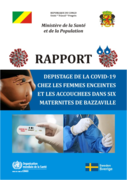
La prévalence de la covid -19 chez la femme enceinte et les accouchées semble être faible. Elles étaient asymptomatiques et le pronostic maternel était satisfaisant. Néanmoins, le risque de for.pdf
The Children’s Cardiac Foundation deals with a wide rage of stakeholders from parents of children affected by CHD, to corporates and grant makers. Before contacting us, please read the relevant sections below as your questions may have already been answered.

The purpose of this workbook is to assist ministries of health, health managers and practitioners in engaging with the private sector on delivery of quality maternal, newborn and child health (MNCH) services in lower- and middle-income countries. Private health care is one of the fastest growing seg
...

To survive and thrive, children and adolescents need good health, adequate nutrition, security, safety and a supportive clean environment, opportunities for early learning and education, responsive relationships and connectedness, and opportunities for personal autonomy and self-realization. To prom
...
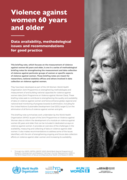
This briefing note summarizes work undertaken by UN Women and WHO to inform the development of a module on violence against women 60 years and older that can be included in dedicated surveys on violence against women. It provides an overview of the challenges in the availability, measurement, and co
...
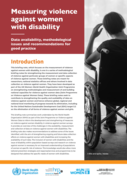
Developed as part of the UN Women–WHO Global Joint Programme on Violence Against Women Data, this briefing note focuses on the measurement of violence against women with disability and is one in a series of methodological briefing notes for strengthening the measurement and data collection of viol
...
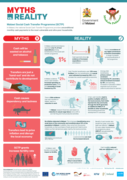
In Malawi, the national Social Cash Transfer Programme provides unconditional monthly cash payments to the most vulnerable and ultra-poor households.
Malawi is a small and beautiful country in south-central Africa. It is divided into three administrative regions: south, central and north. The regions are further subdivided into 28 districts. The Southern Region is the most densely populated, while the Northern Region is the least populated.
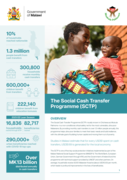
The Social Cash Transfer Programme (SCTP)—locally known in Chichewa as Mtukula Pakhomo—is a non-conditional critical safety net for the most vulnerable, ultra-poor Malawians. By providing monthly cash transfers to over 1.3 million people annually, this programme helps ultra-poor families to meet
...
There has been a rapid expansion of cash-based, social protection programmes in sub-Saharan Africa (SSA) in recent years as Governments increasingly realise the enormous benefits cash transfers offer (World Bank, 2018). In fact, as an investment in human capital and inclusive economic development,
...
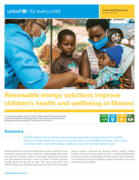
UNICEF Malawi and its partners are prioritizing renewable energy solutions for children and communities across the country to access clean and affordable electricity, with a focus on hard-to-reach, rural communities unable to access the national electricity grid.
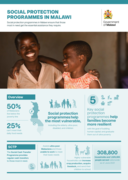
Social protection programmes in Malawi ensure that those most in need get the essential assistance they require.Social protection programmes help the most vulnerable, including the elderly, ultra-poor, disabled, and children
