
Filter
2401
Text search:
united
kingdom
Featured
245
490
Language
2292
91
64
60
39
26
23
20
11
6
6
6
5
5
4
4
4
3
3
3
3
3
3
3
3
2
2
2
2
2
2
2
2
1
1
1
1
1
1
1
1
1
1
1
1
1
1
1
Document type
1067
572
381
160
80
52
47
18
9
6
3
1
1
1
Countries
177
110
41
37
34
33
31
30
29
27
26
25
25
24
24
24
23
22
21
21
20
20
19
17
17
16
15
15
14
14
13
13
13
13
12
12
11
11
11
11
9
8
7
7
7
6
6
6
6
6
5
5
5
4
4
4
4
4
4
4
4
3
3
3
3
3
3
3
3
3
3
3
3
2
2
2
2
2
2
2
2
2
2
2
2
2
2
2
2
2
2
2
2
1
1
1
1
1
1
1
1
1
1
1
1
1
1
1
1
1
1
1
1
1
1
1
1
1
1
1
1
1
Authors & Publishers
560
150
97
90
72
59
31
31
25
24
23
16
15
15
14
13
12
11
11
10
10
10
10
9
9
8
8
8
8
8
8
7
7
7
7
7
7
7
6
6
6
6
6
6
6
6
6
5
5
5
5
5
5
5
5
5
5
5
4
4
4
4
4
4
4
4
4
4
4
4
4
4
4
4
4
4
4
4
3
3
3
3
3
3
3
3
3
3
3
3
3
3
3
3
3
3
3
3
3
3
3
3
3
3
3
3
3
3
3
3
3
3
3
3
2
2
2
2
2
2
2
2
2
2
2
2
2
2
2
2
2
2
2
2
2
2
2
2
2
2
2
2
2
2
2
2
2
2
2
2
2
2
2
2
2
2
2
2
2
2
2
2
2
2
2
2
2
2
2
2
2
2
2
2
2
2
2
2
2
2
2
2
2
2
2
2
2
2
2
2
2
2
2
2
2
2
2
2
2
2
2
2
2
2
2
2
2
2
2
2
2
2
2
1
1
1
1
1
1
1
1
1
1
1
1
1
1
1
1
1
1
1
1
1
1
1
1
1
1
1
1
1
1
1
1
1
1
1
1
1
1
1
1
1
1
1
1
1
1
1
1
1
1
1
1
1
1
1
1
1
1
1
1
1
1
1
1
1
1
1
1
1
1
1
1
1
1
1
1
1
1
1
1
1
1
1
1
1
1
1
1
1
1
1
1
1
1
1
1
1
1
1
1
1
1
1
1
1
1
1
1
1
1
1
1
1
1
1
1
1
1
1
1
1
1
1
1
1
1
1
1
1
1
1
1
1
1
1
1
1
1
1
1
1
1
1
1
1
1
1
1
1
1
1
1
1
1
1
1
1
1
1
1
1
1
1
1
1
1
1
1
1
1
1
1
1
1
1
1
1
1
1
1
1
1
1
1
1
1
1
1
1
1
1
1
1
1
1
1
1
1
1
1
1
1
1
1
1
1
1
1
1
1
1
1
1
1
1
1
1
1
1
1
1
1
1
1
1
1
1
1
1
1
1
1
1
1
1
1
1
1
1
1
1
1
1
1
1
1
1
1
1
1
1
1
1
1
1
1
1
1
1
1
1
1
1
1
1
1
1
1
1
1
1
1
1
1
1
1
1
1
1
1
1
1
1
1
1
1
1
1
1
1
1
1
1
1
1
1
1
1
1
1
1
1
1
1
1
1
1
1
1
1
1
1
1
1
1
1
1
1
1
1
1
1
1
1
1
1
1
1
1
1
1
1
1
1
1
1
1
1
1
1
1
1
1
1
1
1
1
1
1
1
1
1
1
1
1
1
1
1
1
1
1
1
1
1
1
1
1
1
1
1
1
1
1
1
1
1
1
1
1
1
1
1
1
1
1
1
1
1
1
1
1
1
1
1
1
1
1
1
1
1
1
1
1
1
1
1
1
1
1
1
1
1
1
1
1
1
1
1
1
1
1
1
1
1
1
1
1
1
1
1
1
1
1
1
1
1
1
1
1
1
1
1
1
1
1
1
1
1
1
1
1
1
1
1
1
1
1
1
1
1
1
1
1
1
1
1
1
1
1
1
1
1
1
1
1
1
1
1
1
1
1
1
1
1
1
1
1
1
1
1
1
1
1
1
1
1
1
1
1
1
1
1
1
1
1
1
1
1
1
1
1
1
1
1
1
1
1
1
1
1
1
1
1
1
1
1
1
1
1
1
1
1
1
1
1
1
1
1
1
1
1
1
1
1
1
1
1
1
1
1
1
1
1
1
1
1
1
1
1
1
1
1
1
1
1
1
1
1
1
1
1
1
1
1
1
1
1
1
1
1
1
1
1
1
1
1
1
1
1
1
1
1
1
1
1
1
1
1
1
1
1
1
1
1
1
1
1
1
1
1
1
1
1
1
1
1
1
1
1
1
1
1
1
1
1
1
1
1
1
1
1
1
1
1
1
1
1
1
1
1
1
1
1
1
1
1
1
1
1
1
1
1
1
1
1
1
1
1
1
1
1
1
1
1
1
1
1
1
1
1
1
1
1
1
1
1
1
1
1
1
1
1
1
1
1
1
1
1
1
1
1
1
1
1
1
1
1
1
1
1
1
1
1
1
1
1
1
1
1
1
1
1
1
1
1
1
1
1
1
1
1
1
1
1
1
1
1
1
1
1
1
1
1
1
1
1
1
1
1
1
1
1
1
1
1
1
1
1
1
1
1
1
1
1
1
1
1
1
1
1
1
1
1
1
1
1
1
1
1
1
1
1
1
1
1
1
1
1
1
1
1
1
1
1
1
1
1
1
1
1
1
1
1
1
1
1
1
1
1
1
1
1
1
1
1
1
1
1
1
1
1
1
1
1
1
1
1
1
1
1
1
1
1
1
1
1
1
1
1
1
1
1
1
1
1
1
1
1
1
1
1
1
1
1
1
1
1
1
1
1
1
1
1
1
1
1
1
1
1
1
1
1
1
1
1
1
1
1
1
1
1
1
1
1
1
1
1
1
1
1
1
1
1
1
1
1
1
1
1
1
1
1
1
1
1
1
1
1
1
1
1
1
1
1
1
1
1
1
1
1
1
1
1
1
1
1
1
1
1
1
1
1
1
1
1
1
1
1
1
1
1
1
1
1
1
1
1
1
1
1
1
1
1
1
1
1
1
1
1
1
1
1
1
1
1
1
1
1
1
1
1
1
1
1
1
1
1
1
1
1
1
1
1
1
1
1
1
1
1
1
1
1
1
1
1
1
1
1
1
1
1
1
1
1
1
1
1
1
1
1
1
1
1
1
1
1
1
1
1
1
1
1
1
1
1
1
1
1
1
1
1
1
1
1
1
1
1
1
1
1
1
1
1
1
1
1
1
1
1
1
1
1
1
1
1
1
1
1
1
1
1
1
1
1
1
1
1
1
1
1
1
1
1
1
1
1
1
1
1
1
1
1
1
1
1
1
1
1
1
1
1
1
1
1
1
1
1
1
1
1
1
1
1
1
1
1
1
1
1
1
1
1
1
1
1
1
1
1
1
1
1
1
1
1
1
1
1
1
1
1
1
1
1
1
1
1
1
1
1
1
1
1
1
1
1
1
1
1
1
1
1
1
1
1
1
1
1
1
1
1
1
1
1
1
1
1
1
1
1
1
1
1
1
1
1
1
1
1
1
1
1
1
1
1
1
1
1
1
1
1
1
1
1
1
1
1
1
1
1
1
1
1
1
1
1
1
1
1
1
1
1
1
1
1
1
1
1
1
1
1
1
1
1
1
1
1
1
1
1
1
1
1
1
1
1
1
1
1
1
1
1
1
1
1
1
1
1
1
1
1
1
1
1
1
1
1
1
1
1
1
1
1
1
1
1
1
1
1
1
1
1
1
1
1
1
1
1
1
1
1
1
1
1
1
1
1
1
1
1
1
1
1
1
1
1
1
1
1
1
1
1
1
1
1
1
1
1
1
1
1
1
1
1
1
1
1
1
1
1
1
1
1
1
1
1
1
1
1
1
1
1
1
1
1
1
1
1
1
1
1
1
1
1
1
1
1
1
1
1
1
1
1
1
1
1
1
1
1
1
1
1
1
1
1
1
1
1
1
1
1
1
1
1
1
1
1
1
1
1
1
1
1
1
1
1
1
1
1
1
1
1
1
1
1
1
1
1
1
1
1
1
1
1
1
1
1
1
1
1
1
1
1
1
1
1
1
1
1
1
1
1
1
1
1
1
1
1
1
1
1
1
1
1
1
1
1
1
1
1
1
1
1
1
1
1
1
1
1
1
1
1
1
1
1
1
1
1
1
1
1
1
1
1
1
1
1
1
1
1
1
1
1
1
1
1
1
1
1
1
1
1
1
1
1
1
1
1
1
1
1
1
1
1
1
1
1
1
1
1
1
1
1
1
1
1
1
1
1
1
1
1
1
1
1
1
1
1
1
1
1
1
1
1
1
1
1
1
1
1
1
1
1
1
1
1
1
1
1
1
1
1
1
1
1
1
1
1
1
1
1
1
1
1
1
1
1
1
1
1
1
1
1
1
1
1
1
1
1
1
1
1
1
1
1
1
1
1
1
1
1
1
1
1
1
1
1
1
1
1
1
1
1
1
Publication Years
954
1270
160
14
1
1
1
Category
566
231
161
151
151
49
35
Toolboxes
299
221
138
98
94
89
84
76
71
70
68
66
65
63
62
50
45
38
32
26
22
21
11
10
8

The sixteenth meeting of the Strategic and Technical Advisory Group for Neglected Tropical Diseases (STAG-NTD) was held as a hybrid meeting, 27–28 September 2022.
Dr Ren Minghui, Assistant Director-General, Universal Health Coverage/Communicable and Noncommunicable Diseases, welcomed participan
...
ts to the meeting. He said the World Health Organization’s Department of Control of Neglected Tropical Diseases (WHO/NTD) was in a state of transition. Following the death of the late esteemed Director Dr Mwelecele Ntuli Malecela earlier in the year, Dr Gautam Biswas had taken over as Acting Director but would soon retire; the appointment of a new Director was under way. Owing to rotation of STAG-NTD members, this would be the last meeting for some and the first meeting for several new participants. The work however would continue with the same commitment. Discussions over the next two days would focus on critical issues regarding recovery of NTD services following the disruptions caused by coronavirus disease (COVID-19), which had impacted many health services worldwide. He looked forward to receiving the advice and guidance of STAG-N
more

Despite the significant role of vector control in national leishmaniasis control programmes, the programmatic community perceives vector control as the weakest component of leishmaniasis control strategies in terms of resources, scientific evidence of the usefulness of interventions and capacity for
...
quality-assured implementation. Therefore, the main objective of this manual is to provide practical tools, techniques and procedures to strengthen sand fly control and surveillance in order to improve implementation of leishmaniasis control programmes. The manual provides a rationale for programme managers in different geographical regions on the types of vector control interventions to be used in different epidemiological and environmental settings and also how to measure their impact.
more
This strategy defines the World Health Organization (WHO) vision and framework for supporting Member States to accelerate the development, implementation and monitoring of their National Action Plan for Health Security (NAPHS) from 2022 to 2026. The National Action Plan for Health Security (NAPHS)
...
are critical to ensure national capacities in health emergency prevention, preparedness, response and recovery are planned, built, strengthened and sustained in order to achieve national, regional and global health security and therefore keep the world safe, serve the vulnerable and promote health.
The strategy promotes, where existing, the use of existing national action plans for health security and not necessary the creation of an additional unique plan. This will avoid duplication and ensure maximum efficiency in domestic resourcing and operationalization efficiency while harnessing external buy-in to support national health priorities.
more

Pharmaceutical News
Evaluation of Saccharide Content of the WHO 2nd International Standard for Haemophilus Influenzae Polysaccharide Polyribosyl Ribitol Phosphate (PRP) by HPAECPAD Analysis Following Acid Hydrolysis
Consultation Documents
Lamivudine and tenofovir disoproxil fumarate tablets (lami
...
vudini et tenofoviri disoproxili fumarati compressi)
Tenofovir disoproxil fumarate tablets (tenofoviri disoproxili fumarati compressi)
ATC/DDD Classification
Temporary
Final
more

April 2022 Volume 35 Issue 2 e00152-21
Population movements have turned Chagas disease (CD) into a global public health problem. Despite the successful implementation of subregional initiatives to control vectorial and transfusional Trypanosoma cruzi transmission in Latin American settings where t
...
he disease is endemic, congenital CD (cCD) remains a significant challenge. In countries where the disease is not endemic, vertical transmission plays a key role in CD expansion and is the main focus of its control. Although several health organizations provide general protocols for cCD control, its management in each geopolitical region depends on local authorities, which has resulted in a multitude of approaches. The aims of this review are to (i) describe the current global situation in CD management, with emphasis on congenital infection, and (ii) summarize the spectrum of available strategies, both official and unofficial, for cCD prevention and control in countries of endemicity and nonendemicity. From an economic point of view, the early detection and treatment of cCD are cost-effective. However, in countries where the disease is not endemic, national health policies for cCD control are nonexistent, and official regional protocols are scarce and restricted to Europe. Countries of endemicity have more protocols in place, but the implementation of diagnostic methods is hampered by economic constraints. Moreover, most protocols in both countries where the disease is endemic and those where it is not endemic have yet to incorporate recently developed technologies. The wide methodological diversity in cCD diagnostic algorithms reflects the lack of a consensus. This review may represent a first step toward the development of a common strategy, which will require the collaboration of health organizations, governments, and experts in the field.
more

Access to health workers who are fit for purpose, motivated and protected is a fundamental force of health service delivery and the achievement of universal health coverage and the health and health-related Sustainable Development Goals. Data and knowledge of the distribution, skill mix and future d
...
evelopment needs of the health workforce can mean the difference between enabling or impeding health systems performance, inclusive economic growth and global health security preparedness and response
more
The introduction of vaccines for coronavirus disease 2019 (COVID-19) added another measure to the existing set of
recommended preventive measures (wearing a mask in public, keeping a distance from other people and regular handwashing). The roll-out of the vaccines, however, raised concerns that vac
...
cination may lead to lower adherence to the existing
preventive measures. The advice from the World Health Organization (WHO) was to continue these public health and
social measures after being vaccinated.1 However, evidence from other epidemics suggests that there is lower adherence to
preventive measures when some level of protection exists (for example, individuals who use human immunodeficiency virus
pre-exposure prophylaxis
more

Schistosomiasis is a public health problem in tropical and subtropical regions of Africa, Asia, the Caribbean and South America. It is one of the neglected tropical diseases (NTDs) - a group of diseases and conditions that affect particularly low-income populations, worldwide.
Last year, WHO laun
...
ched a new road map for 2021-2030 that aims to end the suffering from NTDs by 2030, in line with the Sustainable Development Goals. The road map specifically targets the elimination of schistosomiasis as a public health problem, globally.
This guideline provides evidence-based recommendations in the following areas: prevalence thresholds, target age groups and frequency of PC, establishment of WASH and snail control activities to support control and elimination of schistosomiasis, diagnostic tests for the assessment of schistosomiasis infection in animal reservoirs, in snail hosts, and in humans.
more
This guideline provides evidence-based recommendations on parenting interventions for parents and caregivers of children aged 0–17 years that are designed to reduce child maltreatment and harsh parenting, enhance the parent–child relationship, and prevent poor mental health among parents and emo
...
tional and behavioural problems among children.
more

Yaws is a disfiguring non-venereal disease caused by infection with the spirochaete. Treponema pallidum subspecies pertenue which is closely related to the causative agent of syphilis and those of the other endemic treponematoses, bejel and pinta. The disease is endemic in certain areas of the World
...
Health Organization (WHO) African, South-East Asia and Western Pacific regions. Of the neglected tropical diseases identified for elimination and eradication, yaws is one of two diseases targeted for eradication. In 1949, the Second World Health Assembly adopted resolution WHA2.36, which addresses yaws, bejel and pinta as major public health problems that need attention.
more
Background: The World Health Organization (WHO) published a clinical case definition of post COVID-19
condition, by a Delphi consensus, on 6 October 2021. That process concluded that a separate definition
may be applicable for children. It is important to understand the frequency, characteristics
...
and risk factors
that lead to post COVID-19 condition, along with its impact on everyday functioning and development of
children and adolescents. Long-term outcomes of the condition are currently unknown and need to be
studied. For these reasons, a globally standardized clinical case definition is needed.
Aim: To develop a globally relevant standardized clinical case definition for children and adolescents by
building on the WHO clinical case definition for post COVID-19 condition in adults.
more
The Onchocerciasis Control Programme in West Africa (OCP) undertook regional and large scale frght against onchocerciasis in West Africa in 1974 using a vector control strategy. By 2002 OCP had succeeded in eliminating the disease as a public health, socio-economic and development problem in 10 out
...
of I I countries. This campaign was highly technical and expensive. ln 1987, Merck & Co.,lnc. committed themselves to provide ivermectin free of charge for as long as needed to onchocerciasis endemic countries. This made it possible to envrsage the extension of onchocerciasis control activities to the remaining endemic countries in Africa.
more
Antimicrobial resistance (AMR) as a serious public health threat was globally acknowledged by WHO in 2015, through the launch of the Global Action Plan (GAP). With a limited number of new antibiotics in the developmental pipeline, many countries are in the process of establishing strategies for anti
...
microbial stewardship (AMS). Within each country, different healthcare challenges have
contributed to AMR. This has also shaped individual AMS strategies and policies. In South Africa (SA), there is a high burden of infectious diseases, mainly of bacterial origin. In addition, SA also has the highest number of people living with
human immunodeficiency virus (HIV) globally. According to the 2019 statistics, there are approximately 7.97 million people living with HIV in SA. Together with this, SA has the fourth largest tuberculosis population globally.
Other important challenges include poverty, malnutrition, a high burden of non-communicable diseases, and a dire shortage of trained healthcare professionals (e.g. clinicians, pharmacists, and nurses).
more

World Health Organization. (2021). Minimum technical standards and recommendations for reproductive, maternal, newborn and child health care for emergency medical teams. World Health Organization.
Training in monitoring and epidemiological assessment of mass drug administration for eliminating lymphatic filariasis: learners’ guide. World Health Organization.
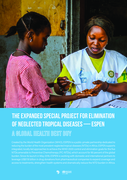
While virtually unheard of in developed countries, NTDs are a group of medically diverse parasitic and bacterial infectious diseases common in tropical and subtropical areas. NTDs affect more than 1.5 billion people annually, causing death, blindness, disfigurement, chronic pain, cognitive impairmen
...
t and other long-term disabilities that create obstacles to education, employment, economic growth and overall
development. When measured in disability-adjusted life years (DALYs), the NTD burden is greater than malaria or tuberculosis.
more
The chapter Dementia in Latin America and the Caribbean: Prevalence, Incidence, Impact, and Trends over Time, is part of the publication series titled “Decade of Healthy Aging: situation and challenges”. This document aims to provide an outline of the current situation in Latin America and the C
...
aribbean in respect of the prevalence and incidence of dementia and its impact on the health status of older people. As dementia is a significant global health problem which also has social and economic impacts this document highlights the importance of monitoring dementia in the region. The document evidences that dementia is one of the main contributors to dependence and disability in older people in Latin America and the Caribbean and, although its prevalence and incidence increase exponentially with age, it is not part of normal aging. Alzheimer’s disease is the most common dementia, and there is no cure for this condition, but with timely diagnosis is possible to ameliorate symptoms. It is important to assess what are the needs of people leaving with dementia and their families and to integrate dementia risk reduction strategies in pre-existing strategies for other non-communicable diseases. As shown in the report, despite the huge burden dementia is still underdiagnosed, and it is fundamental to better monitor its prevalence, incidence and the different societal impact that dementia can have. For that, it is crucial to promote the use of harmonized methodologies to address this information in a broader number of studies and countries in the region. This can contribute to the generation of direct actions to decrease dementia risk and lead to healthier lives for people with dementia and their families.
more
Following the publication of Guidelines on certification of elimination of human onchocerciasis in 2001 by the World Health Organization (WHO), these are the first evidence-based guidelines developed by NTD Department according to the international standards. They provide a set of recommendations th
...
at would guide national programme managers in collaboration with their respective oversight committees on when to stop mass drug administration (MDA) and conduct post-treatment surveillance (PTS) activities for a minimum period of 3 to 5 year before confirming the interruption of transmission of Onchocerca volvulus parasite and hence its elimination. They also include steps to undertake for verification of elimination of transmission of the parasite in the whole endemic country by the International Verification Team (IVT) prior to the official acknowledgement by WHO Director General.
more

This publication is a compendium of 49 country examples highlighting efforts in improving refugees’ and migrants’ health following the adoption of the WHO Global Action Plan on Promoting the health of refugees and migrants at the seventy-second World Health Assembly, in May 2019.

This bulletin focuses on the situation in Ukraine and several key refugee-receiving countries (Bulgaria, Czechia, Hungary, Poland, Republic of Moldova, Romania, and Slovakia), with the understanding that other countries in the European Region are also receiving Ukrainian refugees and WHO is pr
...
oviding technical support to them.
more
