
Filter
10111
Text search:
risk
population
Featured
Recommendations
798
New Publications
2618
Language
Document type
No document type
5453
Studies & Reports
1970
Guidelines
1168
Manuals
500
Strategic & Response Plan
384
Fact sheets
280
Training Material
136
Situation Updates
117
Infographics
46
Resource Platforms
31
Brochures
11
Online Courses
7
Dashboards/Maps
1
App
1
Videos
1
Countries / Regions
Global
457
India
410
Kenya
268
Ethiopia
213
Nepal
192
Sierra Leone
188
Myanmar / Burma
188
Western and Central Europe
188
South Africa
185
Nigeria
184
Uganda
176
Liberia
160
Africa
145
Bangladesh
144
Latin America and the Carribbean
141
Syria
136
Malawi
135
Rwanda
134
Zambia
129
Tanzania
125
Ukraine
123
Congo, Democratic Republic of
113
Ghana
104
Namibia
93
Philippines
86
South Sudan
83
Zimbabwe
76
Mozambique
72
Eastern Europe
72
Senegal
71
South–East Asia Region
70
Indonesia
68
Haiti
67
Lesotho
67
Cambodia
65
Asia
64
West and Central Africa
60
East and Southern Africa
58
Yemen
55
Guinea
54
Venezuela
50
Burkina Faso
47
Brazil
47
Russia
44
Middle East and North Africa
42
Botswana
41
Germany
40
Pakistan
38
Afghanistan
35
Central African Republic
35
Cameroon
33
Colombia
31
Eastern Europe and Central Asia
31
Lebanon
26
Sudan
26
Mali
25
Eswatini/ Swaziland
25
Somalia
24
Jordan
24
Benin
24
Madagascar
23
Vietnam
21
Thailand
20
Tajikistan
18
Iraq
17
Western Pacific Region
17
China
16
Paraguay
16
USA
15
Albania
15
Moldova
15
Côte d’Ivoire / Ivory Coast
14
Sri Lanka
14
Niger
13
North America
13
Palestine
12
Laos
12
Turkey
11
Burundi
11
Chile
11
Georgia
11
Chad
10
Peru
10
Egypt
9
Greece
9
Papua New Guinea
8
North Macedonia
8
Ecuador
8
Iran
8
Togo
7
Argentina
7
El Salvador
7
Libya
7
Angola
7
Mexico
7
Armenia
7
Kyrgyzstan
7
United Kingdom
7
Guinea-Bissau
6
Saudi Arabia
6
Bolivia
6
Guatemala
6
Timor Leste/ East Timor
6
Hungary
5
Honduras
5
Poland
5
Southern Africa
5
Turkmenistan
5
France
5
Spain
5
Belarus
5
Gambia
4
Malaysia
4
Serbia
4
Bhutan
4
Italy
4
Canada
4
Romania
4
Kazakhstan
4
Jamaica
4
Tunisia
4
Portugal
4
Morocco
3
Singapore
3
Croatia
3
Djibouti
3
Uzbekistan
3
Japan
3
Mauritius
3
Bosnia and Herzegovina
3
Vanuatu
2
Dominican Republic
2
Switzerland
2
Nicaragua
2
Other region
2
North Korea
2
Mongolia
2
Congo-Brazzaville
2
Qatar
2
Bulgaria
2
Lithuania
2
Azerbaijan
2
Israel
2
Mauritania
1
Ireland
1
Fiji
1
Solomon Islands
1
Estonia
1
Slovakia
1
Gabon
1
Uruguay
1
Denmark
1
Belgium
1
Maldives
1
Norway
1
Latvia
1
Belize
1
Costa Rica
1
Panama
1
Authors & Publishers
Publication Years
Category
Countries
3830
Clinical Guidelines
651
Key Resources
576
Public Health
515
Women & Child Health
482
Capacity Building
160
Pharmacy & Technologies
67
Annual Report MEDBOX
3
Toolboxes
COVID-19
899
HIV
867
Mental Health
792
TB
509
Planetary Health
410
Conflict
322
Disability
313
NTDs
301
Ebola & Marburg
267
NCDs
225
Caregiver
204
AMR
202
Refugee
187
Rapid Response
173
Global Health Education
171
Natural Hazards
155
Malaria
127
Health Financing Toolbox
116
Pharmacy
111
2.0 Rapid Response
104
Cholera
77
Zika
72
Polio
55
Specific Hazards
54
Social Ethics
22
Typhoon
11
South Sudan
3

This document by Medicines for Malaria Venture (MMV) highlights the significant burden of malaria on children worldwide, emphasizing the need for effective prevention, diagnosis, and treatment strategies. It reviews current challenges and progress in combating pediatric malaria, advocating for conti
...

The WHO guidelines for malaria bring together the Organization’s most up-to-date recommendations for malaria in one user-friendly and easy-to-navigate online platform.
The WHO guidelines for malaria bring together the Organization’s most up-to-date recommendations for malaria in one user-frie
...

The purpose of this guide is to provide updated clinical guidance on TB/HIV, with an emphasis on diagnostic aspects—including new techniques—as well as current treatment, while maintaining a public health approach. By compiling and consolidating the latest World Health Organization recommendatio
...

Community led-monitoring is based on the principle that «Nothing that is done for us should
be done without us”. The combination of this principle with evidence shows that community-led
monitoring is an important driver of improved service delivery and health outcomes that needs to
be re-empha
...

Pillar 3 of the Global technical strategy for malaria 2016–2030 calls for the transformation of malaria surveillance into a core intervention in all malaria-endemic countries, as well as in countries which have eliminated malaria but remain susceptible to re-establishment of transmission. This ref
...
Depuis 2010, la lutte contre le paludisme a permis de réaliser des progrès majeurs grâce à la distribution de moustiquaires, au diagnostic rapide, aux traitements à base d'artémisinine (ACT) et aux interventions préventives ciblées.

This handbook is designed to provide essential information as well as quick tips to improve foot care for people with dark skin tone living with diabetes.
Las enfermedades no transmisibles (ENT), entre las que se incluyen lasenfermedades cardiovasculares (ECV), el cáncer, las enfermedades respiratoriascrónicas (ERC) y la diabetes, son las principales causas de muerte y discapacidaden la Región de las Américas. En el 2021, las ENT ocasionaron 6 mil
...
MEDBOX Annual Report 2024
recommended
The MEDBOX Annual Report provides an overview of the most important projects of the past year

The 2022 report reviews the global malaria diagnostics market and technological landscape to support Unitaid’s 2023–2027 strategy for quality malaria case management. The report highlights the stalled progress of malaria control efforts, the gaps in access to diagnostics and the public health im
...

To guide the provision of quality palliative care services across the African region, the African Palliative Care Association (APCA) has developed a framework of core palliative care competencies that can be used by service providers, educators and other stakeholders to guide programmes development.
...

To contribute to the availability of basic knowledge and skills for the provision of palliative care in
the African region, the African Palliative Care Association (APCA) has developed a competencybased core curriculum framework for use in introductory training on palliative care. The curriculum
...

The African Palliative Care Association is pleased to publish the first edition of Palliative Care Standards for Africa. The development of these standards was achieved through wide consultation with service beneficiaries and providers, and they have been developed to suit different levels of
...

In the absence of a such a measure, and building on the success of developing the APCA African
Palliative Outcome Scale (POS) for adults, the African Palliative Care Association has developed the
APCA African Children’s POS. The tool has been validated across diseases, countries, settings and
...
In this guide, the African Palliative Care Association (APCA) has put together evidence‑based information on the use of specific opioids commonly used in the management of moderate‑to‑severe pain to manage both cancer and non‑cancer pain. APCA hopes that this guide will be a useful tool i
...
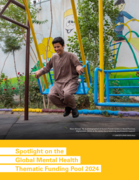
Promoting and protecting the mental health and psychosocial wellbeing of children, adolescents, and their caregivers remains undamental to achieving the Sustainable Development Goals (SDGs), with a direct contribution to SDG 3 (Good Health and Well- eing). In 2024, UNICEF accelerated the scale-up o
...

This Toolkit for ensuring rights-based and ethical use of digital technologies in HIV and health programmes is derived from the comprehensive UNDP Guidance on the rights-based and ethical use of digital technologies in HIV and health programmes document. The foundational UNDP Guidance document outli
...
AIDS Behav. 2022 Feb;26(2):375-384.doi: 10.1007/s10461-021-03391.
A community health worker (CHW) model can promote HIV prevention and treatment behaviors,
especially in highly mobile populations. In a fishing community in Rakai, Uganda, the Rakai
Health Sciences Program implemented a communit
...


A job aid for cadres supporting adolescents living with HIV (ages 15-19) in Orphans and Vulnerable
Children (OVC) Programs
