
Filter
1129
Text search:
perinatal
Featured
110
336
Language
Document type
679
198
130
45
34
16
11
4
4
3
3
1
Countries
50
32
29
29
29
28
24
23
23
22
22
22
21
21
20
20
17
15
14
14
13
13
13
12
12
11
10
9
8
8
8
8
6
6
5
5
5
5
5
5
4
4
4
4
4
3
3
3
3
3
3
3
2
2
2
2
2
2
2
2
2
2
2
1
1
1
1
1
1
1
1
1
1
1
1
1
1
1
1
1
Authors & Publishers
Publication Years
Category
546
155
105
51
29
20
3
Toolboxes
129
62
39
36
34
33
28
22
19
16
14
12
10
10
9
7
7
5
5
2
1
1
Recomendaciones elaboradas por el Ministerio de Salud, a través del Departamento de Ciclo Vital, a través de la División de Prevención y Control de Enfermedades.
El documento que se presenta a continuación, complementa a: “Estrategia Residencias Sanitarias, recomendaciones para la implementa
...

El agente etiológico de la tuberculosis es el Mycobacterium tuberculosis o bacilo de Koch. Se trata de un bacilo aerobio estricto, ácido-alcohol resistente, sin movilidad, de crecimiento lento y que se inactiva con rayos ultravioleta y temperaturas mayores de 60°C.
CORONAVIRUS COVID-19 Manejo Clínico en Pediatría
Paraguay
Manejo Clínico en COVID- 19 Recomendaciones para el manejo de pacientes
adultos con el diagnóstico de COVID‐19
Servicio de Infectología Clínica–Instituto de
Medicina Tropical Abril-2020
Paraguay

Clinical guideline for paediatric care of tuberculosis and TB-HIV co-infection

Lancet 2022; 399: 1155–200 Published Online March 15, 2022 https://doi.org/10.1016/
S0140-6736(21)02488-0
The goal of the global outbreak response for monkeypox is to stop human-to-human transmission of monkeypox, with a priority focus on communities at high risk of exposure which may differ according to context, and to effectively use strong public health measures to prevent onward spread of the diseas
...

Interim rapid response guidance, 10 June 2022.
It includes considerations for certain populations such as patients with mild disease with considerations for community care, patients with moderate to severe disease, sexually active persons, pregnant or breastfeeding women, children and young persons
...

Mental health is critically important to everyone, everywhere. All over the world, mental health needs are high but responses are insufficient and inadequate. The World mental health report: transforming mental health for all is designed to inspire and inform better mental health for everyone everyw
...
The health sector In Ukraine is beginning to change in recent years. The sector, based on a system of health care (Semashko) originating from the Soviet Union, had been stagnant for many years. Remarkably little had changed since Independence and the health care system is as of today still character
...
For health care providers.
Sub-Saharan Africa has the highest maternal mortality in the world. According to estimates by the United Nations Maternal Mortality Estimation Inter-Agency Group (UN MMEIG)1 in September 2017, while the African Region had recorded a significant decline in maternal mortali
...

This annual report highlights the work of the WHO from January to June 2021 ( December 2021). The activities featured herein are by no means exhausted but implemented with technical and financial support through WHO in Nigeria; facilitated by its presence at all levels of governance (national, state
...
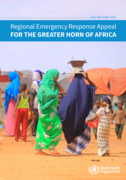
The Greater Horn of Africa is experiencing one of the worst food insecurity situations in decades. It is estimated
that more than 37 million people are in Integrated Food Security Phase Classification (IPC)1 phase 3 or above and approximately 7 million children under the age of five are acutely mal
...

Las infecciones del sitio quirúrgico (ISQ) constituyen una de las Infecciones Asociadas al Cuidado de la Salud (IACS) más frecuentes que ponen en riesgo a los pacientes llevando muchas veces al fracaso del procedimiento quirúrgico. Con una incidencia mucho mayor en países de medianos y bajos ing
...
Diagnóstico y tratamiento de sífilis recomendaciones para los equipos de salud.
