
Filter
2100
Text search:
Access
to
Medicine
Foundation
Featured
192
504
Language
2035
50
47
33
24
16
15
9
4
4
4
3
3
2
2
2
2
2
2
2
2
2
2
2
2
1
1
1
1
1
1
1
1
1
1
1
1
1
1
1
1
1
1
1
Document type
1112
428
246
160
70
41
18
12
7
2
2
1
1
Countries / Regions
93
72
59
44
41
36
35
35
35
34
34
34
31
28
28
27
27
25
23
20
20
19
19
16
16
15
13
10
10
10
9
9
9
9
8
8
8
8
8
8
7
7
7
7
6
6
6
6
6
5
5
5
5
5
4
4
4
4
4
4
4
4
3
3
3
3
3
3
3
3
3
3
3
2
2
2
2
2
2
2
2
2
2
2
2
1
1
1
1
1
1
1
1
1
1
1
1
1
1
1
1
1
1
1
1
1
1
1
1
1
1
1
1
1
1
1
1
1
1
1
Authors & Publishers
324
111
108
62
53
39
28
28
25
23
22
10
10
10
10
10
9
9
9
9
9
9
8
8
8
8
8
8
7
7
7
7
7
6
6
6
6
5
5
5
5
5
5
5
5
5
5
5
5
5
5
5
5
5
4
4
4
4
4
4
4
4
4
4
4
4
4
4
4
4
4
4
4
3
3
3
3
3
3
3
3
3
3
3
3
3
3
3
3
3
3
3
3
3
3
3
3
3
3
3
3
3
3
3
3
3
3
3
3
3
3
3
3
3
3
2
2
2
2
2
2
2
2
2
2
2
2
2
2
2
2
2
2
2
2
2
2
2
2
2
2
2
2
2
2
2
2
2
2
2
2
2
2
2
2
2
2
2
2
2
2
2
2
2
2
2
2
2
2
2
2
2
2
2
2
2
2
2
2
2
2
2
2
2
2
2
2
2
2
2
2
2
2
2
2
2
2
2
2
2
2
2
2
2
2
2
2
2
2
2
2
2
2
2
2
2
2
2
2
2
2
2
2
2
2
2
2
2
2
2
2
2
2
2
2
2
2
2
2
2
2
2
2
1
1
1
1
1
1
1
1
1
1
1
1
1
1
1
1
1
1
1
1
1
1
1
1
1
1
1
1
1
1
1
1
1
1
1
1
1
1
1
1
1
1
1
1
1
1
1
1
1
1
1
1
1
1
1
1
1
1
1
1
1
1
1
1
1
1
1
1
1
1
1
1
1
1
1
1
1
1
1
1
1
1
1
1
1
1
1
1
1
1
1
1
1
1
1
1
1
1
1
1
1
1
1
1
1
1
1
1
1
1
1
1
1
1
1
1
1
1
1
1
1
1
1
1
1
1
1
1
1
1
1
1
1
1
1
1
1
1
1
1
1
1
1
1
1
1
1
1
1
1
1
1
1
1
1
1
1
1
1
1
1
1
1
1
1
1
1
1
1
1
1
1
1
1
1
1
1
1
1
1
1
1
1
1
1
1
1
1
1
1
1
1
1
1
1
1
1
1
1
1
1
1
1
1
1
1
1
1
1
1
1
1
1
1
1
1
1
1
1
1
1
1
1
1
1
1
1
1
1
1
1
1
1
1
1
1
1
1
1
1
1
1
1
1
1
1
1
1
1
1
1
1
1
1
1
1
1
1
1
1
1
1
1
1
1
1
1
1
1
1
1
1
1
1
1
1
1
1
1
1
1
1
1
1
1
1
1
1
1
1
1
1
1
1
1
1
1
1
1
1
1
1
1
1
1
1
1
1
1
1
1
1
1
1
1
1
1
1
1
1
1
1
1
1
1
1
1
1
1
1
1
1
1
1
1
1
1
1
1
1
1
1
1
1
1
1
1
1
1
1
1
1
1
1
1
1
1
1
1
1
1
1
1
1
1
1
1
1
1
1
1
1
1
1
1
1
1
1
1
1
1
1
1
1
1
1
1
1
1
1
1
1
1
1
1
1
1
1
1
1
1
1
1
1
1
1
1
1
1
1
1
1
1
1
1
1
1
1
1
1
1
1
1
1
1
1
1
1
1
1
1
1
1
1
1
1
1
1
1
1
1
1
1
1
1
1
1
1
1
1
1
1
1
1
1
1
1
1
1
1
1
1
1
1
1
1
1
1
1
1
1
1
1
1
1
1
1
1
1
1
1
1
1
1
1
1
1
1
1
1
1
1
1
1
1
1
1
1
1
1
1
1
1
1
1
1
1
1
1
1
1
1
1
1
1
1
1
1
1
1
1
1
1
1
1
1
1
1
1
1
1
1
1
1
1
1
1
1
1
1
1
1
1
1
1
1
1
1
1
1
1
1
1
1
1
1
1
1
1
1
1
1
1
1
1
1
1
1
1
1
1
1
1
1
1
1
1
1
1
1
1
1
1
1
1
1
1
1
1
1
1
1
1
1
1
1
1
1
1
1
1
1
1
1
1
1
1
1
1
1
1
1
1
1
1
1
1
1
1
1
1
1
1
1
1
1
1
1
1
1
1
1
1
1
1
1
1
1
1
1
1
1
1
1
1
1
1
1
1
1
1
1
1
1
1
1
1
1
1
1
1
1
1
1
1
1
1
1
1
1
1
1
1
1
1
1
1
1
1
1
1
1
1
1
1
1
1
1
1
1
1
1
1
1
1
1
1
1
1
1
1
1
1
1
1
1
1
1
1
1
1
1
1
1
1
1
1
1
1
1
1
1
1
1
1
1
1
1
1
1
1
1
1
1
1
1
1
1
1
1
1
1
1
1
1
1
1
1
1
1
1
1
1
1
1
1
1
1
1
1
1
1
1
1
1
1
1
1
1
1
1
1
1
1
1
1
1
1
1
1
1
1
1
1
1
1
1
1
1
1
1
1
1
1
1
1
1
1
1
1
1
1
1
1
1
1
1
1
1
1
1
1
1
1
1
1
1
1
1
1
1
1
1
1
1
1
1
1
1
1
1
1
1
1
1
1
1
1
1
1
1
1
1
1
1
1
1
1
1
1
1
1
1
1
1
1
1
1
1
1
1
1
1
1
1
1
1
1
1
1
1
1
1
1
1
1
1
1
1
1
1
1
1
1
1
1
1
1
1
1
1
1
1
1
1
1
1
1
1
1
1
1
1
1
1
1
1
1
1
1
1
1
1
1
1
1
1
1
1
1
1
1
1
1
1
1
1
1
1
1
1
1
1
1
1
1
1
1
1
1
1
1
1
1
1
1
1
1
1
1
1
1
1
1
1
1
1
1
1
1
1
1
1
1
1
1
1
1
1
1
1
1
1
1
1
1
1
1
1
1
1
1
1
1
1
1
1
1
1
1
1
1
1
1
1
1
1
1
1
1
1
1
1
1
1
1
1
1
1
1
1
1
1
1
1
1
1
1
1
1
1
1
1
1
1
1
1
1
1
1
1
1
1
1
1
1
1
1
1
1
1
1
1
1
1
1
1
1
1
1
1
1
1
1
1
1
1
1
1
1
1
1
1
1
1
1
1
1
1
1
1
1
1
1
1
1
1
1
1
1
1
1
1
1
1
1
1
1
1
1
1
1
1
1
1
1
1
1
1
1
1
1
1
1
1
1
1
1
1
1
1
1
1
1
1
1
1
1
1
1
1
1
1
1
1
1
1
1
1
1
1
1
1
1
1
1
1
1
1
1
1
1
1
1
1
1
1
1
1
1
1
1
1
1
1
1
1
1
1
1
1
1
1
1
1
1
1
1
1
1
1
1
1
1
1
1
1
1
1
1
1
1
1
1
1
1
1
1
1
1
1
1
1
1
1
1
1
1
1
1
1
1
1
1
1
1
1
1
1
1
1
1
1
1
1
1
1
1
1
1
1
1
1
1
1
1
1
1
1
1
1
1
1
1
1
1
1
1
1
1
1
1
1
1
1
1
1
1
1
1
1
1
1
1
1
1
1
1
1
1
1
1
1
1
1
1
1
1
1
1
1
1
1
1
1
1
1
1
1
1
1
1
1
1
1
1
1
1
1
1
1
1
1
1
1
1
1
1
1
1
1
1
1
1
1
1
1
1
1
1
1
1
1
1
1
1
1
1
1
1
1
1
1
1
1
1
1
1
1
1
1
1
1
1
1
1
1
1
1
1
1
1
1
1
1
1
1
1
1
1
1
1
1
1
1
1
1
1
1
1
1
1
1
1
1
1
1
1
1
1
1
1
1
1
1
1
1
1
1
1
1
1
1
1
1
1
1
1
1
1
1
1
1
1
1
1
1
1
1
1
1
1
1
1
1
1
1
1
1
1
1
1
1
1
1
1
1
1
1
1
1
1
1
1
1
1
1
1
1
1
1
1
1
1
1
1
1
1
1
1
1
1
1
1
1
1
1
1
1
1
1
1
1
1
1
1
1
1
1
1
1
1
1
1
1
1
1
1
1
1
1
1
1
1
1
1
1
1
1
1
1
1
1
1
1
1
1
1
1
1
1
1
1
1
1
1
1
1
1
1
1
1
1
1
1
1
1
1
1
1
1
1
1
1
1
1
1
1
1
1
1
1
1
1
1
1
1
1
1
1
1
1
1
1
1
1
1
1
1
1
1
1
1
1
1
1
1
1
1
1
1
1
1
1
1
1
1
1
1
1
1
1
1
1
1
1
1
1
1
1
1
1
1
1
1
1
1
1
1
1
1
1
1
1
1
1
1
1
1
1
1
1
1
1
1
1
1
1
1
1
1
1
1
1
1
1
1
1
1
1
1
1
1
1
1
1
1
1
1
1
1
1
1
1
1
1
1
1
1
1
1
1
1
1
1
1
1
1
1
1
1
1
1
1
1
1
1
1
1
1
1
1
1
1
1
1
1
1
1
1
1
1
1
1
1
1
1
1
1
1
1
1
1
1
1
1
1
1
1
1
1
1
1
1
1
1
1
1
1
1
1
1
1
1
1
1
1
1
1
1
1
1
1
1
1
1
1
1
1
1
1
1
1
1
1
1
1
1
1
1
1
1
1
1
1
1
1
1
1
1
1
1
1
1
1
1
1
1
1
1
1
1
1
1
1
1
1
1
1
1
1
1
1
1
1
1
1
1
1
1
1
1
1
1
1
1
1
1
1
1
1
1
1
1
1
1
1
1
1
1
1
1
1
1
1
1
1
1
1
1
1
1
1
1
1
1
1
1
1
1
1
1
1
1
1
1
1
1
1
1
1
1
1
1
1
1
1
1
1
1
1
1
1
1
1
1
1
1
1
1
1
1
1
1
1
1
1
1
1
1
1
1
1
1
1
1
1
1
1
1
1
1
1
1
1
1
1
1
1
1
1
1
1
1
1
1
1
1
1
1
1
1
1
1
1
1
1
1
1
1
1
1
1
1
1
1
1
1
1
1
1
1
1
1
1
1
1
1
1
1
1
1
1
1
1
1
1
1
1
1
1
1
1
1
1
1
1
1
1
1
1
1
1
1
1
1
1
1
1
1
1
1
1
1
1
1
1
1
1
1
1
1
1
1
1
1
1
1
1
1
1
1
1
1
1
1
1
1
1
1
1
1
1
1
1
1
1
1
1
1
1
1
1
1
1
Publication Years
573
1348
172
7
Category
644
183
153
116
96
50
27
1
Toolboxes
224
157
144
104
85
84
82
72
65
53
52
45
44
41
38
31
27
14
14
13
10
9
6
4
1
This technical report presents the results of a cross-sectional survey conducted in Banja Luka, the Republika Srpska, Bosnia and Herzegovina, between July and August 2017, as part of the FEEDcities Project (Food Environment Description in cities – eastern Europe and central Asia). The aim of the r
...
eport is to describe the city’s local street food and takeaway food environment, exploring the characteristics of food vending sites, the industrially produced and homemade foods they typically offer, and the nutritional composition of these foods. Finally, the report provides guidance on how to address its findings through policy action.
more

22 December 2020
The COVID-19 vaccine safety guidance manual has been developed upon recommendation and guidance of GACVS members, as well as by experts incorporating current and available information critical to all stakeholders when COVID-19 vac
...
cines will be introduced.
For ease of use, the manual is available in a compiled form and in several separate modules that can be consulted individually. For each module, specific training material is also available to facilitate implementation.
more
2nd edition. This document describes the latest methods and procedures for disinsection of internal areas of passenger, military and cargo aircraft to prevent international transport of mosquito vectors of human diseases and protect aircraft passeng
...
ers and airline crew. It provides updates on insecticide application methods and equipment, physical requirements of aerosol and residual sprays, and revised calculation tables for aerosol spray amounts required, as well as updated examples of pre-embarkation and pre-departure cabin treatment and certification requirements of the International Civil Aviation Organization (ICAO).
more

The document is structured into five sections. The first presents the key experiences and challenges that justify a renewal of the EPHFs. The second section updates the groundwork for the exercise of public health and provides a framework to inform
...
the exercise of the new essential functions. The third section proposes a new integrated approach for implementing the EPHFs. The fourth section presents a new list of 11 EPHFs related to each stage of this integrated approach. Finally, in the last section, considerations are put forth to guide EPHF implementation as a means of strengthening the health sector.
more

In the context of the coronavirus disease (COVID-19) pandemic response, WHO identifies young people as a priority target audience with specific concerns, experiences and behaviours. This policy brief provides relevant insights from behavioural evidence and a set of behavioural considerations for tho
...
se promoting COVID-19 preventive behaviours among young people. Designers of programmes and initiatives targeting youth may find it helpful to refer to the youth-specific barriers and drivers identified in this policy brief and to prioritize these for testing when planning initiatives targeted at young people.
more
This toolkit was developed by the Centers for Disease Control and Prevention (CDC) Division for Heart Disease and Stroke Prevention (DHDSP) to provide healthcare organizations, including those in resource-constrained settings, with the information a
...
nd resources to implement the HMP and improve hypertension control among their patients. CDC DHDSP developed an online toolkit that consists of interactive e-learning modules that are designed to guide learners through the key features of the ten HMP components and prepare them for implementation at their health system. The online e-learning modules are accompanied by a PDF toolkit document that can be used as an additional resource for users.
The purposes of this toolkit and the associated online e-learning modules are to provide healthcare organizations:
An overview of the HMP, its ten core components, and suggestions for implementing the HMP in clinical settings.
Guidance to staff, administrators, and other healthcare professionals on how to implement and adapt the HMP for their unique clinical setting.
The online e-learning modules you can find here:
https://www.cdc.gov/dhdsp/pubs/toolkits/hmp-toolkit/index.htm
accessed 29.07.2021
more
Learn how the decision making process must ensure that appropriate structures and supports are in place to maximize the nursing effort resulting in the best possible care and positive outcomes for the patients/clients, nursing personnel, and the org
...
anization.
more

Burns are a global public health problem, accounting for close to 200,000 deaths annually. The majority of these occur in low- and middle-income countries, where a number of constraints complicate the public health task of addressing burns. While th
...
e primary prevention of burns in low- and middle-income countries is a pressing need, the World Health Organization (WHO) also actively encourages further development of burn-care systems, including the training of health-care providers in the appropriate triage and management of people with burns.
more

This is the sixth of our 11-paper supplement entitled “Community Health Workers at the Dawn of New Era”. Expectations of community health workers (CHWs) have expanded in recent years to encompass a wider array
of services
...
to numerous subpopulations, engage communities to collaborate with and to assist health systems in responding to complex and sometimes intensive threats. In this paper, we explore a set of key considerations for training of CHWs in response to their enhanced and changing roles and provide actionable recommendations based on
current evidence and case examples for health systems leaders and other stakeholders to utilize.
more

This is the ninth paper in our series, “Community Health Workers at the Dawn of a New Era”. Community health workers (CHWs) are in an intermediary position between the health system and the community. While this position provides CHWs with a good platform
...
to improve community health, a major challenge in large-scale CHW programmes is the need for CHWs to establish and maintain benefcial relationships with both sets of actors, who may have diferent expectations and needs. This paper focuses on the quality of CHW relationships with actors at the local level of the national health system and with communities.
more
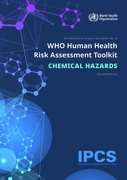
2nd edition. The purpose of the WHO human health risk assessment toolkit: chemical hazards is to provide its users with guidance to identify, acquire and use the information needed
...
to assess chemical hazards, exposures and the corresponding health risks in their given health risk assessment contexts at local and/or national levels.
The Toolkit provides road maps for conducting a human health risk assessment, identifies information that must be gathered to complete an assessment and provides electronic links to international resources from which the user can obtain information and methods essential for conducting the human health risk assessment
more
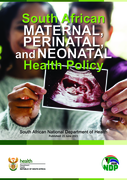
As a lower-middle-income country (LMIC), South Africa (SA) bears
the burden of maternal and neonatal mortality similar to other sub-
Saharan African countries. According to the Saving Mothers Repo
...
rt
2017/19, there has been a progressive and sustained reduction
in institutional maternal mortality (iMMR) in the past three triennia
(2010-2019), from 320 per 100,000 live births to 120 per 100,000 live
births.
According to the Rapid Mortality Survey, the country’s infant mortality
rate has declined from 29 deaths per 1000 live births in 2014 to 25
deaths per 1,000 live births in 2018. The institutional neonatal death
rate showed a slight decrease from 12,7 deaths per 1,000 live births in
2016 to the current level of 12 per 1,000 live births and has remained
static at this level for the past three years (saDHIS).
Working towards the Sustainable Development Goal (SDG) of reducing maternal mortality to below 70 per 100 000 live births and neonatal mortality to 12 deaths per 1000 live births, South Africa aims to reduce institutional maternal mortality, neonatal mortality and stillbirths by 50% by 2030.
This Maternal, Perinatal and Neonatal Health Policy provides a
framework for the delivery of quality, comprehensive, and integrated
MNH services and will guide the development and review of guidelines
and related MNH interventions, including strengthening of the service
delivery platform, governance, leadership and accountability for
the provision of quality MNH services, development of advocacy
messages, and guiding civil society priorities and community
initiatives. The policy will also guide the development and review of
academic curricula and the setting of research priorities.
more
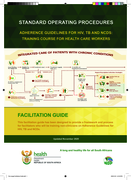
The target audience for this training course is non-clinicians such as Home Based Carers, Community Caregivers, Youth Care Workers, Peer educators, Community Health Workers etc. primarily those who will be providing adherence counselling to clients
...
with HIV, TB, Hypertension and Diabetes. This group of non-clinicians play a vital role in helping to reduce the workload of nursing staff. Amongst others, non- clinicians educate clients and provide emotional support in a manner that makes each client feel like they are receiving focused, individual attention. Non-clinicians are often in close contact with communities and, therefore, able to understand and play a role in alleviating health service barriers in the community.
Facility managers may also be part of the target audience in order to ensure that they understand the components of the minimum package of interventions to support linkage, adherence and retention in care.
Further, their attendance seeks to ensure that non-clinicians receive necessary assistance and support when they have to implement what they have learned back into their workplaces.
more
Injection Safety and Safe Disposal of Medical Waste National Communication Strategy and Health Care Waste Management Standard
Operating Procedures (SOPs).
The overall objective of the consultancy was to review and align the three national technica
...
l and communication guiding documents on HCWM to the WHO Blue Book and other global standards and recommendations. The specific objectives of the assignment were ; to establish how well aligned the Kenya Healthcare Waste Management Guidelines, 2011, are to the WHO Blue Book on healthcare waste management, global recommendations and other global conventions on environmental protection; to establish the extent to which the Kenya Injection Safety and Safe Disposal of Medical Waste National Communication Strategy is aligned to the National Health Communication Guidelines, 2013; to determine the extent to which the current Standard Operating Procedures are aligned to the best available technologies (BAT) and best environmental practices (BEP) and international practices; and to assess current health care waste management practices at the health facilities supported by the GEF project.
more

This joint publication by UNAIDS and WHO emphasizes the importance of integrating HIV prevention, testing, treatment and care and mental health services for people living with HIV. It provides a compilation of tools, best practices, recommendations and guidelines that facilitate the integration of i
...
nterventions and services to address the interlinked issues of mental health and HIV. This publication is intended for global, regional and national policy-makers; programme implementers including at subnational levels; organizations working in and providers of HIV and mental health services; civil society; and community-based and community-led organizations and advocates.
more
This study examines the effectiveness of a low-cost, targeted social media campaign to encourage COVID-19 vaccine uptake
among Arabic, Turkish and Russian speakers in Germany. The study involved a series of online experiments on the social media pl
...
atform Facebook.
more

Thesis presented in partial fulfilment of the requirements for the degree of Master of Nursing Science in the Faculty of Health Sciences at Stellenbosch University.
The mobile clinic health care services fulfil an essential role in delivering primary health care
...
to the dwellers in the rural communities of the Western Cape. However, occupational health and safety, as well as quality assurance are issues that need to be addressed urgently. It is thus recommended that policy makers take cognizance of the specific needs of every individual mobile clinic team.
more
Clinical features and management of human monkeypox: a retrospective observational study in the UK
recommended
Cases of human monkeypox are rarely seen outside of west and central Africa. There are few data regarding viral kinetics or the duration of viral shedding and no licensed treatments. Two oral drugs, brincidofovir and tecovirimat, have been approved for treatment of smallpox and have demonstrated eff
...
icacy against monkeypox in animals. Our aim was to describe the longitudinal clinical course of monkeypox in a high-income setting, coupled with viral dynamics, and any adverse events related to novel antiviral therapies.
more

The Global guidance framework for the responsible use of the life sciences: mitigating biorisks and governing dual-use research (the framework) aims to provide values and principles, tools and mechanisms t
...
o support Member States and key stakeholders to mitigate and prevent biorisks and govern dual-use research.
Digital publication you can download the English, French, Spanish and Russian version
The framework adopts the One health approach and focuses on the role that responsible life sciences research can play in preventing and mitigating risks caused by accidents, inadvertent or deliberate misuse with the intention to cause harm to humans, nonhuman animals, plants and agriculture, and the environment.
more

Addressing comorbidities and risk factors for TB is a crucial component of Pillar one of the End TB Strategy, which focuses on integrated patient-centred care and prevention, including action on TB and comorbidities. The Framework for collaborative action on TB and comorbidities aims
...
to support countries in the evidence-informed introduction and scale-up of holistic people-centred services for TB, comorbidities and health-related risk factors, with the goal of comprehensively addressing TB and other co-existing health conditions. It should be used in conjunction with relevant WHO guidelines. The Framework is intended for use by people working in ministries of health, other relevant line-ministries, policymakers, international technical and funding organizations, researchers, nongovernmental and civil society organizations, as well as primary care workers, specialist health practitioners, and community health workers who support the response to TB and comorbidities in both the public and private sectors.
more
