
Filter
913
Text search:
toilets
Featured
108
275
Language
Document type
502
143
107
60
31
24
24
14
7
1
Countries
58
36
33
29
28
26
25
25
24
17
16
16
16
16
15
12
12
12
11
10
10
9
9
8
7
7
7
6
6
6
6
6
6
5
5
5
5
5
5
5
4
4
4
4
4
4
4
3
3
3
3
3
3
3
3
2
2
2
2
2
2
2
2
1
1
1
1
1
1
1
1
1
1
1
1
1
1
1
1
1
1
1
1
1
1
1
1
1
Authors & Publishers
Publication Years
Category
409
153
40
37
33
24
1
Toolboxes
111
107
42
41
36
33
32
31
29
24
18
18
16
15
14
10
8
8
2
2
1
1
1
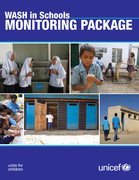
The package is designed to help address the WASH in Schools monitoring deficit at the national level.
The package consists of three modules:
The EMIS module: a set of basic monitoring questions on WASH in Schools to be incorporated into national Education Monitoring Information Syst ...
The package consists of three modules:
The EMIS module: a set of basic monitoring questions on WASH in Schools to be incorporated into national Education Monitoring Information Syst ...
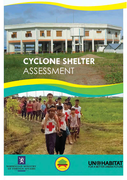
The purpose of this study was to document a technical assessment of a sample of these existing shelters on their functionality, accessibility, operation and management, community perspectives in Myanmar; identify gaps, needs and further the linkages with community-based disaster risk reduction (CDBR
...

This manual is intended to enable WASH practitioners
who work in Mozambique to contribute to the
reduction of WASH-preventable NTDs.

Guidelines on sanitation and health
recommended
The new WHO Guidelines on Sanitation and Health summarize the evidence on the effectiveness of a range of sanitation interventions and provide a comprehensive framework for health-protecting sanitation, covering policy and governance measures, implementation of sanitation technologies, systems and b
...


Problems with education for children with disabilities in Iran“Just Like All Other Kids”: Lack of Access to Inclusive Education for Children With Disabilities in Iran

Helping Children Live with HIV offers a holistic approach by building on the existing knowledge of parents and caregivers and respecting the importance of other local resources. It integrates health care, illness prevention, and psychosocial support for children and families coping with poverty, foo
...
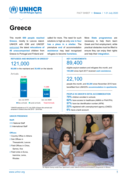
This month 600 people reached Greece, mostly to Lesvos island. UNHCR with IOM and UNICEF welcomed the latest relocations of 49 unaccompanied children from Greece to Portugal and Finland and called for more. The need for such solutions is high as only one in four has a place in a shelter. The prematu
...
Healthcare-associated infections (HAI) are a significant burden globally, with millions of patients affected each year. These infections affect both high- and limited-resource healthcare settings, but in limited-resource settings, rates are approximately twice as high as high-resource settings (15 o
...
Last updated Friday 20 March

This document provides guidance to EU/EEA Member States on environmental cleaning in healthcare and non-healthcare settings during the COVID-19 pandemic.
Accessed: 08.04.2020

This document, produced by IFRC, UNICEF and WHO, suggests key actions on how people and communities can stay safe and slow down the spread of COVID-19, particularly for contexts where you might have been asked by your local authorities to maintain physical distance or stay home.
Available in: Arabi
...

Accessed: 16.04.2020

WHO recommends member states provide universal access to public hand hygiene stations and making their use obligatory on entering and leaving any public or private commercial building and any public transport facility. It is also recommended that healthcare facilities improve access to and practice
...

12 April 2020
This Guidance Note on making COVID-19 response Age & Disability-inclusive provides advice for organizations and sectors to ensure essential responses, communication about the outbreak and adapt to services and support are inclusive and accessible for older persons and persons with d
...
In response to the COVID-19 outbreak, this guidance provides information on infection and prevention control (IPC) for older people, their friends and families, carers, and healthcare providers. Anyone who manages, works, volunteers or provides care at any type of facilities where older people recei
...

This guidance note developed by UNICEF helps WASH staff in their preparedness and response to the current COVID-19 pandemic. It provides an overview of Infection Prevention and Control (IPC) and its intersection with water, sanitation and hygiene (WASH). It also provides key actions that staff can i
...
The purpose of this document is to provide guidance on the cleaning and disinfection of environmental surfaces in the context of COVID-19. This guidance is intended for health care professionals, public health professionals and health authorities that are developing and implementing policies and sta
...
