
Filter
1155
Text search:
state
of
inequality
Featured
76
290
Language
Document type
559
369
86
53
45
14
13
6
4
3
Countries
90
54
33
29
28
27
25
24
21
20
19
19
18
16
16
16
14
13
12
12
11
10
9
9
9
9
8
8
7
7
7
7
7
7
7
6
6
6
6
6
5
5
5
5
5
5
5
4
4
4
4
4
4
4
4
4
4
3
3
3
3
3
3
3
3
2
2
2
2
2
2
2
2
2
1
1
1
1
1
1
1
1
1
1
1
1
1
1
1
1
1
1
1
1
1
1
1
1
1
1
Authors & Publishers
Publication Years
Category
428
99
79
70
38
12
2
Toolboxes
103
99
94
77
68
45
36
33
30
25
21
18
17
15
14
12
8
7
5
4
2
1
1
1

Based on WHO South-East Asia Regional Strategy on Autism Spectrum Disorder
The collaborative framework for implementation of the “WHO South-East Asia Regional Strategy on Autism Spectrum Disorders” articulates to Member States: the nature ...
The collaborative framework for implementation of the “WHO South-East Asia Regional Strategy on Autism Spectrum Disorders” articulates to Member States: the nature ...
“They Treated Us in Monstrous Ways”.
Since the Syrian conflict began in March 2011, men and boys and transgender women have been subjected to rape and other forms of sexual violence by the Syrian government and non-
...
This thematic brief accompanies the Working for Health 2022–2030 Action Plan, serving as a rationale to the related actions of the Working for Health progression model (see Annex). The brief aims to inform Member States, non-
...
This thematic brief accompanies the Working for Health 2022–2030 Action Plan, providing a rationale for the related actions of the Working for Health progression model (see Annex). This brief aims to inform Member States, non-
...

Tax capacity—the policy, institutional, and technical capabilities to collect tax revenue—is part of a deeper process of state building that is
...

he United Nations Development Programme’s (UNDP) Gender Equality Strategy 2022-2025 has
been created during turbulent times. Multiple crises and risks are threatening the world and
we are witnessing an alarming backlash against women’s rights and gender equality. Since the
COVID-19 pandemic h
...
Development assistance for health (DAH) has grown substantially, totaling more than $31.3 billion in 2013. However, the degree that countries with high concentrations of armed conflict, ethnic violence, in
...


In South Africa, young women and girls are exposed to extremely high levels of gender-based violence (GBV) and HIV infection. Given the links between the two epidemics, it is important that HIV prevention programmes also address violence against wom
...
This study of Adolescent Boys and Young Men highlights the importance of engaging adolescent boys and young men in sexual and reproductive health and rights (srhr) and gender equality. This paper e
...
Background paper 13
The Independent Panel for Pandemic Preparedness and Response
May 2021
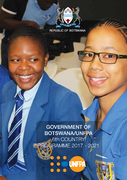
Botswana CPD.
The 6th Government of Botswana/UNFPA Country Programme (2017-2021) is focusing on a transformative development agenda that is universal, inclusive, human rights-based, integrated and anchored in the principle
...
Conference Report Sao Paulo, Brazil 22-24 October 2015
Key considerations for the use of law to prevent noncommunicable diseases in the WHO European Region
Report of an intensive legal training and capacity-building workshop on law and noncommunicable diseases (Moscow, 30 May–3 June 2016)
The report summarizes important issues, themes and topics discussed during the meeting in Moscow, ranging from t
...
A implementation Matrix approved by the Cabinet of the Government of South Africa

