
Filter
347
Text search:
metrics
Featured
Recommendations
27
New Publications
56
Language
Document type
Studies & Reports
126
No document type
115
Guidelines
33
Manuals
25
Strategic & Response Plan
25
Resource Platforms
8
Fact sheets
7
Training Material
3
Situation Updates
2
Brochures
1
Infographics
1
Online Courses
1
Countries / Regions
Global
44
Latin America and the Carribbean
9
Kenya
8
Ethiopia
7
Uganda
7
India
7
Africa
7
Sierra Leone
6
Nigeria
5
Zambia
5
Western and Central Europe
5
Guinea
4
Liberia
4
Congo, Democratic Republic of
4
Tanzania
4
Malawi
4
Brazil
4
Senegal
3
Ghana
3
Haiti
3
Syria
3
Ukraine
3
East and Southern Africa
3
Russia
3
Philippines
2
Somalia
2
Pakistan
2
South Sudan
2
Afghanistan
2
Rwanda
2
Sudan
2
Namibia
2
Western Pacific Region
2
Burkina Faso
1
Côte d’Ivoire / Ivory Coast
1
Cameroon
1
Nepal
1
Lebanon
1
Chad
1
China
1
Indonesia
1
South Africa
1
Bangladesh
1
Mozambique
1
Benin
1
Peru
1
Eswatini/ Swaziland
1
North Macedonia
1
Angola
1
Lesotho
1
Myanmar / Burma
1
West and Central Africa
1
Other region
1
Asia
1
Venezuela
1
Eastern Europe
1
Southern Africa
1
Moldova
1
Kazakhstan
1
Gabon
1
Denmark
1
Authors & Publishers
Publication Years
Category
Countries
103
Public Health
42
Clinical Guidelines
23
Key Resources
20
Women & Child Health
11
Capacity Building
4
Pharmacy & Technologies
2
Toolboxes
Planetary Health
42
COVID-19
28
Mental Health
23
AMR
23
NCDs
23
HIV
20
Global Health Education
17
Health Financing Toolbox
14
NTDs
12
Caregiver
9
Disability
6
Rapid Response
6
TB
6
Conflict
5
Ebola & Marburg
4
Natural Hazards
4
Polio
3
Pharmacy
3
Malaria
3
Refugee
2
Cholera
1
Zika
1

The 2023 meeting of the WHO Clinical Consortium on Healthy Ageing (CCHA) was the group’s ninth gathering and took place in Geneva 5–7 December 2023. The meeting was structured around seven panels, with a series of technical presentations, plenary discussions and group work, and a final session o
...
This report presents, for the first time, a global assessment of the extent to which health care facilities provide essential water, sanitation and hygiene (WASH) services. Drawing on data from 54 low- and middle-income countries, the report concludes that 38% lack access to even rudimentary levels
...

he refugee flow to Ethiopia continued during 2018, with 36,1351 persons seeking safety and protection within the country’s borders. At the start of 2019, the nation hosted 905,8312 thousand refugees who were forced to flee their homes as a result of insecurity, political instability, military cons
...

Snakebite envenoming affects millions of people worldwide annually and is a significant source of mortality. Preventing and treating the problem is complex and requires collaboration among the fields of public health, medicine, ecology, and laboratory science. After being removed from the category A
...
This toolkit is designed to help you plan and implement a Patient Navigation program with the best chance of reducing health disparities and improving health outcomes for your patients. It contains evidence-based and experience-based examples, case studies, practical tools, and resources to help you
...

Uganda is Africa's largest refugee-hosting country and ranks fifth globally. Over the decades, Uganda has hosted refugees from nations including South Sudan, the Democratic Republic of Congo, Eritrea, Somalia, Sudan, Burundi, and Rwanda. As of early 2024, it hosts 1 600 000 refugees, primarily in re
...

This document compiles the recommendations made by the World Health Organization (WHO) and the Pan American Health Organization (PAHO) to help professionals in charge of vector control programs in Latin America and the Caribbean at the national, subnational, and local level update their knowledge in
...
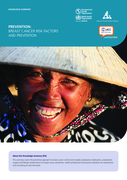
This summary covers the preventive approach to breast cancer control and includes prophylactic medications, prophylactic surgery and lifestyle modifications for breast cancer prevention. Health professional training and individual risk assessments and counseling are also discussed.
This book provides significantly expanded content and experience in relation to a broader stewardship context- for example, stewardship in specific populations, different countries as well as the role of different professions in stewardship to political and media engagement. We hope this book has so
...
The Mapping Antimicrobial Resistance and Antimicrobial Use Partnership (MAAP) project has conducted a multi-year, multi-country study that provides stark insights on the under-reported depth of the antimicrobial resistance (AMR) crisis across Africa and lays out urgent policy recommendations to addr
...
second edition
Included more self-measured blood pressure (SMBP)-focused content with tools and resources.
Showcased more tools to find patients with potentially undiagnosed HTN.
Added new strategies that focus on chronic kidney disease testing and identification.

In recent years, high prices of pharmaceutical products have posed challenges in high- and low-income countries alike. In many instances, high prices of pharmaceutical products have led to significant financial hardship for individuals and negatively impacted on healthcare systems’ ability to prov
...
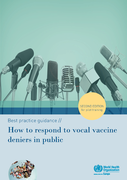
This guidance document provides basic broad principles for a spokesperson
of any health authority on how to respond to vocal vaccine deniers.
The suggestions are based on psychological research on persuasion,
on research in public health, communication studies and on WHO risk
communication guide
...

Inequality of access to palliative care and symptom relief is one of the greatest disparities in global health care (1). Currently, there is avoidable suffering on a massive scale due to lack of access to palliative care and symptom relief in low- and middle-income countries (LMICs) (1). Yet basic p
...

Zambia has about 1.2 physicians, nurses, and midwives per 1000 population while the minimum acceptable density threshold is 2.3 per 1000 population. The estimated shortage of doctors, nurses and midwives in Zambia is about 14,960. However, with the projected population growth the deficit more than d
...

"Some of the problems with our current drug policies stem from the fact that these policies have been largely bifurcated between two different and often contradictory approaches. One treats drug use as a crime that cannot be tolerated and should be punished; the other views addiction as a chronic re
...
