
Filter
1418
Text search:
Ministry
of
Medical
Services,
Kenya
Featured
Recommendations
122
New Publications
325
Language
Document type
No document type
766
Studies & Reports
276
Guidelines
165
Manuals
91
Strategic & Response Plan
64
Training Material
31
Situation Updates
11
Fact sheets
7
Infographics
3
Resource Platforms
2
Brochures
1
Online Courses
1
Countries / Regions
Kenya
264
Uganda
65
Global
63
Africa
42
Nigeria
38
Ethiopia
37
Tanzania
31
Rwanda
30
Malawi
28
Zambia
25
South Sudan
18
East and Southern Africa
17
Sierra Leone
16
Congo, Democratic Republic of
16
Zimbabwe
16
South Africa
16
Liberia
15
India
15
Ghana
13
Mozambique
13
Namibia
13
Lesotho
11
Senegal
10
Guinea
9
Nepal
9
Bangladesh
8
Botswana
8
West and Central Africa
8
Somalia
7
Ukraine
7
Myanmar / Burma
7
Burkina Faso
6
Cameroon
6
Eswatini/ Swaziland
6
Cambodia
5
Central African Republic
5
South–East Asia Region
5
Pakistan
4
Syria
4
Indonesia
4
Western and Central Europe
4
Asia
4
Russia
4
Togo
3
Jordan
3
Chad
3
Sudan
3
Benin
3
Yemen
3
Latin America and the Carribbean
3
Eastern Europe
3
Mali
2
Côte d’Ivoire / Ivory Coast
2
Philippines
2
Afghanistan
2
Lebanon
2
Thailand
2
China
2
Burundi
2
Colombia
2
Angola
2
Mexico
2
Middle East and North Africa
2
Eastern Europe and Central Asia
2
Iran
2
Guinea-Bissau
1
Morocco
1
Saudi Arabia
1
Niger
1
Haiti
1
Iraq
1
Germany
1
Gambia
1
Argentina
1
Brazil
1
Ecuador
1
Greece
1
Madagascar
1
Sri Lanka
1
Western Pacific Region
1
Palestine
1
Albania
1
Southern Africa
1
Laos
1
Canada
1
Tajikistan
1
Estonia
1
Georgia
1
Vietnam
1
Gabon
1
Japan
1
Mauritius
1
Tunisia
1
Authors & Publishers
Publication Years
Category
Countries
569
Clinical Guidelines
106
Women & Child Health
89
Public Health
80
Key Resources
66
Capacity Building
34
Pharmacy & Technologies
11
Annual Report MEDBOX
1
Toolboxes
HIV
184
Mental Health
97
Disability
89
TB
87
COVID-19
73
AMR
53
Caregiver
49
NTDs
41
Planetary Health
32
Ebola & Marburg
24
Global Health Education
24
Conflict
23
Pharmacy
23
Health Financing Toolbox
20
Refugee
19
Malaria
16
Rapid Response
14
NCDs
12
2.0 Rapid Response
10
Natural Hazards
7
Polio
6
Cholera
5
Social Ethics
4
Zika
3
Specific Hazards
3
South Sudan
1

Despite the increasing population of refugees stuck in protracted situations and our awareness of the vulnerability of children and adolescents gro
...
Guideline ‒ Alternative mass drug administration regimens to eliminate lymphatic filariasis
recommended
Lymphatic filariasis is a vector-borne neglected tropical disease that causes damage of the lymphatic system and can lead to lymphoedema (elephantiasis) and hydrocele in infected individuals. The global baseline estimate
...

This second edition of the “living paper” contributes to the global knowledge on how countries are responding to the pandemic by documenting real-time actions in a key area of response – that
...

Antibiotics and other antimicrobial agents are invaluable life savers, particularly in resource-limited countries where infectious diseases are abundant. Both uncomplicated and severe infections are potentially curable as long as the aetiological agents are susceptible to the
...
Fact Book on WHO Level I and Level II monitoring indicators - To monitor the progress of efforts to improve the global medicines situation, WHO has developed a system of indicators that measure impo
...

Cholera is a major health risk in many parts of the world, affecting millions of people every year. Since mid-2021, the world has been facing an acute upsurge
...
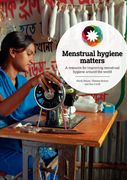
A resource for improving menstraul hygiene around the world.
Comprehensive guidance with examples of good practice, information for colleagues and pupils in class and tips on how to break the taboo
The purpose of this manual is to define a limited number of indicators that will objectively describe the management and use of antimicrobials in h
...

Guideline
Iron deficiency is one of the most common forms of nutritional deficiencies, particularly among vulnerable groups such as women, children and low-income populations. Iron deficiency o ...
Iron deficiency is one of the most common forms of nutritional deficiencies, particularly among vulnerable groups such as women, children and low-income populations. Iron deficiency o ...
This publication provides managers with guidance on how to create basic HIV prevention cascades as a starting point to enhance their ability to monitor and improve their programming and to facilitate comparisons of programme effectiveness across sit
...

Paper commissioned for Fixing the Broken Promise of Education for All: Findings from the Global Initiative on Out-of-School Children

Improving the survival chances and quality of life of women, newborns, and children remains an urgent global challenge. Since 2012, substantial progress has been made in reducing maternal and under-
...

Cyclone in Mozambique and Zimbabwe
Ebola virus disease in Democratic Republic of the Congo
Humanitarian crisis in Mali
Humanitarian crisis in Central African Republic.

This document contains guidance for strengthening the disability inclusiveness of MHPSS responses and programmes in emergency settings. It is intended to supplement the IASC Guidelines on Mental Health and Psychosocial Support in Emergency Settings
...

An estimated 1.3 billion people – or 16% of global population worldwide – experience a significant disability today. Persons with disabilities have the right to the highest attainable standard of
...

Ending the epidemics of HIV, tuberculosis and malaria by 2030 is within reach, but not yet fully in our grasp.
With only 11 years left, we have no time to waste. We must step up the fight now.
A Guide to Inclusive Education 2023
recommended
Refugee children with disabilities experience a reality of exclusion and marginalisation that makes them among the most vulnerable displaced persons in the world. Excluded from participation in social activities and access to school, not only becaus
...
From passive beneficiaries to active agents of change
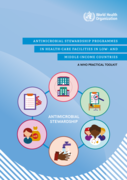
Stewardship is defined as “the careful and responsible management of something entrusted to one’s care”. It was originally applied in the health-care setting as a tool for optimizing antimicrobial use, termed “antimicrob
...

The new WHO recommendations for the treatment of isoniazid-resistant, rifampicin-susceptible TB are based upon a review of evidence from patients treated with such regimens by a Guideline Developmen
...
