
Filter
2303
Text search:
International
Labour
Organization
Featured
206
637
Language
2205
59
53
47
31
18
16
8
4
3
3
2
2
2
2
2
2
2
1
1
1
1
1
1
1
1
1
1
1
1
1
1
1
1
1
1
1
1
1
1
1
Document type
1249
440
292
132
107
28
25
22
6
2
Countries / Regions
119
86
62
57
54
53
50
49
45
45
44
43
42
41
38
37
32
31
29
25
22
21
20
20
18
17
16
14
14
14
13
13
12
12
12
12
11
10
10
10
10
9
9
9
9
8
8
7
7
7
6
6
6
6
6
6
6
5
5
5
4
4
4
4
4
4
4
3
3
3
3
3
3
3
3
3
3
2
2
2
2
2
2
2
2
2
2
2
2
2
2
1
1
1
1
1
1
1
1
1
1
1
1
1
1
1
1
1
1
1
1
1
1
1
1
1
1
1
1
1
1
Authors & Publishers
325
112
84
77
73
66
46
43
37
18
17
16
16
16
15
14
14
14
13
12
12
12
11
11
11
11
10
10
10
10
10
9
9
9
8
8
8
8
8
8
8
7
7
7
7
7
7
7
7
7
7
6
6
6
6
6
6
6
5
5
5
5
5
5
5
5
5
5
5
5
4
4
4
4
4
4
4
4
4
4
4
4
4
4
4
4
4
4
4
4
4
4
4
4
4
4
4
4
4
4
4
3
3
3
3
3
3
3
3
3
3
3
3
3
3
3
3
3
3
3
3
3
3
3
3
3
3
3
3
3
3
3
3
3
3
3
3
3
3
3
3
3
3
3
3
3
3
3
3
3
3
3
3
3
3
2
2
2
2
2
2
2
2
2
2
2
2
2
2
2
2
2
2
2
2
2
2
2
2
2
2
2
2
2
2
2
2
2
2
2
2
2
2
2
2
2
2
2
2
2
2
2
2
2
2
2
2
2
2
2
2
2
2
2
2
2
2
2
2
2
2
2
2
2
2
2
2
2
2
2
2
2
2
2
2
2
2
2
2
2
2
2
2
2
2
2
2
2
2
2
2
2
2
2
2
2
2
2
2
2
2
2
2
2
2
2
2
2
2
2
2
2
2
2
2
2
2
2
2
2
2
1
1
1
1
1
1
1
1
1
1
1
1
1
1
1
1
1
1
1
1
1
1
1
1
1
1
1
1
1
1
1
1
1
1
1
1
1
1
1
1
1
1
1
1
1
1
1
1
1
1
1
1
1
1
1
1
1
1
1
1
1
1
1
1
1
1
1
1
1
1
1
1
1
1
1
1
1
1
1
1
1
1
1
1
1
1
1
1
1
1
1
1
1
1
1
1
1
1
1
1
1
1
1
1
1
1
1
1
1
1
1
1
1
1
1
1
1
1
1
1
1
1
1
1
1
1
1
1
1
1
1
1
1
1
1
1
1
1
1
1
1
1
1
1
1
1
1
1
1
1
1
1
1
1
1
1
1
1
1
1
1
1
1
1
1
1
1
1
1
1
1
1
1
1
1
1
1
1
1
1
1
1
1
1
1
1
1
1
1
1
1
1
1
1
1
1
1
1
1
1
1
1
1
1
1
1
1
1
1
1
1
1
1
1
1
1
1
1
1
1
1
1
1
1
1
1
1
1
1
1
1
1
1
1
1
1
1
1
1
1
1
1
1
1
1
1
1
1
1
1
1
1
1
1
1
1
1
1
1
1
1
1
1
1
1
1
1
1
1
1
1
1
1
1
1
1
1
1
1
1
1
1
1
1
1
1
1
1
1
1
1
1
1
1
1
1
1
1
1
1
1
1
1
1
1
1
1
1
1
1
1
1
1
1
1
1
1
1
1
1
1
1
1
1
1
1
1
1
1
1
1
1
1
1
1
1
1
1
1
1
1
1
1
1
1
1
1
1
1
1
1
1
1
1
1
1
1
1
1
1
1
1
1
1
1
1
1
1
1
1
1
1
1
1
1
1
1
1
1
1
1
1
1
1
1
1
1
1
1
1
1
1
1
1
1
1
1
1
1
1
1
1
1
1
1
1
1
1
1
1
1
1
1
1
1
1
1
1
1
1
1
1
1
1
1
1
1
1
1
1
1
1
1
1
1
1
1
1
1
1
1
1
1
1
1
1
1
1
1
1
1
1
1
1
1
1
1
1
1
1
1
1
1
1
1
1
1
1
1
1
1
1
1
1
1
1
1
1
1
1
1
1
1
1
1
1
1
1
1
1
1
1
1
1
1
1
1
1
1
1
1
1
1
1
1
1
1
1
1
1
1
1
1
1
1
1
1
1
1
1
1
1
1
1
1
1
1
1
1
1
1
1
1
1
1
1
1
1
1
1
1
1
1
1
1
1
1
1
1
1
1
1
1
1
1
1
1
1
1
1
1
1
1
1
1
1
1
1
1
1
1
1
1
1
1
1
1
1
1
1
1
1
1
1
1
1
1
1
1
1
1
1
1
1
1
1
1
1
1
1
1
1
1
1
1
1
1
1
1
1
1
1
1
1
1
1
1
1
1
1
1
1
1
1
1
1
1
1
1
1
1
1
1
1
1
1
1
1
1
1
1
1
1
1
1
1
1
1
1
1
1
1
1
1
1
1
1
1
1
1
1
1
1
1
1
1
1
1
1
1
1
1
1
1
1
1
1
1
1
1
1
1
1
1
1
1
1
1
1
1
1
1
1
1
1
1
1
1
1
1
1
1
1
1
1
1
1
1
1
1
1
1
1
1
1
1
1
1
1
1
1
1
1
1
1
1
1
1
1
1
1
1
1
1
1
1
1
1
1
1
1
1
1
1
1
1
1
1
1
1
1
1
1
1
1
1
1
1
1
1
1
1
1
1
1
1
1
1
1
1
1
1
1
1
1
1
1
1
1
1
1
1
1
1
1
1
1
1
1
1
1
1
1
1
1
1
1
1
1
1
1
1
1
1
1
1
1
1
1
1
1
1
1
1
1
1
1
1
1
1
1
1
1
1
1
1
1
1
1
1
1
1
1
1
1
1
1
1
1
1
1
1
1
1
1
1
1
1
1
1
1
1
1
1
1
1
1
1
1
1
1
1
1
1
1
1
1
1
1
1
1
1
1
1
1
1
1
1
1
1
1
1
1
1
1
1
1
1
1
1
1
1
1
1
1
1
1
1
1
1
1
1
1
1
1
1
1
1
1
1
1
1
1
1
1
1
1
1
1
1
1
1
1
1
1
1
1
1
1
1
1
1
1
1
1
1
1
1
1
1
1
1
1
1
1
1
1
1
1
1
1
1
1
1
1
1
1
1
1
1
1
1
1
1
1
1
1
1
1
1
1
1
1
1
1
1
1
1
1
1
1
1
1
1
1
1
1
1
1
1
1
1
1
1
1
1
1
1
1
1
1
1
1
1
1
1
1
1
1
1
1
1
1
1
1
1
1
1
1
1
1
1
1
1
1
1
1
1
1
1
1
1
1
1
1
1
1
1
1
1
1
1
1
1
1
1
1
1
1
1
1
1
1
1
1
1
1
1
1
1
1
1
1
1
1
1
1
1
1
1
1
1
1
1
1
1
1
1
1
1
1
1
1
1
1
1
1
1
1
1
1
1
1
1
1
1
1
1
1
1
1
1
1
1
1
1
1
1
1
1
1
1
1
1
1
1
1
1
1
1
1
1
1
1
1
1
1
1
1
1
1
1
1
1
1
1
1
1
1
1
1
1
1
1
1
1
1
1
1
1
1
1
1
1
1
1
1
1
1
1
1
1
1
1
1
1
1
1
1
1
1
1
1
1
1
1
1
1
1
1
1
1
1
1
1
1
1
1
1
1
1
1
1
1
1
1
1
1
1
1
1
1
1
1
1
1
1
1
1
1
1
1
1
1
1
1
1
1
1
1
1
1
1
1
1
1
1
1
1
1
1
1
1
1
1
1
1
1
1
1
1
1
1
1
1
1
1
1
1
1
1
1
1
1
1
1
1
1
1
1
1
1
1
1
1
1
1
1
1
1
1
1
1
1
1
1
1
1
1
1
1
1
1
1
1
1
1
1
1
1
1
1
1
1
1
1
1
1
1
1
1
1
1
1
1
1
1
1
1
1
1
1
1
1
1
1
1
1
1
1
1
1
1
1
1
1
1
1
1
1
1
1
1
1
1
1
1
1
1
1
1
1
1
1
1
1
1
1
1
1
1
1
1
1
1
1
1
1
1
1
1
1
1
1
1
1
1
1
1
1
1
1
1
1
1
1
1
1
1
1
1
1
1
1
1
1
1
1
1
1
1
1
1
1
1
1
1
1
1
1
1
1
1
1
1
1
1
1
1
1
1
1
1
1
1
1
1
1
1
1
1
1
1
1
1
1
1
1
1
1
1
1
1
1
1
1
1
1
1
1
1
1
1
1
1
1
1
1
1
1
1
1
1
1
1
1
1
1
1
1
1
1
1
1
1
1
1
1
1
1
1
1
1
1
1
1
1
1
1
1
1
1
1
1
1
1
1
1
1
1
1
1
1
1
1
1
1
1
1
1
1
1
1
1
1
1
1
1
1
1
1
1
1
1
1
1
1
1
1
1
1
1
1
1
1
1
1
1
1
1
1
1
1
1
1
1
1
1
1
1
1
1
1
1
1
1
1
1
1
1
1
1
1
1
1
1
1
1
1
1
1
1
1
1
1
Publication Years
1
720
1360
209
11
1
1
Category
888
182
158
130
119
38
15
Toolboxes
195
154
147
137
100
92
91
82
79
61
45
43
36
33
31
30
20
18
16
15
12
9
7
7
7
2
1

This paper is motivated by the global spread of the coronavirus referred to as COVID-19 and its efect on Sub-Saharan African (SSA) economies. The International Monetary Fund (IMF) has alluded to the COVID-19 not only afecting the global health but a
...
lso trade and tourism, commodity prices, and fnancial conditions that calls for an additional policy response to support demand and ensure an adequate supply of credit
more
Since the first edition of the CDAC snapshot of communication, community engagement and accountability (CCEA) across the Ukraine response was published in May 2022, a conscious effort has been made by international, national and local responders to
...
ramp up CCEA action. Progress has been made in establishing coordination mechanisms and launching activities, particularly around accountability to affected people (AAP). As CCEA work continues to scale up on the ground, a greater focus and more effort are still needed on community-facing information and two-way communication; this should be accorded a higher priority than at present.
more

The Early Childhood Development Policy and its Strategic Plan seek to provide a framework to ensure such a holistic and integrated approach to the development of young children. International research has demonstrated the high economic returns on EC
...
D investment and its positive impact on health and education outcomes as well as the overall economic development of a nation. The implementation of the ECD Policy will thus provide Rwanda with the basis for achieving the objectives and goals of the EDPRS and Vision 2020.
more
In response to COVID-19, countries around the world have implemented several public health and social measures (PHSM), such as movement restrictions, closure of schools and businesses, and international travel restrictions.1 As the local epidemiolog
...
y of the disease changes, countries will adjust (i.e. loosen or reinstate) these measures according to the intensity of transmission.
more
Despite the development of point-of-care diagnostic tests for syphilis, chlamydia, gonorrhoea, and trichomoniasis, none comply with all WHO criteria. This analysis overviews landscape analyses of point-of-care diagnostic technologies for Chlamydia trachomatis, Neisseria gonorrhoeae, Trichomonas vagi
...
nalis and syphilis, available and in the pipeline. The target audience for the target product profiles is broad and includes clinicians, researchers working on diagnostics, laboratory experts, including, microbiologists and virologists, public health experts, epidemiologists, developers, and representatives for manufactures, including biotech engineers, policy-and decision-makers as well as representatives from regulatory bodies and agencies, donor agencies and international organizations.
more

Developmental disabilities are common. Yet, children with developmental disabilities have been neglected in health systems planning and policy provisions for health and continue to experience stigmatization, institutionalization, barriers to access health care and inequalities in health and educatio
...
n outcomes.
Using findings from research and practice and guided by the tenets of international human rights conventions, this WHO-UNICEF Global Report on children with developmental disabilities provides principles and approaches to intentionally include the needs and aspirations of children and young people with developmental disabilities in policy, programming and public health monitoring. It makes the case for greater accountability and proposes 10 priority actions to accelerate changes towards inclusive environments and responsive multisectoral care systems for children with developmental disabilities.
more

A historic funding crisis is threatening to unravel decades of progress unless countries can make radical shifts to HIV programming and funding. The report highlights the impact that the sudden, large-scale funding cuts from international donors are
...
having on countries most affected by HIV. Yet it also showcases some inspiring examples of resilience, with countries and communities stepping up in the face of adversity to protect the gains made and drive the HIV response forward.
more

According to the National Institute of Statistics and Demography (NSID) 168,094 persons out of Burkina Faso’s 14,017,262 inhabitants are living with a physical, sensory or mental disability. The numbers are questioned as the effort to collect in-depth statistics has not been great. Furthermore, mu
...
ch of the statistics is only collected in more densely populated provinces and towns and not in smaller rural communities. Handicap International (HI) estimates that the number is as high as 7 per cent.
more
In this paper they make estimates of the potential short-term economic impact of COVID-19 on global monetary poverty through contractions in per capita household income or consumption.
The estimates are based on three scenarios: low, medium, and high global contractions of 5, 10, and 20 per cent;
...
we calculate the impact of each of these scenarios on the poverty headcount using the international poverty lines of US$1.90, US$3.20 and US$5.50 per day.
The estimates show that COVID poses a real challenge to the UN Sustainable Development Goal of ending poverty by 2030 because global poverty could increase for the first time since 1990 and, depending on the poverty line, such increase could represent a reversal of approximately a decade in the world’s progress in reducing poverty.
In some regions the adverse impacts could result in poverty levels similar to those recorded 30 years ago. Under the most extreme scenario of a 20 per cent income or consumption contraction, the number of people living in poverty could increase by 420–580 million, relative to the latest official recorded figures for 2018.
more
Gender-based violence and child protection among Syrian refugees in Jordan, with a focus on early marriage
UNWomen
(2013)
Findings from this report reveal that, rates of early marriage are high, a significant percentage of children contribute to the household’s income or are its main source of income, and restrictions on the mobility of women and girls constrain their participation in social and economic activities a
...
nd their access to basic services. As the overwhelming majority of refugees do not have paid employment and rely mainly on aid and dwindling family resources, the more the situation of displacement is prolonged the greater the likelihood of higher rates of child labour for boys and early marriage for girls.
more
This field study to assess the pharmaceutical situation was undertaken in Ghana in May-June 2008 using a standardized methodology developed by the World Health Organization. The study assessed medicines availability and affor
...
dability, geographical accessibility, quality and rational use among other issues. The survey was conducted in six regions. In each region, 6 public health care facilities, 12 private pharmacies and 1 warehouse were surveyed.
more

Produced by UNICEF and IRC, with the support of the German Corporation for International Cooperation GmbH (GIZ) and the generous funding from the German Federal Ministry of Economic Cooperation and Development (BMZ), the Caring for Child Survivors o
...
f Sexual Abuse (CCS) Resource Package (Second Edition, 2023) is a revision of the original CCS Guidelines and associated Training (First Edition, 2012). The Second Edition offers an up-to-date global technical guidance on providing a model of quality care for children and families affected by sexual abuse in humanitarian settings. The new resources include both revised and content additions based on practitioner feedback, the most recent evidence and learning. In particular, the Guidelines aim to bring a stronger focus on gender inequality, intersectionality, as well as the connections between the best interests of the child and a survivor-centered approach.
more
To understand the patterns of Rwanda’s achievements in health development, it is important to explore how Rwanda addresses the Social Determinants of Health (SDH) particularly those related to routine conditions in which people are born, live and work. It is in this particular context that a case
...
study on Rwanda’s Performance in Addressing Social Determinants of Health was conducted by the Rwanda Ministry of Health, with technical and financial support from the World Health Organization (WHO). The overall goal of the exercise was to document Rwanda's recent initiatives that contribute to the advancements of the Rio Political Declaration on Social Determinants of Health.
more
This handbook is an adaptation from the WHO Clinical Handbook Health care for women subjected to intimate partner violence or sexual violence developed by the World Health Organization (WHO), UN Women and United Nations Population Fund. The handbook
...
draws on the work from professionals who are dedicated to preventing and responding to Gender Based Violence.
The Handbook guides health care service providers to provide comprehensive services to survivors of intimate partner violence and/or sexual violence. It also guides health professionals with respect to relevant stakeholders for referral purposes. The purpose is to ensure that relevant authorities are informed timeously in order act and ensure that those affected by violence receive speedy service as required.
more
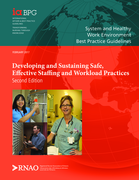
Learn how the decision making process must ensure that appropriate structures and supports are in place to maximize the nursing effort resulting in the best possible care and positive outcomes for the patients/clients, nursing personnel, and the organizati
...
on.
more
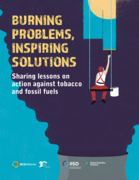
This report challenges policy-makers and political leaders to tackle fossil fuel production and consumption as a health control issue, in the same way that smoking has been reduced and regulated. Fossil fuel combustion is a major source of toxic air pollution that kills 7 million people every year,
...
almost the same as the number of deaths caused by tobacco smoking.
In 2018, the World Health Organization (WHO) recognised air pollution as a major health risk factor. There is widespread public discussion about the effects of fossil fuel combustion and emissions on climate change… but what about the effect on our health? Climate change poses a threat not only to the health of the planet, but also to humans.
The case studies evaluated in this report offer examples of mechanisms that can be used to restrict the production and consumption of unhealthy commodities, so that the health, air pollution and climate communities can learn from one another, using shared approaches and language. These case studies show that the connection with health is a strong argument to support sustainable change.
more
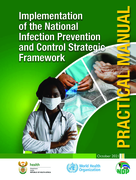
The strategic framework gives guidance to public and private health facilities and health workers on compliance with standards relating to IPC practices. To further assist health facilities to implement the IPC strategic framework, this practical implementation manual has been developed in parallel
...
to accompany the document.
These implementation strategies should be read in conjunction with the National Infection Prevention and Control (IPC) Strategic Framework (2020) to support an IPC programme at health facility level towards reducing healthcare-associated infections (HAI) and antimicrobial resistance (AMR). This manual is aligned with the World Health Organization (WHO) Core Component IPC programme recommendations and highlights the essentials for developing and improving IPC at health facility level in a systematic, stepwise manner for South Africa. It supports the Framework for the Prevention and Containment of AMR in South African Hospitals (2018).
more

This regional action plan provides a broad framework for the regional level to assist governments in accelerating the implementation of existing international, regional and national commitments on ending FGM. Formulating the plan has provided an opp
...
ortunity for the region to identify broad priorities, initiate strategic actions and determine responsibilities among different actors. It also ensures that anti-FGM campaign activities are seen not as standalone efforts but rather as an integral part of the African Union’s discussions, in line with the African Union initiative on eliminating FGM (Saleema Initiative)
more
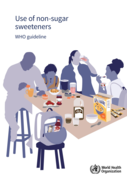
This guideline provides evidence-informed guidance on the use of non-sugar sweeteners to reduce the risk of unhealthy weight gain and diet-related noncommunicable diseases in adults and children. The guidance in this guideline is not based on toxicological assessments of the safety of individual no
...
n-sugar sweeteners and is therefore not intended to update or replace guidance on safe or maximal levels of intake established by the Joint Food and Agriculture Organization of the United Nations (FAO)/WHO Expert Committee on Food Additives (JECFA) or other authoritative bodies.
more
