Filter
1095
Text search:
l'enfant
Featured
52
397
Language
Document type
649
173
96
49
35
35
20
13
11
4
4
4
1
Countries
83
55
54
42
40
37
36
35
31
31
31
29
28
27
26
23
23
23
21
20
20
19
19
17
17
17
16
16
11
10
9
9
8
8
7
7
7
6
6
6
6
6
6
5
5
5
5
5
4
4
4
4
4
4
4
3
3
3
3
3
3
2
2
2
2
2
2
2
1
1
1
1
1
1
1
1
1
1
1
1
1
1
1
1
1
1
1
1
Authors & Publishers
Publication Years
Category
877
209
45
18
17
13
Toolboxes
49
40
38
27
16
15
9
8
8
7
7
6
6
4
3
3
3
3
2
1
1
1
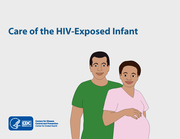
This clinical job aid addresses the importance of maternal health and antiretroviral therapy adherence, as well as care and testing for the HIV-exposed infant until the infant’s final HIV diagnosis after the end of breastfeeding.
Census Report Volume 4-C
The 2014 Myanmar Census provided the opportunity to measure maternal mortality. The questions on deaths in households during the twelve months prior to the Census were included in the questionnaire, as well as questions necessary to estimate maternal mortality indicator ...
The 2014 Myanmar Census provided the opportunity to measure maternal mortality. The questions on deaths in households during the twelve months prior to the Census were included in the questionnaire, as well as questions necessary to estimate maternal mortality indicator ...
Census Report Volume 4-A
This thematic report presents findings on fertility and nuptiality in Myanmar. The analysis hows that the total fertility rate is 2.5 children per woman at the Union level, 1.9 children per woman for urban areas, and 2.8 children per woman for rural areas. Total fertili ...
This thematic report presents findings on fertility and nuptiality in Myanmar. The analysis hows that the total fertility rate is 2.5 children per woman at the Union level, 1.9 children per woman for urban areas, and 2.8 children per woman for rural areas. Total fertili ...
DHS Working Paper No. 136
A total of 1,222 children age 6-23 months were included in this analysis. Twenty percent of children were stunted and 43% were moderately anemic. Regarding IYCF practices, only 16% of children received a minimum acceptable diet, 25% received diverse food groups, 58% were ...
A total of 1,222 children age 6-23 months were included in this analysis. Twenty percent of children were stunted and 43% were moderately anemic. Regarding IYCF practices, only 16% of children received a minimum acceptable diet, 25% received diverse food groups, 58% were ...
WHO recommendations on child health: Guidelines approved by the WHO Guidelines Review Committee
recommended
Updated May 2017
This document is meant to respond to the questions:
■ What health interventions should the child receive and when should s/he receive it?
■ What health behaviours should a mother/caregiver practise (or not practise)?
This document is meant to respond to the questions:
■ What health interventions should the child receive and when should s/he receive it?
■ What health behaviours should a mother/caregiver practise (or not practise)?

A cross-sectional descriptive study design covering all states and regions was undertaken to:
1) To assess availability, utilization and supply chain management system for RH commodities at different levels of health facilities,
2) To assess quality of RH services with emphasis on family ...
1) To assess availability, utilization and supply chain management system for RH commodities at different levels of health facilities,
2) To assess quality of RH services with emphasis on family ...
The purpose of this Operational Guideline is to support state health authorities, programme managers and health care professionals with recommendations on appropriate management of children with SAM in the health facilities. Facility based management includes setting up and managing within the healt
...
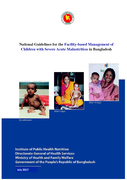
Level of stunting among Bangladeshi children <5years declined from 51% in 2004 to 36% and underweight from 41% in 2007 to 33% (BDHS 2014). But the decrease in wasting rate is not as expected, which is only from 17% to 14.3 % over last decade. Approximately 3.1 % (BDHS 2014) of under-5 children suffering from SAM only b
...

No publication year indicated
The specific objectives of the plan are to:
- Scale up evidence-based, cost effective interventions through effective strategies within a HSS approach and provide equitable coverage with quality.
- Reduce neonatal mortality by improved home-based newborn ...
The specific objectives of the plan are to:
- Scale up evidence-based, cost effective interventions through effective strategies within a HSS approach and provide equitable coverage with quality.
- Reduce neonatal mortality by improved home-based newborn ...

A National Service Programme for All Children with Special Needs and their Families
In Myanmar, we estimate that at least 40% of children require ECI services for short to longer periods of time. At present, 35.1% of Myanmar children are moderately to severely stunted; all of these children are l ...
In Myanmar, we estimate that at least 40% of children require ECI services for short to longer periods of time. At present, 35.1% of Myanmar children are moderately to severely stunted; all of these children are l ...



Global Health Media Project Videos
recommended
Creating Videos to train health workers and serve communities.
Global Health Media Project designs and develops videos that are tailored to the needs of health workers and populations in low-resource settings. Internet and mobile technology give us the power to reach large numbers, cost-effectively
...
Cervical Cancer Control in India
recommended
A new e-learning course has just been released, aimed at healthcare professionals working with patients in India exploring HPV screening and vaccination, assessment and diagnosis of cervical cancer, and palliative care for patients with advanced cervical cancer. The course was developed by ecancer i
...