
Filter
9142
Text search:
measures
Featured
Recommendations
816
New Publications
2216
Language
Document type
No document type
4632
Studies & Reports
1699
Guidelines
1234
Manuals
521
Strategic & Response Plan
367
Fact sheets
285
Training Material
134
Situation Updates
104
Resource Platforms
49
Infographics
48
Videos
28
Brochures
19
Online Courses
18
Dashboards/Maps
2
App
1
Countries / Regions
Global
449
India
405
Kenya
242
Sierra Leone
208
Western and Central Europe
191
Liberia
184
South Africa
183
Ethiopia
175
Nigeria
168
Uganda
161
Nepal
156
Myanmar / Burma
156
Latin America and the Carribbean
137
Tanzania
132
Syria
130
Rwanda
127
Africa
123
Zambia
120
Bangladesh
116
Ghana
115
Congo, Democratic Republic of
101
Malawi
100
Ukraine
93
Philippines
88
Namibia
78
South Sudan
64
Guinea
63
Eastern Europe
63
South–East Asia Region
62
Senegal
59
Yemen
59
Brazil
58
Zimbabwe
56
Cambodia
55
Indonesia
55
Mozambique
54
West and Central Africa
54
Russia
54
Middle East and North Africa
51
East and Southern Africa
49
Asia
48
Germany
47
Lesotho
47
Venezuela
45
Haiti
44
Eastern Europe and Central Asia
42
Burkina Faso
40
Afghanistan
35
Mali
34
Botswana
32
Cameroon
31
Pakistan
31
Colombia
29
Sudan
28
Central African Republic
27
Somalia
25
Jordan
25
Lebanon
24
Eswatini/ Swaziland
24
Western Pacific Region
24
Vietnam
21
Thailand
20
Madagascar
19
China
18
Côte d’Ivoire / Ivory Coast
17
Iraq
17
USA
16
Niger
15
Tajikistan
15
Laos
14
Moldova
14
Angola
13
Palestine
13
Benin
12
Sri Lanka
12
Iran
12
Chile
11
Albania
11
North America
11
Peru
10
Chad
9
Libya
9
Georgia
9
Guinea-Bissau
8
Togo
8
Egypt
8
Argentina
8
Burundi
8
Southern Africa
8
Greece
7
Mexico
7
Paraguay
7
United Kingdom
7
Spain
7
Saudi Arabia
6
Turkey
6
Papua New Guinea
6
North Macedonia
6
Ecuador
6
El Salvador
6
Italy
6
Portugal
6
Gambia
5
Malaysia
5
Bolivia
5
Poland
5
Timor Leste/ East Timor
5
Kyrgyzstan
5
Kazakhstan
5
Turkmenistan
5
Tunisia
5
Singapore
4
Hungary
4
Honduras
4
Djibouti
4
Armenia
4
Estonia
4
Romania
4
Jamaica
4
Morocco
3
Dominican Republic
3
Serbia
3
Croatia
3
Guatemala
3
Fiji
3
Uzbekistan
3
Japan
3
France
3
Mauritius
3
Belarus
3
Bosnia and Herzegovina
3
Mauritania
2
Switzerland
2
Nicaragua
2
Other region
2
Bhutan
2
Mongolia
2
Canada
2
Qatar
2
Gabon
2
Azerbaijan
2
Israel
2
Ireland
1
Vanuatu
1
Solomon Islands
1
North Korea
1
Congo-Brazzaville
1
Bulgaria
1
Lithuania
1
Slovakia
1
Australia
1
Denmark
1
Maldives
1
Norway
1
South Korea
1
Algeria
1
Morocco
1
French Guyana
1
Belize
1
Costa Rica
1
Oman
1
Panama
1
Authors & Publishers
Publication Years
Category
Countries
3362
Key Resources
595
Clinical Guidelines
509
Public Health
469
Women & Child Health
403
Capacity Building
155
Pharmacy & Technologies
72
Annual Report MEDBOX
1
Toolboxes
COVID-19
1215
Mental Health
616
HIV
543
TB
368
Planetary Health
362
Ebola & Marburg
357
Disability
354
Conflict
274
AMR
270
NTDs
239
Caregiver
223
Refugee
212
Rapid Response
205
NCDs
194
Global Health Education
149
Natural Hazards
137
Health Financing Toolbox
124
Pharmacy
121
Malaria
121
2.0 Rapid Response
117
Cholera
87
Zika
74
Specific Hazards
62
Polio
57
Social Ethics
29
Typhoon
6
South Sudan
2

Each year since 2007, G-FINDER has provided policy-makers, donors, researchers and industry with a comprehensive analysis of global investment into research and development of new products to
prevent, diagnose, control or cure neglected diseases in low- and middle-income countries, making it the go
...
Development finance is at a turning point, as the macroeconomic environment has changed profoundly and the financing gap for low- and middle-income countries has widened. The events that led to this new situation are the multiple crises that the global economy is facing, such as the climate crisis,
...

Achieving financial risk protection for the whole population requires significant financing for health. Health systems in low- and middle-income countries (LMIC) are plagued with persistent underfunding, and recent reductions in official development assistance have been registered. To create fiscal
...

Development assistance for health (DAH)
plays a vital role in supporting health programmes in lowand middle-income countries. While DAH has historically
focused on infectious diseases and maternal and child
health, there is a lack of comprehensive analysis of DAH
trends, strategic shifts and the
...

The Council was established in late 2020 by Dr Tedros Adhanom
Ghebreyesus (Director-General, WHO) to provide new economic thinking – reassessing how health and wellbeing are valued, produced and distributed across the economy. An all-female group of 10 distinguished economists and area experts, t
...
This article provides an in-depth analysis of the Global Fund's strategic initiatives in resource mobilization and recovery amid global economic fluctuations and geopolitical challenges. It highlights the Fund's successful conversion of pledges and innovative financing models that ensure sustainable
...

This comprehensive HPFM report thoroughly explores Kenya’s health financing landscape. It provides an in-depth analysis of the current state of affairs and sheds light on required strategic changes in health financing. The report points out the need to improve public financial management within th
...
There is growing pressure on PEPFAR, the U.S. global HIV program, to increase its planning for sustainability, including through domestic resource mobilization and, ultimately, transitioning financing at
least in part to recipient countries. While this is connected to a broader push in global healt
...
This paper examines the implications of the IMF’s April 2024 macro-fiscal forecast updates on government health expenditure (GHE) across 170 economies through 2029, covering nearly all years remaining to achieve the Sustainable Development Goals (SDGs). The findings reveal wide disparities in gove
...

Conditioned domestic financing policy, referring to the domestic financing of health projects, programs, and national responses conditioned by global health funding agencies and recipient country governments, is one mechanism to promote sustainability and country ownership. We aim to understand how
...

For this report, the Task Force commissioned
additional background papers on health taxes to
update the evidence, assess short-term revenue
potential, and understand the role of health taxes
in the current era of multiple crises. We find that
health taxes continue to be underutilized despite th
...

The COVID-19 pandemic exposed critical gaps in the global response to health crises, particularly in the financing of pandemic prevention, preparedness, response, recovery, and reconstruction. This chapter presents a comprehensive framework for pandemic financing that spans the entire pandemic cycle
...

There has never been a more critical moment to invest in WHO, and strengthen the unique role it plays in global health. Now is the time to sustainably finance WHO and invest in a healthy return for all.

In 2019, the Task Force on Fiscal Policy for Health concluded that taxes on tobacco, alcohol, and sugar-sweetened beverages were a highly effective but greatly underused policy tool to reduce consumption, save lives, and raise domestic resources. The Task Force estimated that if all countries increa
...

This Guide is part of WHO’s overall programme of work on Political Economy of Health Financing Reform: Analysis and Strategy to Support UHC. The impetus for this work came from demands for more concrete evidence, recognition and integration of political economy issues within
health financing, and
...

The world is facing a sustainable development crisis. The 2024 Financing for Sustainable Development Report: Financing for Development at a Crossroads finds that financing challenges are at the heart of the crisis and imperil the SDGs and climate action. The window to rescue the SDGs and prevent a c
...

The National Strategic Plan for Malaria Elimination in India (2023-2027) focuses on achieving malaria elimination by 2030, in alignment with the Global Technical Strategy. The document outlines the strategies, targets, and goals for malaria elimination, aiming for zero indigenous malaria cases by 20
...

The Plan subscribes to the goals and pillars of the WHO Global Technical Strategy against Malaria 2016-2030 (GTS), while presenting key elements to address the specific challenges of the Region.

The Malaria Ministerial Conference, co-hosted by WHO and the Government of Cameroon on 6 March 2024, brought together more than 400 stakeholders, including Ministers of Health and senior representatives from the African countries hardest hit by malaria, global health leaders, scientists, civil socie
...
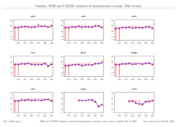
Each year WHO and UNICEF jointly review reports submitted by Member States regarding national immunization coverage, finalized survey reports as well as data from the published and grey literature. Based on these data, with due consideration to potential biases and the views of local experts, WHO an
...
