
Filter
3824
Text search:
hiv
testing
Featured
384
1135
Language
3621
93
67
64
30
26
22
12
10
9
8
6
5
4
3
3
3
2
2
2
2
2
2
2
2
2
2
2
2
1
1
1
1
1
1
1
1
1
1
1
1
1
1
1
1
1
1
1
1
1
1
1
1
1
Document type
2217
533
517
166
129
96
86
33
17
12
6
2
1
1
Countries
232
150
137
103
102
98
97
97
93
87
79
77
77
74
54
52
52
52
47
47
45
44
43
36
32
31
29
28
27
26
22
20
20
20
19
18
17
16
16
13
11
11
11
11
11
10
10
9
8
8
7
7
7
6
6
6
6
6
6
5
5
4
4
4
4
4
3
3
3
3
3
3
3
3
3
3
3
2
2
2
2
2
2
2
2
2
2
2
2
2
2
2
2
2
2
2
1
1
1
1
1
1
1
1
1
1
1
1
1
1
1
1
1
1
1
1
1
1
1
1
1
1
1
1
1
1
1
1
Authors & Publishers
486
193
133
123
84
80
66
62
56
48
43
33
30
29
28
24
22
22
22
21
20
19
19
19
18
17
17
17
16
16
16
16
16
16
15
15
15
15
14
14
13
13
13
12
12
11
11
11
11
11
11
11
11
10
10
10
10
9
9
9
8
8
8
8
8
8
7
7
7
7
7
7
7
7
7
6
6
6
6
6
6
6
6
6
6
6
6
6
6
6
6
6
6
6
6
6
6
6
6
6
6
6
6
5
5
5
5
5
5
5
5
5
5
5
5
5
5
5
5
5
5
5
5
5
5
5
5
5
4
4
4
4
4
4
4
4
4
4
4
4
4
4
4
4
4
4
4
4
4
4
4
4
4
4
4
4
4
4
4
4
4
4
4
4
4
4
4
4
4
4
4
4
4
4
4
4
4
3
3
3
3
3
3
3
3
3
3
3
3
3
3
3
3
3
3
3
3
3
3
3
3
3
3
3
3
3
3
3
3
3
3
3
3
3
3
3
3
3
3
3
3
3
3
3
3
3
3
3
3
3
3
3
3
3
3
3
3
3
3
3
3
3
3
3
3
3
3
3
3
3
3
3
3
3
3
3
3
3
3
3
3
3
3
3
3
2
2
2
2
2
2
2
2
2
2
2
2
2
2
2
2
2
2
2
2
2
2
2
2
2
2
2
2
2
2
2
2
2
2
2
2
2
2
2
2
2
2
2
2
2
2
2
2
2
2
2
2
2
2
2
2
2
2
2
2
2
2
2
2
2
2
2
2
2
2
2
2
2
2
2
2
2
2
2
2
2
2
2
2
2
2
2
2
2
2
2
2
2
2
2
2
2
2
2
2
2
2
2
2
2
2
2
2
2
2
2
2
2
2
2
2
2
2
2
2
2
2
2
2
2
2
2
2
2
2
2
2
2
2
2
2
2
2
2
2
2
2
2
2
2
2
2
2
2
2
2
2
2
2
2
2
2
2
2
2
2
2
2
2
2
2
2
2
2
2
2
2
2
2
2
2
2
2
2
2
2
2
2
2
2
2
2
2
2
2
2
2
2
2
2
2
2
2
2
2
2
2
2
2
2
2
2
2
2
2
2
2
2
2
2
2
2
2
2
2
2
1
1
1
1
1
1
1
1
1
1
1
1
1
1
1
1
1
1
1
1
1
1
1
1
1
1
1
1
1
1
1
1
1
1
1
1
1
1
1
1
1
1
1
1
1
1
1
1
1
1
1
1
1
1
1
1
1
1
1
1
1
1
1
1
1
1
1
1
1
1
1
1
1
1
1
1
1
1
1
1
1
1
1
1
1
1
1
1
1
1
1
1
1
1
1
1
1
1
1
1
1
1
1
1
1
1
1
1
1
1
1
1
1
1
1
1
1
1
1
1
1
1
1
1
1
1
1
1
1
1
1
1
1
1
1
1
1
1
1
1
1
1
1
1
1
1
1
1
1
1
1
1
1
1
1
1
1
1
1
1
1
1
1
1
1
1
1
1
1
1
1
1
1
1
1
1
1
1
1
1
1
1
1
1
1
1
1
1
1
1
1
1
1
1
1
1
1
1
1
1
1
1
1
1
1
1
1
1
1
1
1
1
1
1
1
1
1
1
1
1
1
1
1
1
1
1
1
1
1
1
1
1
1
1
1
1
1
1
1
1
1
1
1
1
1
1
1
1
1
1
1
1
1
1
1
1
1
1
1
1
1
1
1
1
1
1
1
1
1
1
1
1
1
1
1
1
1
1
1
1
1
1
1
1
1
1
1
1
1
1
1
1
1
1
1
1
1
1
1
1
1
1
1
1
1
1
1
1
1
1
1
1
1
1
1
1
1
1
1
1
1
1
1
1
1
1
1
1
1
1
1
1
1
1
1
1
1
1
1
1
1
1
1
1
1
1
1
1
1
1
1
1
1
1
1
1
1
1
1
1
1
1
1
1
1
1
1
1
1
1
1
1
1
1
1
1
1
1
1
1
1
1
1
1
1
1
1
1
1
1
1
1
1
1
1
1
1
1
1
1
1
1
1
1
1
1
1
1
1
1
1
1
1
1
1
1
1
1
1
1
1
1
1
1
1
1
1
1
1
1
1
1
1
1
1
1
1
1
1
1
1
1
1
1
1
1
1
1
1
1
1
1
1
1
1
1
1
1
1
1
1
1
1
1
1
1
1
1
1
1
1
1
1
1
1
1
1
1
1
1
1
1
1
1
1
1
1
1
1
1
1
1
1
1
1
1
1
1
1
1
1
1
1
1
1
1
1
1
1
1
1
1
1
1
1
1
1
1
1
1
1
1
1
1
1
1
1
1
1
1
1
1
1
1
1
1
1
1
1
1
1
1
1
1
1
1
1
1
1
1
1
1
1
1
1
1
1
1
1
1
1
1
1
1
1
1
1
1
1
1
1
1
1
1
1
1
1
1
1
1
1
1
1
1
1
1
1
1
1
1
1
1
1
1
1
1
1
1
1
1
1
1
1
1
1
1
1
1
1
1
1
1
1
1
1
1
1
1
1
1
1
1
1
1
1
1
1
1
1
1
1
1
1
1
1
1
1
1
1
1
1
1
1
1
1
1
1
1
1
1
1
1
1
1
1
1
1
1
1
1
1
1
1
1
1
1
1
1
1
1
1
1
1
1
1
1
1
1
1
1
1
1
1
1
1
1
1
1
1
1
1
1
1
1
1
1
1
1
1
1
1
1
1
1
1
1
1
1
1
1
1
1
1
1
1
1
1
1
1
1
1
1
1
1
1
1
1
1
1
1
1
1
1
1
1
1
1
1
1
1
1
1
1
1
1
1
1
1
1
1
1
1
1
1
1
1
1
1
1
1
1
1
1
1
1
1
1
1
1
1
1
1
1
1
1
1
1
1
1
1
1
1
1
1
1
1
1
1
1
1
1
1
1
1
1
1
1
1
1
1
1
1
1
1
1
1
1
1
1
1
1
1
1
1
1
1
1
1
1
1
1
1
1
1
1
1
1
1
1
1
1
1
1
1
1
1
1
1
1
1
1
1
1
1
1
1
1
1
1
1
1
1
1
1
1
1
1
1
1
1
1
1
1
1
1
1
1
1
1
1
1
1
1
1
1
1
1
1
1
1
1
1
1
1
1
1
1
1
1
1
1
1
1
1
1
1
1
1
1
1
1
1
1
1
1
1
1
1
1
1
1
1
1
1
1
1
1
1
1
1
1
1
1
1
1
1
1
1
1
1
1
1
1
1
1
1
1
1
1
1
1
1
1
1
1
1
1
1
1
1
1
1
1
1
1
1
1
1
1
1
1
1
1
1
1
1
1
1
1
1
1
1
1
1
1
1
1
1
1
1
1
1
1
1
1
1
1
1
1
1
1
1
1
1
1
1
1
1
1
1
1
1
1
1
1
1
1
1
1
1
1
1
1
1
1
1
1
1
1
1
1
1
1
1
1
1
1
1
1
1
1
1
1
1
1
1
1
1
1
1
1
1
1
1
1
1
1
1
1
1
1
1
1
1
1
1
1
1
1
1
1
1
1
1
1
1
1
1
1
1
1
1
1
1
1
1
1
1
1
1
1
1
1
1
1
1
1
1
1
1
1
1
1
1
1
1
1
1
1
1
1
1
1
1
1
1
1
1
1
1
1
1
1
1
1
1
1
1
1
1
1
1
1
1
1
1
1
1
1
1
1
1
1
1
1
1
1
1
1
1
1
1
1
1
1
1
1
1
1
1
1
1
1
1
1
1
1
1
1
1
1
1
1
1
1
1
1
1
1
1
1
1
1
1
1
1
1
1
1
1
1
1
1
1
1
1
1
1
1
1
1
1
1
1
1
1
1
1
1
1
1
1
1
1
1
1
1
1
1
1
1
1
1
1
1
1
1
1
1
1
1
1
1
1
1
1
1
1
1
1
1
1
1
1
1
1
1
1
1
1
1
1
1
1
1
1
1
1
1
1
1
1
1
1
1
1
1
1
1
1
1
1
1
1
1
1
1
1
1
1
1
1
1
1
1
1
1
1
1
1
1
1
1
1
1
1
1
1
1
1
1
1
1
1
1
1
1
1
1
1
1
1
1
1
1
1
1
1
1
1
1
1
1
1
1
1
1
1
1
1
1
1
1
1
1
1
1
1
1
1
1
1
1
1
1
1
1
1
1
1
1
1
1
1
1
1
1
1
1
1
1
1
1
1
1
1
1
1
1
1
1
1
1
1
1
1
1
1
1
1
1
1
1
1
1
1
1
1
1
1
1
1
1
1
1
1
1
1
1
1
1
1
1
1
1
1
1
1
1
1
1
1
1
1
1
1
1
1
1
1
1
1
1
1
1
1
1
1
1
1
1
1
1
1
1
1
1
1
1
1
1
1
1
1
1
1
1
1
1
1
1
1
1
1
1
1
1
1
1
1
1
1
1
1
1
1
1
1
1
1
1
1
1
1
1
1
1
1
1
1
1
1
1
1
1
1
1
1
1
1
1
1
1
1
1
1
1
1
1
1
1
1
1
1
1
1
1
1
1
1
1
1
1
1
1
1
1
1
1
1
1
1
1
1
1
1
1
1
1
1
1
1
1
1
1
1
1
1
1
1
1
1
1
1
1
1
1
1
1
1
1
1
1
1
1
1
1
1
1
1
1
1
1
1
1
1
1
1
1
1
1
1
1
1
1
1
1
1
1
1
1
1
1
1
1
1
1
1
1
1
1
1
1
1
1
1
1
1
1
1
1
1
1
1
1
1
1
1
1
1
1
1
1
1
1
1
1
1
1
1
1
1
1
1
1
1
1
1
1
1
1
1
1
1
1
1
1
1
1
1
1
1
1
1
1
1
1
1
1
1
1
1
1
1
1
1
1
1
1
1
1
1
1
1
1
1
1
1
1
1
1
1
1
1
1
1
1
1
1
1
1
1
1
1
1
1
1
1
1
1
1
1
1
1
1
1
1
1
1
1
1
1
1
1
1
1
1
1
1
1
1
1
1
1
1
1
1
1
1
1
1
1
1
1
1
1
1
1
1
1
1
1
1
1
1
1
1
1
1
1
1
1
1
1
1
1
1
1
1
1
1
1
1
1
1
1
1
1
1
1
1
1
1
1
1
1
1
1
1
1
1
1
1
1
1
1
1
1
1
1
1
1
1
1
1
1
1
1
1
1
1
1
1
1
1
1
1
1
1
1
1
1
1
1
1
1
1
1
1
1
1
1
1
1
1
1
1
1
1
1
1
1
1
1
1
1
1
1
1
1
1
1
1
1
1
1
1
1
1
1
1
1
1
1
1
1
1
1
1
1
1
1
1
1
1
1
1
1
1
1
1
1
1
1
1
1
1
1
1
1
1
1
1
1
1
1
1
1
1
1
1
1
1
1
1
1
1
1
1
1
1
1
1
1
1
1
1
1
1
1
1
1
1
1
1
1
1
1
1
1
1
1
1
1
1
1
1
1
1
1
1
1
1
1
1
1
1
1
1
1
1
1
1
1
1
1
1
1
1
1
1
1
1
1
1
1
1
1
1
1
1
1
1
1
1
1
1
1
1
1
1
1
1
1
1
1
1
1
1
1
1
1
1
1
1
1
1
1
1
1
1
1
1
1
1
1
1
1
1
1
1
1
1
1
1
1
1
1
1
1
1
1
1
1
1
1
1
1
1
1
1
1
1
1
1
1
1
1
1
1
1
1
1
1
1
1
1
1
1
1
1
1
1
1
1
1
1
1
1
1
1
1
1
1
1
1
1
1
1
1
1
1
1
1
1
1
1
1
1
1
1
1
1
1
1
1
1
1
1
1
1
1
1
1
1
1
1
1
1
1
1
1
1
1
1
1
1
1
1
1
1
1
1
1
1
1
1
1
1
1
1
1
1
1
1
1
1
1
1
1
1
1
1
1
1
1
1
1
1
1
1
1
1
1
1
1
1
1
1
1
1
1
1
1
1
1
1
1
1
1
1
1
1
1
1
1
1
1
1
1
1
1
1
1
1
1
1
1
1
1
1
1
1
1
1
1
1
1
1
1
1
1
1
1
1
1
1
1
1
1
1
1
1
1
1
1
1
1
1
1
1
1
1
1
1
1
1
1
1
1
1
1
1
1
1
1
1
1
1
1
1
1
1
1
1
1
1
1
1
1
1
1
1
1
1
1
1
1
1
1
1
1
1
1
1
1
1
1
1
1
1
1
1
1
1
1
1
1
1
1
1
1
1
1
1
1
1
1
1
1
1
1
1
1
1
1
1
1
1
1
1
1
1
1
1
1
1
1
1
1
1
1
1
1
1
1
1
1
1
1
1
1
1
1
1
1
1
1
1
Publication Years
1059
2411
339
15
Category
1804
313
221
128
124
111
49
1
Toolboxes
499
388
218
131
115
98
71
67
63
60
55
52
42
41
39
34
31
25
24
20
17
15
11
4
2
Adolescent girls and young women (AGYW) remain disproportionately affected by HIV in Eastern and Southern Africa (ESA), with 26 per cent of new infections attributed to this population. AGYW face many personal, social and structural barriers to acce
...
ss, uptake and use of traditional HIV prevention methods. Oral Pre-exposure Prophylaxis (PrEP) is proven to be highly effective as an additional prevention choice for reducing the risk of HIV acquisition, including for AGYW. Successful uptake and adherence to PrEP is critical in its effectiveness as an HIV prevention method, however, the current demand for PrEP by AGYW is low with suboptimal adherence.
Within the ESA region, there is currently great impetus to address these challenges and scale up PrEP for AGYW. A critical aspect of this is to leverage the learnings and evidence from implementation of how to improve the demand and quality of PrEP programming for this population. Improving the Quality of Pre-Exposure Prophylaxis Implementation for Adolescent Girls and Young Women in Eastern and Southern Africa examines the current efforts in the region to accelerate and scale up evidence-based PrEP delivery platforms. The implementation brief provides current knowledge and builds on WHO guidance to provide key considerations for implementation, including driving demand and improving quality, as well as focus on wider combination prevention and integration agendas.
more

United- Towards Ending AIDS. The Global AIDS Strategy 2026-2031 focuses global efforts for the future of the AIDS response to end AIDS as a public health threat by 2030 and sustain the HIV response after 2030. This is a strategy uniting the world.
...
The Strategy will shape the June 2026 United Nations General Assembly High-Level Meeting on Ending AIDS and its political declaration. It provides all actors in the field with guidance to overcome the challenges and to ensure effective country-led AIDS responses. The Global AIDS Strategy 2026-2031 includes new global targets for 2030 and resource needs estimates.
more
Integrated HIV Behavioral and Serologic Surveillance
EACS produces Guidelines for the management of people living with HIV in Europe. The English version is regularly updated by the guidelines panels with major revision every other year and minor revisions in the years in between. Guidelines are publi
...
shed in the autumn and translated into additional languages.e
more
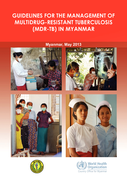
Following the encouraging initial results of the pilot project, the Ministry of Health is committed to increasing access to MDR-TB diagnosis, treatment and care. An expansion plan for the programmatic management of drug-resistant TB has been developed and forms part of the Five Year National Strateg
...
ic Plan for TB Control, 2011-2015. The long-term goals of the MDR-TB expansion plan are threefold:
1. Diagnosis of MDR-TB in all groups of patients at risk for MDR-TB
2. Diagnosis of MDR-TB in all HIV-infected TB patients
3. MDR-TB treatment for all patients diagnosed with MDR-TB under WHO-endorsed treatment protocols more
1. Diagnosis of MDR-TB in all groups of patients at risk for MDR-TB
2. Diagnosis of MDR-TB in all HIV-infected TB patients
3. MDR-TB treatment for all patients diagnosed with MDR-TB under WHO-endorsed treatment protocols more
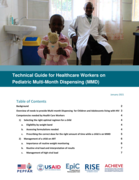
Multi-month dispensing (MMD) is the prescribing and dispensing of three to six months of antiretrovirals
(ARV) and other medicines required for treatment of people living with HIV (PLHIV). This approach is in
contrast to the current standard of ca
...
re approach where drug dispensing requires monthly clinical visits.
While many programs have moved to providing MMD for adults, implementation in children has been
particularly challenging. MMD takes a client-centered approach and has the promise of improving and
sustaining continuity of treatment and rates of viral suppression (VS), as well as reducing the provider the
provider workload and other burdens on the health system.
more
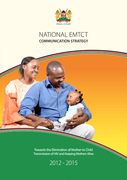
Kenya : National Communications Strategy
NATIONAL AIDS and STIs CONTROL PROGRAMME (NASCOP), MINISTRY OF PUBLIC HEALTH AND SANITATION
Ministry of health
(2012)
C1
Towards the Elimination of Mother-to-Child Transmission of HIV and keeping mothers Alive. 2012-2015

The purpose of the PAS III is to guide Pakistan’s overall national response for HIV and AIDS through 2020, through focused interventions with set targets, costs, roles and responsibilities. The successful implementation of PAS III involves multipl
...
e stakeholders to achieve priority outcomes outlined in the Strategy. The Strategy focuses on allocating limited resources to scale up high-impact, high-value interventions such as HTC and treatment to reduce AIDS related deaths and new HIV infections. Priorities in the PAS III have been identified to ensure maximum impact in reducing new infections, especially among key populations, improving treatment uptake and retention, and improving the quality of life of people living with HIV and AIDS in the context of limited financial and human resources.
more

Myanmar is one of the world’s 22 high tuberculosis (TB) burden countries, and supporting TB control in Myanmar is a global priority. This report reflects the findings, discussions, conclusions and recommendations of the fourth international review mission of the Myanmar National TB Programme (NTP)
...
, which brought together international and national partners to review progress in TB control and to offer guidance on future TB control directions and efforts.
A high-quality national disease prevalence survey completed in 2010 demonstrated a TB disease burden two to three times higher than anticipated on the basis of previous surveys. In 2011 about 200 000 adults and children will have developed TB, including 20 000 HIV infected and 9000 suffering from MDR-TB, both of which will require additional care and costly treatment. TB remains among the top killers of adults, and more women die of TB than from maternal causes. more
A high-quality national disease prevalence survey completed in 2010 demonstrated a TB disease burden two to three times higher than anticipated on the basis of previous surveys. In 2011 about 200 000 adults and children will have developed TB, including 20 000 HIV infected and 9000 suffering from MDR-TB, both of which will require additional care and costly treatment. TB remains among the top killers of adults, and more women die of TB than from maternal causes. more
Reporting period: January 2014 – December 2014
The human immunodeficiency virus (HIV) epidemic in Myanmar is concentrated among men who have sex with men (MSM), people who inject drugs (PWID) and female sex workers (FSW). ... HIV prevalence in the adult population aged 15 years and older was estimated at 0.54% in 2014. But data from HIV Sentinel Sero-Surveillance (HSS) indicates higher prevalence in 2014 among key populations: FSW 6.3%, MSM 6.6% and PWID 23.1%. Compared to 2012 data, the prevalence has declined from 7.1% in FSW and 8.9% in MSM, but has increased from 18% in PWID.
Epidemiological modelling suggests that in 2014 there were around 212,000 people living with HIV (PLHIV) in Myanmar, 34% of whom were females. Nearly 11,000 people died of HIV-related illnesses, compared to approximately 15,000 in 2011. An estimated 9,000 new infections occurred in 2014. more
The human immunodeficiency virus (HIV) epidemic in Myanmar is concentrated among men who have sex with men (MSM), people who inject drugs (PWID) and female sex workers (FSW). ... HIV prevalence in the adult population aged 15 years and older was estimated at 0.54% in 2014. But data from HIV Sentinel Sero-Surveillance (HSS) indicates higher prevalence in 2014 among key populations: FSW 6.3%, MSM 6.6% and PWID 23.1%. Compared to 2012 data, the prevalence has declined from 7.1% in FSW and 8.9% in MSM, but has increased from 18% in PWID.
Epidemiological modelling suggests that in 2014 there were around 212,000 people living with HIV (PLHIV) in Myanmar, 34% of whom were females. Nearly 11,000 people died of HIV-related illnesses, compared to approximately 15,000 in 2011. An estimated 9,000 new infections occurred in 2014. more

The Zambia Population Based HIV impact assessment of 2016, reported the prevalence of viral hepatitis in Zambia as ranging between 5.6% among adults aged 15 to 59% in the general population, and 7.1% among
...
HIV infected individuals. It is estimated that the majority of persons with chronic hepatitis B and/ or hepatitis C are unware of their infection and do not benefit from promotive, preventive and curative services designed to reduce onward transmission. Zambia introduced hepatitis B virus vaccine to the routine Under 5 vaccination schedule in 2005. Preliminary results from the ZAMPHIA indicate that hundreds of infections have been abated in children since then. However, its also clear that we continue to miss key opportunities to prevent transmission, diagnose and treat infections, prevent serious disease, and in many cases cure people. In addition, high risk groups inter alia health care workers still have limited access to the vaccine.
more

Evidence shows that oral pre-exposure prophylaxis (PrEP) reduces the risk of contracting HIV during sexual intercourse by more than 90% when taken daily. It is for this reason the National HIV Pre
...
vention Strategy 2015-2020 (2018 Revision) emphasises the role of preexposure prophylaxis (PrEP) in reducing new HIV infections in Malawi.
The Ministry of Health has prioritised PrEP use among the populations most at-risk of HIV infection in Malawi: young women ages 10 to 24 years, sero-discordant couples, female sex workers, men who have sex with men, and other priority populations (such as members of the uniformed services, prisoners, and mobile populations).
more

Tuberculosis (TB) is among the top ten most common causes of death globally and as a single infectious disease it top among infectious diseases. Furthermore, it is noted as the top causes of death among people infected with the human immunodeficiency virus (
...
HIV). Despite recent decreases in the number of notified cases, Namibia still has a high TB burden and is included among the top 30 high-burden TB countries by the World Health Organisation (WHO). In the 2018 Global TB Report, the estimated incidence rate of TB in Namibia was 423/100,000. The same report estimated that 60 people per 100,000 populations died of TB in Namibia, which is a concern, for a disease that is curable and preventable.
more

The country snapshot prepared by UNAIDS Regional Support Team for Asia and the Pacific and AIDS Data Hub provides information on the HIV epidemic and response in Bangladesh country.
The mandate of the National Tuberculosis Control Programme is to provide leadership and stewardship to accelerate intense and coordinated efforts to reduce the adult TB burden of 290 per 100,000 population recently established in the 2013 National TB Prevalence Survey. Other key challenges are low T
...
B case notification, unacceptably high TB death rates, low antiretroviral therapy (ART) coverage among TB/HIV patients and low drug-resistant notification and treatment.
more
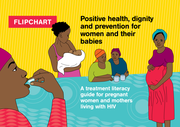
A treatment literacy guide for pregnant women and mothers living with HIV
Positive Health, Dignity and Prevention for Women and their Babies is intended for use by networks of women living with HIV, women’s groups, peer educators and o ... thers wishing to help guide women living with HIV through the decisions they will need to take before, during and after their pregnancy. It is not intended as a substitute for going to a health facility and seeking information from a healthcare worker.
The facilitator’s manual and flipchart are intended to be used by leaders of support groups, peer educators or lay counsellors to facilitate small groups or community sessions with women living with HIV. Together, they provide accurate and comprehensive information to enable pregnant women and mothers living with HIV to know their rights and make informed decisions about their health, and the health of their baby. more
Positive Health, Dignity and Prevention for Women and their Babies is intended for use by networks of women living with HIV, women’s groups, peer educators and o ... thers wishing to help guide women living with HIV through the decisions they will need to take before, during and after their pregnancy. It is not intended as a substitute for going to a health facility and seeking information from a healthcare worker.
The facilitator’s manual and flipchart are intended to be used by leaders of support groups, peer educators or lay counsellors to facilitate small groups or community sessions with women living with HIV. Together, they provide accurate and comprehensive information to enable pregnant women and mothers living with HIV to know their rights and make informed decisions about their health, and the health of their baby. more
The country snapshot provides information on the HIV epidemic and response in Myanmar country .
African Jesuits AIDS Network (AJAN) unites Jesuit efforts across Africa to fight HIV and AIDS through compassionate care, counseling, education, and youth empowerment. From providing treatment and psychosocial support to offering scholarships and li
...
fe skills training, we work to restore dignity and hope.
more
Zambia has completed the implementation of the National TB Strategic Plan (2017-2021) that set in motion the TB elimination agenda in Zambia through coordinated and accelerated TB response. During this period, the National TB and Leprosy Programme (NTLP) registered tremendous success.
The NTLP is
...
poised to attain the ambitious goal pronounced by the government of eliminating TB by 2030, in line with the Sustainable Development Goals (SDGs) and the World Health Organization End TB Strategy. The programme exponentially increased TB notifications from as low as 35,922 people with TB in 2018 to 40,726 in 2020 and in 2021 the TB notifications rose to 50,825 (a 25% increase against 2020 performance). The NTLP also registered incredible success in sustaining high TB Preventive Treatment (TPT) initiations among persons living with HIV and a high TB treatment success rate among drug-susceptible TB cases. New and relapse TB notifications in children below 15 years increased by 43%, from 2,724 in 2020 to 3,890 in 2021. TB notifications ratio between children aged 0-4 and 5-14 was 0.9, an improvement from what we achieved in 2018 (the ratio was 0.7). The proportion of TB patients who are HIV positive continued to decrease, reaching 34% in 2021 from 39% in 2020. Sustained increases in TB notifications, treatment success rate, and TPT initiations have resulted in a rapid decrease in the TB incidence rate that reached 307 per 100,000 population in 2021 against a rate of 391 in 2015.
more
A Meand to enhancing HIV prevention in key populations. This document has been developed out of the increasing need to set up standards and procedures to prevent and respond to violence against key populations.
