
Filter
1269
Text search:
Burden
of
mental
disorders
Featured
136
275
Language
Document type
754
220
145
61
40
15
15
6
5
4
3
Countries
77
70
48
32
29
28
25
24
20
20
19
18
17
16
16
15
15
14
13
13
13
12
10
9
8
8
7
7
7
7
6
5
5
5
5
5
5
5
4
4
4
4
4
4
4
4
4
4
3
3
3
3
3
2
2
2
2
2
2
2
2
2
2
2
2
2
2
2
2
2
1
1
1
1
1
1
1
1
1
1
1
1
1
1
1
1
1
1
1
1
1
1
1
1
1
1
1
1
Authors & Publishers
Publication Years
Category
396
101
79
55
34
13
4
Toolboxes
460
69
68
53
42
34
34
30
29
26
23
20
11
8
6
5
4
4
3
3
3
3
3
2
The primary objective of this book is to provide practical, up-to-date guidelines for the consulting clinician working with patients with HIV in primary care

Q10: In individuals with psychotic disorders (including schizophrenia) and bipolar disorders are psychoeducation, family interventions and cognitive-behavioural therapy feasible and effective?

Report of a World Health Organization and International Diabetes Federation meeting
This document provides an overview of the evidence of nutrition gains that can be achieved with improved WASH, a description of key WASH practices,
...

Session outline
•Introduction to psychoses.
•Assessment of psychoses.
•Management of psychoses.
•Follow-up.
•Review.

Archives of Medicine vo.7 no.5:10
Individuals infected with human immunodeficiency virus (HIV) often develop
multiple complications and comorbidities, among them, opportunistic infections.
The highest incidence
...
In this entry we are looking at smoking, alcohol consumption and the use of illicit drugs. We are studying who is using these substances, how their use has changed over time, and we are presenting the estimates
...
The Global Campaign Against Epilepsy “Out of the Shadows”
This guide is strongly practice -oriented and intended as an open resource when replicating similar methods of psychosocial care in other projects. It describes the steps in the development of
...
Manual for use in primary care.
There is substantial evidence for the benefits of screening and brief intervention in primary health care for alcohol problems. However, there is a need for screening and brief interventions with cross-cultural rele
...

Non-communicable diseases (NCDs) are of increasing concern for society and national governments, as well as globally due to their high mortality rate. The main risk factors of NCDs can be classified
...

Alcohol use is deeply embedded in the social landscape of many societies, and some 2300 million people drink alcoholic beverages in most parts of the world. At the same time, more than half
...

Surgical Care At The District Hospital
recommended
Promotion of the quality of clinical care through the identification, promotion and standardization of appropriate procedures, equipment and materi
...

What are the common health problems of refugees and migrants arriving in the European Region?
Examination of the business behaviour of Boehringer Ingelheim, Bayer and Baxter in Uganda
MAMI refers to the management of small and nutritionally at risk infants under six months of age (infants u6m) and their mothers.

The Pharmaceutical Forum of the Americas (PFA) has previously published guidelines and organised campaigns for community pharmacists on the prevention, detection and control of arbovirus infections
...
WHO Guideline on self-care interventions for health and well-being, 2022 revision: executive summary
recommended
A global shortage of an estimated 18 million health workers is anticipated by 2030, a record 130 million people are in need of humanitarian assistance, and there is the global threat
...
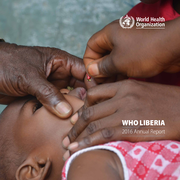
This year marked the beginning of the WHO biennium 2016-2017 action plan; this annual report highlights WHO’s key achievements in 2016
It also documents the extraordinary efforts by a broad coalition o
...

Human activities are driving fundamental changes to the biosphere and disrupting many of our planet’s natural systems. There is increasing scientific evidence that the unfolding climate crisis, global pollution, unprecedented levels
...
