
Filter
2159
Text search:
community
event
based
surveillance
Featured
267
543
Language
Document type
878
417
413
182
177
34
28
23
4
1
1
1
Countries
142
63
57
56
55
41
41
39
36
35
30
29
27
26
26
25
25
25
24
21
21
21
21
21
20
20
18
17
16
15
11
11
11
11
10
10
10
9
9
8
7
7
7
7
6
6
6
6
6
5
5
5
5
4
4
4
4
3
3
3
3
3
3
2
2
2
2
2
2
2
2
2
2
2
2
2
2
2
2
1
1
1
1
1
1
1
1
1
1
1
1
1
1
1
1
1
1
1
1
1
1
1
1
1
1
1
1
1
1
1
1
1
Authors & Publishers
Publication Years
Category
625
220
184
174
98
38
29
Toolboxes
236
139
124
115
104
97
94
86
72
70
55
52
50
45
39
38
33
32
31
29
29
21
14
13
4
1

Benchmarking is a strategic process often used by businesses and institutes to standardize performance in relation to the best practices of their sector. The World Health Organization (WHO) and partners have developed a tool with a list of benchmarks and corresponding suggested actions that can be a
...

Smallpox eradication was certified in 1980. Mpox has been endemic in Central and West African countries since it was first detected in 1958 . It is a zoonosis; cases are often found close to tropical rainforests where various animals carry the orthopoxvirus that causes the disease. In endemic countr
...

Mozambique was the first country outside of the Sahel to successfully implement seasonal malaria chemoprevention (SMC) on a large scale. This learning paper captures some of the lessons drawn from the implementation process.

This training module on malaria case management has been developed to support the staff involved in malaria control and elimination programmes in the effective organization of malaria diagnosis and case management services

The document focuses on integrating epidemic risk into the INFORM Global Risk Index, a tool used to assess and compare crisis and disaster risks across countries. It explains how epidemics can significantly impact vulnerability and hazard exposure, and therefore should be systematically included in
...

Acting Ahead of Epidemics
recommended
Designed for OCHA and partners at country, regional and headquarters-level, this guidance was developed in 2025 with the objective of giving an idea of suitable triggers and assistance packages for anticipatory action. It will be regularly updated with learning and good practices from implementation
...
Recognizing this need and the role of NPHIs in ensuring health security across the continent, the Africa CDC has prioritized the strengthening of NPHIs as a critical pillar of both the New Public Health Order and the Africa CDC Strategic Plan 2023-2027. To aid the realization of this goal, the Afric
...
Shoman et al. Globalization and Health (2017) 13:1 DOI 10.1186/s12992-016-0224-2

While the full effects of COVID-19 remain unknown, the pandemic continues to profoundly impact regional migration and mobility dynamics, with deep health, social and economic consequences for the most vulnerable, including migrants, displaced populations and their host communities, and returnees.
International health regulations (2005): state party self-assessment annual reporting tool, 2nd ed
Second edition.
AVailable in English, French, Spanish, Russian, Chinese and Portuguese
A key purpose of the Recovery Toolkit is to support countries in the reactivation of health services which may have suffered as a result of the emergency. These services include ongoing programmes such as immunization and vaccinations, maternal and child health services, and noncommunicable diseases
...

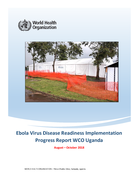
Risk of spill-over of EVD to Uganda has been categorised as very high. On 28 September 2018, WHO elevated the risk at the regional level which includes Uganda from ‘high’ to ‘very high’. Uganda has a very long and largely porous border with the DRC. High population movements across the borde
...
Accessed: 02.04.2020

Every year, nearly 250 million people move across borders temporarily or permanently for a job opportunity, studying, to flee a crisis back home, or for other reasons. Another 750 million move for similar reasons within the borders of their countries. With the understanding that human mobility affec
...


This new plan has been developed to build on successes made and lessons learnt from implementation of the two initial plans and to provide a short to medium term strategic anchor against which preparedness and response plans to the corona virus disease COVID-19 epidemic in the country should focus o
...
