
Filter
918
Text search:
Malawi
Ministry
of
Health
Featured
66
236
Language
Document type
532
208
84
42
27
7
7
7
3
1
Countries / Regions
166
39
37
32
31
25
22
19
15
14
14
13
13
13
12
12
12
10
10
10
10
9
9
7
6
6
5
5
5
3
3
3
3
3
3
2
2
2
2
2
2
2
2
2
2
2
2
2
2
1
1
1
1
1
1
1
1
1
1
1
1
1
1
1
1
1
1
1
Authors & Publishers
Publication Years
Category
420
63
58
54
41
12
10
Toolboxes
106
67
63
38
33
32
29
26
25
16
15
14
13
12
11
10
8
8
7
5
4
4
3
Mémento de Soins hospitaliers pédiatriques
recommended
Prise en charge des affections courantes de l'enfance. 2ième edition
Ce mémento est destiné aux médecins, au personnel infirmier et autres professionnels de santé responsables des soins administrés aux jeunes enfants au premier niveau de recours.
Il est conçu pour être utilisé pour les s
...

Dieses Kurzdossier konzentriert sich besonders auf den Zusammenhang zwischen zwei übertragbaren
tropischen Armutserkrankungen – dem Wurmbefall des Darms durch Geohelminthen wie Spul-,
Peitschen- und Hakenwürmer sowie der Schistosomiasis (Bilharziose). Es zeigt Möglichkeiten zu
deren Bekämpf
...

PLOS ONE | https://doi.org/10.1371/journal.pone.0217693 June 7, 2019
Volume 5 2017
Harmonising proven strategies beyond the emergency phase. Zero Hunger Phase 2

Clinical Pharmacology: Advances and Applications, 2025:17 29–47
Progress on the sustainable development goals.
Available in: English, French, Chinese, Spanish, Russian, Arabic, Thai, Korean, Tajik, Vietnamese, Uzbek
http://www.who.int/disabilities/cbr/guidelines/en/
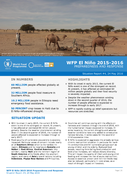
IN NUMBERS
60 MILLION people affected globally at present.
32 MILLION people food insecure in Southern Africa.
10.2 MILLION people in Ethiopia need emergency food assistance.
50 PERCENT crop losses in Haiti due to El Niño-influenced drought.

PLoS One. 2012; 7(4): e29656.
Published online 2012 Apr 20. doi: 10.1371/journal.pone.0029656
A MANUAL FOR WASH IMPLEMENTERS, BOTSWANA
Sightsavers | Department for International Development | The International Trachoma Initiative | Children Without Worms | WaterAid | WASH Advocates | Center for Global Safe Water, Emory University | CARE USA
