
Filter
938
Text search:
MDG
Featured
61
441
Language
Document type
789
81
22
12
11
8
6
5
2
1
1
Countries / Regions
63
54
43
36
35
35
34
31
29
28
28
28
28
21
20
20
20
18
16
15
14
9
9
9
8
7
6
6
6
5
5
5
5
5
4
4
4
4
4
3
3
3
3
3
3
2
2
2
2
2
2
1
1
1
1
1
1
1
1
1
1
1
1
1
1
1
1
1
1
1
1
1
1
1
1
1
1
1
1
Authors & Publishers
Publication Years
Category
618
58
35
28
15
2
2
Toolboxes
51
47
33
27
24
21
13
12
8
8
7
7
6
5
5
4
3
3
2
2
2
2
1
Accessed: 29.09.2019

The World Health Organization (WHO) and United NationsHuman Settlements Programme (UN-HABITAT) joint globalreport, Hidden cities: unmasking and overcoming healthinequities in urban settings, exposes the extent to whichcertain city dwellers suffer disproportionately from a wide range of diseases and
...
This report considers how to integrate health into urban planning, investments, and policy decisions, so as to support the implementation and achievement of the goals and objectives of the New Urban Agenda.
This timely report comes at a decisive moment in history where
we can reshape urban environments and health systems for the
majority of the world’s population that live in cities. Enabling
this transformation are the SDGs, which have reconfigured how
governments and the international community
...
Accessed: 26.09.2019
National Statistical Committee of the Kyrgyz Republic Bishkek, Kyrgyz Republic
Ministry of Health Bishkek, Kyrgyz Republic
MEASURE DHS
ICF International Calverton, Maryland, U.S.A.

The Open AIDS Journal, 2012, 6, 245-258
A practical guide to meaningfully engage adolescents in the AIDS response
UNAIDS 2016 reference
A toolkit to equip young people with the skills to become powerful advocates for Youth Sexual Reproductive Health and Rights (YSRH&R)
Accessed: 17.11.2019

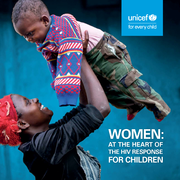
Thirty years ago, the United Nations General Assembly adopted the Convention on the Rights of the Child at a moment of rapid global change marked by the end of apartheid, the fall of the Berlin Wall and the birth of the World Wide Web. These developments and more brought momentous and lasting evolut
...
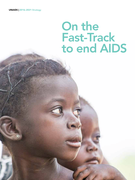
UNAIDS | 2016–2021 Strategy
Accessed: 20.11.2019

The report showed commitments made three decades ago to protect the rights of children remain unfulfilled for millions. Violence still affects countless children. Discrimination based on age, gender, disability, sexual orientation and religion harms children worldwide.
Key factors include a lack
...
Yaya et al. BMC Pregnancy and Childbirth (2018) 18:194
Ensuring equitable access to maternal health care including antenatal, delivery, postnatal services
and fertility control methods, is one of the most critical challenges for public health sector. There are significant
disparities in materna
...
Documentation des meilleures pratiques et des goulots d’étranglement à la mise en œuvre du programme au Sénégal .

Public Health is the science field dedicated to promoting health and well-being, and preventing disease within the human population to ultimately increase the quality of our livelihood and life span. Public Health does not focus on individual patients or diseases, but rather a given population and
...

Antimicrobial resistance (AMR) is an important public health concern shared by developed and developing countries. In developing countries the burden of infectious diseases is greater and exacerbated by limited access to, and availability and affordability of, antimicrobials required to treat infect
...
July 2014
This report was made possible through support provided by the One Million Community Health Workers Campaign, mPowering Frontline Health Workers, Intel, and USAID. This report was authored by Cindil Redick for mPowering Frontline Health Workers under the terms of Contract No. GHS-A-00-08
...

The management of information and logistics is an essential component of health product systems. In a context of limited financial resources and morbidity and mortality sustained by persistent diseases, it is necessary to strengthen health systems through competent resources, especially human resour
...

Antibiotics and other antimicrobial agents are invaluable life savers, particularly in resource-limited countries where infectious diseases are abundant. Both uncomplicated and severe infections are potentially curable as long as the aetiological agents are susceptible to the
...
