
Filter
897
Text search:
Fast
Package
Featured
110
302
Language
Document type
501
132
120
57
42
32
8
3
1
Countries
59
44
41
31
28
28
24
23
23
22
20
19
17
17
16
15
14
13
12
11
11
8
8
7
7
7
6
6
6
5
4
4
3
3
3
3
3
3
3
3
2
2
2
2
2
2
2
2
2
2
2
2
2
2
2
1
1
1
1
1
1
1
1
1
1
1
1
1
1
1
1
1
1
1
1
1
1
1
1
1
Authors & Publishers
Publication Years
Category
429
76
63
50
49
27
13
Toolboxes
79
69
50
34
30
26
24
20
19
17
17
17
16
15
15
13
12
12
11
6
5
5
3
2
1
Esta nueva hoja de ruta traza el camino a seguir para las acciones a nivel de país con el fin de alcanzar un ambicioso conjunto de objet ivos de prevención del VIH para 2025. Estos objetivos surgieron de la Declaración Política sobre el VIH y el sida de 2021, que la Asamblea General de las Nacio
...
The Practical manual on laboratory strengthening, 2022 update provides practical guidance on implementation of WHO recommendations and best practices for TB laboratory strengthening. It is an updated version of the GLI Practical Guide to Laboratory Strengthening published in 2017 and provides the la
...
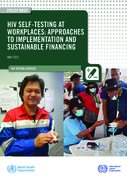
Countries are making progress toward the global goal of 95% of people living with HIV knowing their status by 2025. However, considerable gaps remain in achieving these goals globally. Men in high HIV burden settings and men from key populations in all settings are consistently less likely to know t
...

As of 12 December 2022, over 645 million people worldwide have been diagnosed with COVID-19, with over 6.6 million deaths (4).
The Omicron variant, which emerged in late November 2021, and its subvariants, are now the dominant circulating viruses, contributing to the ongoing surge in several countr
...
Burden of T. solium: Neurocysticercosis is a disease induced by T. solium larvae penetrating human tissues, especially the nervous system. Neurocysticercosis burdens economies, societies and individuals because of the impact of epilepsy on wages, health costs and social stigmatization of sufferers.
...

The military offensive by the Russian Federation in Ukraine which began February 2022 has triggered one of the world’s fastest-growing displacement and humanitarian crisis, with geopolitical and economic ripples felt across the globe. The ongoing war has caused large-scale disruptions to the deliv
...
The Strategic Plan of Action and Budget 2016-2025 for the elimination of onchocerciasisin countries was prepared based on the above dlrective for the consideration of IAF 18.The vision of the plan of action is to eliminate onchocerciasis in 80 percent of Africancountries. Implementation of the plan
...

The WHO standard: Universal access to rapid tuberculosis diagnostics sets benchmarks to achieve universal access to WHO-recommended rapid diagnostics (WRDs), increase bacteriologically confirmed tuberculosis and drug resistance detection, and reduce the time to diagnosis. WHO-recommended rapid diagn
...

Children continue to be exposed to powerful food marketing, which predominantly promotes foods high in saturated fatty acids, trans-fatty acids, free sugars and/or sodium and uses a wide variety of marketing strategies that are likely to appeal to children. Food marketing has a harmful impact on chi
...
UNHCR invested significantly in risk mitigation, prevention and response to sexual exploitation and abuse (SEA) in the Europe region in 2022-2023, in particular in connection with the Ukraine emergency, where the risks were considered high due to the unprecedented scale and speed of displacement, mo
...

The 2030 health-related Sustainable Development Goals call on countries to end AIDS as a public health threat and also to achieve universal health coverage. The World Health Organization (WHO) promotes primary health care (PHC) as the key mechanism for achieving universal health coverage, and the PH
...
The 2020 Financing for Sustainable Development Report, the fifth report of the Inter-agency Task Force on Financing for Development, provides a comprehensive assessment of the state of sustainable finance. Prepared by more than 60 agencies of the United Nations system and partner international organ
...

The majority of developing countries will fail to achieve their targets for Universal Health Coverage (UHC)1 and the health- and poverty-related Sustainable Development Goals (SDGs) unless they take urgent steps to strengthen their health financing. Just over a decade out from the SDG deadline of 20
...
This codebook outlines the set of TUFF procedures that have been developed, tested, refined, and implemented by AidData staff and affiliated faculty at the College of William & Mary. We initially employed these methods to achieve a specific objective: documenting the known universe of officially fin
...

The development of this draft Proposed programme budget 2022–2023 comes at a unique moment for WHO. The world is in the grip of the coronavirus disease (COVID-19) pandemic and faces health, social and economic consequences on an unprecedented scale. Although it is not known when the COVID-19 pande
...

The WHO COVID-19 Clinical management: living guidance contains the most up-to-date recommendations for the clinical management of people with COVID-19. Providing guidance that is comprehensive and holistic for the optimal care of COVID-19 patients throughout their entire illness is important.

In an ambitious new era for health development under the 2030 Agenda for Sustainable Development, WHO and
its partners have a solid foundation of success on which to build. Health plays a fundamental role in development
and is the central focus of Sustainable Development Goal 3, “Ensure healthy
...

The response to a cholera outbreak must focus on limiting mortality and reducing the spread of the disease. It should be comprehensive and multisectoral, including epidemiology, case management, water, sanitation and hygiene, logistics, community engagement and risk communication. All efforts must b
...

The Democratic Republic of Timor-Leste has the highest TB incidence rate in the South East Asian Region - 498 per 100,000, which is the seventh highest in the world. In Timor-Leste TB is the eighth most common cause of death.
The salient observations are as follows:
In 2018, 487 (12.5%) of the
...
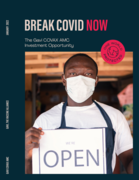
In April 2020, Gavi and COVAX joined the Access to COVID-19 Tools Accelerator (ACT-A) to provide equitable global access to COVID-19 vaccines to tackle the pandemic. In June 2020, the Gavi COVAX Advance Market Commitment (AMC) was launched to finance equitable access in 92 lower-income countries. Si
...
