
Filter
2726
Text search:
World
Health
Organization
(
WHO),
Regional
Office
for
Africa
Featured
Recommendations
292
New Publications
680
Language
Document type
No document type
1375
Studies & Reports
535
Guidelines
372
Manuals
172
Strategic & Response Plan
137
Training Material
53
Fact sheets
38
Situation Updates
29
Resource Platforms
6
Infographics
5
Brochures
2
App
1
Online Courses
1
Countries / Regions
Global
147
Ethiopia
93
Sierra Leone
85
Africa
82
Kenya
81
Liberia
75
Uganda
64
Tanzania
50
Zambia
48
Nigeria
47
Ghana
47
Malawi
42
South Africa
41
India
35
Guinea
34
Western and Central Europe
34
Rwanda
33
Mozambique
31
Namibia
31
West and Central Africa
30
South Sudan
28
East and Southern Africa
27
Congo, Democratic Republic of
26
Syria
25
Middle East and North Africa
25
Senegal
24
Asia
23
Nepal
22
South–East Asia Region
20
Latin America and the Carribbean
18
Ukraine
17
Lesotho
17
Yemen
17
Zimbabwe
15
Bangladesh
14
Cameroon
13
Central African Republic
13
Angola
13
Eastern Europe
13
Somalia
11
Botswana
10
Myanmar / Burma
10
Burkina Faso
9
Mali
9
Guinea-Bissau
9
Sudan
9
Eswatini/ Swaziland
9
Russia
9
Pakistan
8
Afghanistan
8
Cambodia
8
China
8
Madagascar
8
Haiti
7
Philippines
7
Thailand
7
Brazil
7
Côte d’Ivoire / Ivory Coast
6
Chad
6
Gambia
6
Eastern Europe and Central Asia
6
Togo
5
Benin
5
Colombia
5
Sri Lanka
5
Venezuela
5
Jordan
4
Lebanon
4
Indonesia
4
Burundi
4
Western Pacific Region
4
North Macedonia
3
Laos
3
Iran
3
Georgia
3
Mauritius
3
Morocco
2
Saudi Arabia
2
Iraq
2
Papua New Guinea
2
Peru
2
Mexico
2
Albania
2
Djibouti
2
Southern Africa
2
Kyrgyzstan
2
Kazakhstan
2
Portugal
2
Bosnia and Herzegovina
2
USA
1
Niger
1
Germany
1
Turkey
1
Mauritania
1
Argentina
1
Hungary
1
Ecuador
1
Greece
1
Libya
1
Palestine
1
Armenia
1
Timor Leste/ East Timor
1
Tajikistan
1
Qatar
1
Bulgaria
1
Estonia
1
Moldova
1
Vietnam
1
North America
1
Turkmenistan
1
Jamaica
1
Japan
1
Belgium
1
Tunisia
1
United Kingdom
1
Norway
1
Spain
1
Belarus
1
Israel
1
Authors & Publishers
Publication Years
Category
Countries
860
Clinical Guidelines
218
Key Resources
188
Public Health
167
Women & Child Health
156
Capacity Building
54
Pharmacy & Technologies
33
Toolboxes
HIV
257
COVID-19
212
Mental Health
173
TB
137
Planetary Health
127
Ebola & Marburg
120
Disability
105
Rapid Response
87
NTDs
87
AMR
83
Global Health Education
70
Caregiver
68
Conflict
64
2.0 Rapid Response
61
Refugee
54
Pharmacy
50
Health Financing Toolbox
44
NCDs
42
Malaria
40
Natural Hazards
21
Zika
20
Cholera
16
Polio
14
Specific Hazards
7
Social Ethics
6
Typhoon
3
South Sudan
1
A survey was conducted in countries in all six WHO regions and focused on the building blocks that are considered prerequisites to combat antimicrobial resistance: a comprehensive national plan, laboratory capacity to undertake surveillance
...
2nd edition - Published in 2003, the first WHO/HAI medicine prices manual Medicine Prices – A
New Approach to Measurement Draft for field-testing provides a draft methodology and tools to conduc
...

Malaria is a prevalent cause of febrile illnesses in areas with high transmission, and its clinical presentation overlaps with initial signs of Ebola disease. For this reason, the effectiveness of the Ebola response in Guinea, Liberia and Sierra Leo
...

The main objective of this mission was to assess the level of preparedness of Guinea-Bissau in respect of the WHO consolidated checklist. The checklist helps countries to assess and test their level of readiness it is being used to identify concrete
...
The country profiles incorporate facts indicating the national status of medical devices in areas such as: medical device policies, regulations, incorporation, lists, inventories, nomenclature, health technology assessment, management, and biomedi
...
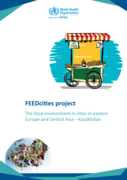
This technical report presents results from the FEEDcities Project – Eastern Europe and Central Asia, a cross-sectional survey conducted in Almaty, Aktau and Kyzylorda, Kazakhstan, between July and August 2017, to evaluate the local street food environment. It characterized the vending sites, the
...
The objective of this guidance document is to support the public health professionals
in implementing effective surveillance of cholera in at-risk, endemic and epidemic
areas. This document has been developed by the Surveillance Working Group of t
...
Countries are making progress toward the global goal of 95% of people living with HIV knowing their status by 2025. However, considerable gaps remain in achieving these goals globally. Men in high HIV burden settings and men from key populations in all settings are consistently less likely to know t
...
This technical report presents the results of a cross-sectional survey conducted in Sarajevo, the Federation of Bosnia and Herzegovina, Bosnia and Herzegovina, between June and August 2017, as part of the FEEDcities Project (Food Environment Description in cities – eastern Europe and central Asia)
...

This guidance note identifies strategic action for policy-makers and managers at the national, subnational and facility level to address these different challenges.

The African Regional Convening of the Global Initiative to Support Parents (GISP) stimulated the interest or engagement of almost 1500 individuals from 742 unique organizations in the fields of health
...

Guidance statement
Recommendations on contraceptive methods used by
women at high risk of HIV
The report provides a brief introduction to patents and licences and their effect on the market for antiretroviral (ARV) medicines. It gives an overview of the patent landscape with respect to a select number of ARV medicines in developing countries
...
The Guidance on National Deployment and Vaccination Planning is intended to help countries develop their plan for COVID-19 vaccine introduction.
NEUROLOGY ATLAS presents for the first time, the most
comprehensive collection and compilation of information on
neurological resources across 109 countries. The results confirm
that the available resources including services
...

The World Health Organization (WHO) recommends the use of insecticide-treated nets (ITNs) and in
...
