
Filter
1291
Text search:
indicators
of
climate
change
Featured
110
350
Language
Document type
543
382
129
110
83
18
13
8
3
1
1
Countries
110
34
34
27
26
25
23
22
21
20
19
17
17
17
16
15
14
14
14
14
12
11
10
9
9
9
9
8
8
7
7
7
7
6
6
6
6
6
6
5
5
5
5
5
5
4
4
4
4
4
4
4
4
3
3
3
3
3
3
3
3
3
2
2
2
2
2
2
2
2
2
2
2
1
1
1
1
1
1
1
1
1
1
1
1
1
1
1
1
1
1
1
1
1
1
1
1
1
1
1
1
1
1
1
Authors & Publishers
Publication Years
Category
472
177
74
47
30
24
4
Toolboxes
234
71
61
55
52
52
49
41
36
35
33
31
29
18
18
17
16
15
14
12
8
8
3
2
2
1
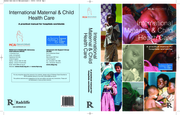
The purpose of adding the books to the website of MCAI for download, is to make this life-saving, up-to-date information available to all who need it. Fill in a short registration field and you can
...

At the threshold of Sustainable Development Goals (SDG) era, this document captures the remarkable achievements by Member States towards achieving MDGs 4 and 5. It acknowledges new opportunities in the post-2015 phase shaped by the SDGs and the Glo
...
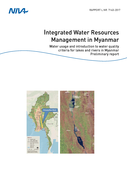
The purpose of the report is to present some first recommendation for the development of Myanmar ecological quality criteria using the system of th
...
Event-based surveillance (EBS) is defined as the organized collection, monitoring, assessment and interpretation of mainly unstructured ad hoc information regarding health events or risks, which may represent an acute risk to health. Both indicator-
...
A workshop of “first mover” countries to exchange experience and identify wider policy implications for the WHO European Region
The World Health Organization (WHO) European Region continues to be severely affected by diet-related noncommunicabl
...

Event-based surveillance (EBS) is defined as the organized collection, monitoring, assessment and interpretation of mainly unstructured ad hoc information regarding health events or risks, which may represent an acute risk to health. Both indicator-
...
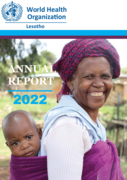
This annual report gives an overview of WHO lesotho Country office's undertakings and achievements in the context of an extraordinary health emergency. As we walk another mile this year, may we embr
...

The strategic priorities of the CCS 2014–2018 are:
(1) Strengthening the health system.
(2) Enhancing the achievement of communicable disease control targets.
(3) Controlling the gr ...
(1) Strengthening the health system.
(2) Enhancing the achievement of communicable disease control targets.
(3) Controlling the gr ...

Guide to national implementation of the Shanghai Declaration describes policy orientations and approaches that can unlock the transformative potential of health promotion for sustainable development
...

The key to a lasting world free of all forms of poliovirus lies in rapidly interrupting all remaining endemic transmission of WPV in the endemic ar
...

It provides insight into WHO’s work that aims to improve the health of the people of the United Republic of Tanzania in collaboration with key st
...

There has been important progress for the rights of adolescent girls and women in recent decades, yet millions still struggle to
access the nutritious diets, essential nutrition services and nutrition and care practices they need to prevent malnutr
...
This publication uses graphics to explain the importance of development cooperation in general and for health in particular. Financial contributions in the context of development cooperation have pr
...

Stronger collaboration, better health: global action plan for healthy lives and well-being for all
recommended
The overall objective of the Global Action Plan is to enhance collaboration among 12 global organizations engaged in health, development and humanitarian responses to accelerate country progress on the health-related SDG targets. The Plan presents a
...

A guide to facilitating community-managed disaster risk reduction in the Horn of Africa.
This manual describes how to help communities implement disaster risk reduction activities. It was written for development workers and community-based organiza
...
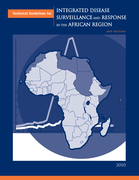
Technical Guidelines for Integrated Disease Surveillance and Response in the African Region
recommended
3rd edition.
The third edition of the Integrated Disease Surveillance and Response (IDSR) Technical Guidelines was prepared by the WHO Health Emergencies (WHE) Programme with the active participation and involvement
...
The global burden of disease associated with air pollution exposure exacts a massive toll on human health worldwide: exposure to air pollution is estimated to cause millions of deaths and lost years
...

The World Health Organization (WHO) and the global community of countries, partners, donors, technical experts, scientists and field implementation teams continue to work towards the ultimate goal of
...
Improving the survival chances and quality of life of women, newborns, and children remains an urgent global challenge. Since 2012, substantial progress has been made in reducing maternal and under-
...

National action plans on antimicrobial resistance (AMR) often overlook the critical intersection of gender, despite evidence that exposure and susceptibility to infection, health-seeking behaviours, as well as antimicrobial prescribing and use patte
...
