
Filter
2305
Text search:
heart
diseases
Featured
250
495
Language
2210
92
75
62
46
32
27
16
12
6
5
4
4
4
4
3
3
2
2
2
2
2
2
2
2
2
2
1
1
1
1
1
1
1
1
1
1
1
1
1
1
1
1
1
1
1
1
1
1
Document type
997
524
355
141
84
82
58
13
13
12
9
6
5
5
Countries
185
132
55
55
55
46
40
37
36
36
34
33
31
30
29
26
25
24
22
22
21
20
19
16
15
14
13
13
11
10
9
9
9
9
8
8
7
7
7
7
7
7
7
7
7
6
6
6
5
5
5
4
4
4
4
4
4
3
3
3
3
3
3
3
3
3
3
2
2
2
2
2
2
2
2
2
2
2
2
2
2
1
1
1
1
1
1
1
1
1
1
1
1
1
1
1
1
1
1
1
1
1
1
1
1
1
1
1
1
1
1
1
Authors & Publishers
346
90
78
74
72
40
30
24
20
18
18
17
16
16
15
14
14
13
13
13
12
11
11
10
10
9
8
8
8
8
7
7
7
7
7
6
6
6
6
6
6
6
6
5
5
5
5
5
5
5
5
5
5
5
5
5
5
5
5
4
4
4
4
4
4
4
4
4
4
4
4
4
4
4
4
4
4
4
4
3
3
3
3
3
3
3
3
3
3
3
3
3
3
3
3
3
3
3
3
3
3
3
3
3
3
3
3
3
3
3
3
3
3
3
3
3
3
3
3
3
3
3
3
3
3
3
3
3
2
2
2
2
2
2
2
2
2
2
2
2
2
2
2
2
2
2
2
2
2
2
2
2
2
2
2
2
2
2
2
2
2
2
2
2
2
2
2
2
2
2
2
2
2
2
2
2
2
2
2
2
2
2
2
2
2
2
2
2
2
2
2
2
2
2
2
2
2
2
2
2
2
2
2
2
2
2
2
2
2
2
2
2
2
2
2
2
2
2
2
2
2
2
2
2
2
2
2
2
2
2
2
2
2
2
2
2
2
2
2
2
2
2
2
2
2
2
2
2
2
2
2
2
2
2
2
2
2
2
2
2
2
2
2
2
2
2
2
2
2
2
2
1
1
1
1
1
1
1
1
1
1
1
1
1
1
1
1
1
1
1
1
1
1
1
1
1
1
1
1
1
1
1
1
1
1
1
1
1
1
1
1
1
1
1
1
1
1
1
1
1
1
1
1
1
1
1
1
1
1
1
1
1
1
1
1
1
1
1
1
1
1
1
1
1
1
1
1
1
1
1
1
1
1
1
1
1
1
1
1
1
1
1
1
1
1
1
1
1
1
1
1
1
1
1
1
1
1
1
1
1
1
1
1
1
1
1
1
1
1
1
1
1
1
1
1
1
1
1
1
1
1
1
1
1
1
1
1
1
1
1
1
1
1
1
1
1
1
1
1
1
1
1
1
1
1
1
1
1
1
1
1
1
1
1
1
1
1
1
1
1
1
1
1
1
1
1
1
1
1
1
1
1
1
1
1
1
1
1
1
1
1
1
1
1
1
1
1
1
1
1
1
1
1
1
1
1
1
1
1
1
1
1
1
1
1
1
1
1
1
1
1
1
1
1
1
1
1
1
1
1
1
1
1
1
1
1
1
1
1
1
1
1
1
1
1
1
1
1
1
1
1
1
1
1
1
1
1
1
1
1
1
1
1
1
1
1
1
1
1
1
1
1
1
1
1
1
1
1
1
1
1
1
1
1
1
1
1
1
1
1
1
1
1
1
1
1
1
1
1
1
1
1
1
1
1
1
1
1
1
1
1
1
1
1
1
1
1
1
1
1
1
1
1
1
1
1
1
1
1
1
1
1
1
1
1
1
1
1
1
1
1
1
1
1
1
1
1
1
1
1
1
1
1
1
1
1
1
1
1
1
1
1
1
1
1
1
1
1
1
1
1
1
1
1
1
1
1
1
1
1
1
1
1
1
1
1
1
1
1
1
1
1
1
1
1
1
1
1
1
1
1
1
1
1
1
1
1
1
1
1
1
1
1
1
1
1
1
1
1
1
1
1
1
1
1
1
1
1
1
1
1
1
1
1
1
1
1
1
1
1
1
1
1
1
1
1
1
1
1
1
1
1
1
1
1
1
1
1
1
1
1
1
1
1
1
1
1
1
1
1
1
1
1
1
1
1
1
1
1
1
1
1
1
1
1
1
1
1
1
1
1
1
1
1
1
1
1
1
1
1
1
1
1
1
1
1
1
1
1
1
1
1
1
1
1
1
1
1
1
1
1
1
1
1
1
1
1
1
1
1
1
1
1
1
1
1
1
1
1
1
1
1
1
1
1
1
1
1
1
1
1
1
1
1
1
1
1
1
1
1
1
1
1
1
1
1
1
1
1
1
1
1
1
1
1
1
1
1
1
1
1
1
1
1
1
1
1
1
1
1
1
1
1
1
1
1
1
1
1
1
1
1
1
1
1
1
1
1
1
1
1
1
1
1
1
1
1
1
1
1
1
1
1
1
1
1
1
1
1
1
1
1
1
1
1
1
1
1
1
1
1
1
1
1
1
1
1
1
1
1
1
1
1
1
1
1
1
1
1
1
1
1
1
1
1
1
1
1
1
1
1
1
1
1
1
1
1
1
1
1
1
1
1
1
1
1
1
1
1
1
1
1
1
1
1
1
1
1
1
1
1
1
1
1
1
1
1
1
1
1
1
1
1
1
1
1
1
1
1
1
1
1
1
1
1
1
1
1
1
1
1
1
1
1
1
1
1
1
1
1
1
1
1
1
1
1
1
1
1
1
1
1
1
1
1
1
1
1
1
1
1
1
1
1
1
1
1
1
1
1
1
1
1
1
1
1
1
1
1
1
1
1
1
1
1
1
1
1
1
1
1
1
1
1
1
1
1
1
1
1
1
1
1
1
1
1
1
1
1
1
1
1
1
1
1
1
1
1
1
1
1
1
1
1
1
1
1
1
1
1
1
1
1
1
1
1
1
1
1
1
1
1
1
1
1
1
1
1
1
1
1
1
1
1
1
1
1
1
1
1
1
1
1
1
1
1
1
1
1
1
1
1
1
1
1
1
1
1
1
1
1
1
1
1
1
1
1
1
1
1
1
1
1
1
1
1
1
1
1
1
1
1
1
1
1
1
1
1
1
1
1
1
1
1
1
1
1
1
1
1
1
1
1
1
1
1
1
1
1
1
1
1
1
1
1
1
1
1
1
1
1
1
1
1
1
1
1
1
1
1
1
1
1
1
1
1
1
1
1
1
1
1
1
1
1
1
1
1
1
1
1
1
1
1
1
1
1
1
1
1
1
1
1
1
1
1
1
1
1
1
1
1
1
1
1
1
1
1
1
1
1
1
1
1
1
1
1
1
1
1
1
1
1
1
1
1
1
1
1
1
1
1
1
1
1
1
1
1
1
1
1
1
1
1
1
1
1
1
1
1
1
1
1
1
1
1
1
1
1
1
1
1
1
1
1
1
1
1
1
1
1
1
1
1
1
1
1
1
1
1
1
1
1
1
1
1
1
1
1
1
1
1
1
1
1
1
1
1
1
1
1
1
1
1
1
1
1
1
1
1
1
1
1
1
1
1
1
1
1
1
1
1
1
1
1
1
1
1
1
1
1
1
1
1
1
1
1
1
1
1
1
1
1
1
1
1
1
1
1
1
1
1
1
1
1
1
1
1
1
1
1
1
1
1
1
1
1
1
1
1
1
1
1
1
1
1
1
1
1
1
1
1
1
1
1
1
1
1
1
1
1
1
1
1
1
1
1
1
1
1
1
1
1
1
1
1
1
1
1
1
1
1
1
1
1
1
1
1
1
1
1
1
1
1
1
1
1
1
1
1
1
1
1
1
1
1
1
1
1
1
1
1
1
1
1
1
1
1
1
1
1
1
1
1
1
1
1
1
1
1
1
1
1
1
1
1
1
1
1
1
1
1
1
1
1
1
1
1
1
1
1
1
1
1
1
1
1
1
1
1
1
1
1
1
1
1
1
1
1
1
1
1
1
1
1
1
1
1
1
1
1
1
1
1
1
1
1
1
1
1
1
1
1
1
1
1
1
1
1
1
1
1
1
1
1
1
1
1
1
1
1
1
1
1
1
1
1
1
1
1
1
1
1
1
1
1
1
1
1
1
1
1
1
1
1
1
1
1
1
1
1
1
1
1
1
1
1
1
1
1
1
1
1
1
1
1
1
1
1
1
1
1
1
1
1
1
1
1
1
1
1
1
1
1
1
1
1
1
1
1
1
1
1
1
1
1
1
1
1
1
1
1
1
1
1
1
1
1
1
1
1
1
1
1
1
1
1
1
1
1
1
1
1
1
1
1
1
1
1
1
1
1
1
1
1
1
1
1
1
1
1
1
1
1
1
1
1
1
1
1
1
1
1
1
1
1
1
1
1
1
1
1
1
1
1
1
1
1
1
1
1
1
1
1
1
1
1
1
1
1
1
1
1
1
1
1
1
1
1
1
1
1
1
1
1
1
1
1
1
1
1
1
1
1
1
1
1
1
1
1
1
1
1
1
1
1
1
1
1
1
1
1
1
1
1
1
1
1
1
1
1
1
1
1
1
1
1
1
1
1
1
1
1
1
1
1
1
1
1
1
1
1
1
1
1
1
1
1
1
1
1
1
1
1
1
1
1
1
1
1
1
1
1
1
1
1
1
1
1
1
1
1
1
1
1
1
1
1
1
1
1
1
1
1
1
1
1
1
1
1
1
1
1
1
1
1
1
1
1
1
1
1
1
1
1
1
1
1
1
1
1
1
1
1
1
1
1
1
1
1
1
1
1
1
1
1
1
1
1
1
1
1
1
1
1
1
1
1
1
1
1
1
1
1
1
1
1
1
1
1
1
1
1
1
1
1
1
1
1
1
1
1
1
1
1
1
1
1
1
1
1
1
1
1
1
1
1
1
1
1
1
1
1
1
1
1
1
1
1
1
1
1
1
1
1
1
1
1
1
1
1
1
1
1
1
1
1
1
1
1
1
1
1
1
1
1
1
1
1
1
1
1
1
1
1
1
1
1
1
1
1
1
1
1
1
1
1
1
1
1
1
1
1
1
1
1
1
1
1
1
1
1
1
1
1
1
1
1
1
1
1
1
1
1
1
1
1
1
1
1
1
1
1
Publication Years
857
1244
189
14
1
Category
821
287
265
114
97
72
8
1
Toolboxes
282
207
178
126
91
85
67
60
57
49
49
46
39
37
36
30
23
20
17
16
14
13
10
5
4

Across the world more than 420 million people are living with diabetes. Two thirds of these have not yet been diagnosed. When discovered late or managed incorrectly, diabetes can damage your heart, blood vessels, eyes, kidneys, and nerves, leading t
...
o disability and premature death. In fact, more people are dying of diabetes related diseases than of diseases as HIV/AIDS, malaria and tuberculosis combined.
more
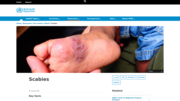
Human scabies is a parasitic infestation caused by Sarcoptes scabiei var hominis. The microscopic mite burrows into the skin and lays eggs, eventually triggering a host immune response that leads to intense itching and rash. Scabies infestation may be complicated by bacterial infection, leading to t
...
he development of skin sores that, in turn, may lead to the development of more serious consequences such as septicaemia, heart disease and chronic kidney disease. In 2017, scabies and other ectoparasites were included as Neglected Tropical Diseases (NTDs), in response to requests from Member States and the recommendations of the WHO Strategic and Technical Advisory Group for NTDs.
more
Cardiovascular disease (CVD) is often thought to be a problem of wealthy, industrialized nations. The term “cardiovascular disease” is used throughout the report to refer to cardiac disease, vascular diseases of the brain and kidney, and periphe
...
ral vascular disease. The report’s main focus is on the major contributors to global CVD mortality, coronary heart disease and stroke, and on the major modifiable risk factors for cardiovascular diseases. In fact, as the leading cause of death worldwide, CVD now has a major impact not only on developed nations but also on low and middle income countries, where it accounts for nearly 30 percent of all deaths. The terms “developed” and “high income countries” are used interchangeably throughout the report to refer to countries classified by the World Bank as high income economies. The terms “developing” and “low and middle income countries” are used interchangeably throughout the report to refer to countries classified by the World Bank as low, lower middle, and upper middle income economies. The increased prevalence of risk factors for CVD and related chronic diseases in developing countries, including tobacco use, unhealthy dietary changes, reduced physical activity, increasing blood lipids, and hypertension, reflects significant global changes in behavior and lifestyle. The term “chronic diseases” is used throughout the report to refer to CVD and the following related chronic diseases that share many common risk factors: diabetes, cancer, and chronic respiratory disease. These changes now threaten once-low-risk regions, a shift that is accelerated by industrialization, urbanization, and globalization. The potentially devastating effects of these trends are magnified by a deleterious economic impact on nations and households, where poverty can be both a contributing cause and a consequence of chronic diseases. The accelerating rates of unrecognized and inadequately addressed CVD and related chronic diseases in both men and women in low and middle income countries are cause for immediate action.
more
Extreme heat events (EHEs) are a leading cause of weather-related injury and death in the United States, and under a changing climate, these meteorological episodes are predicted to increase in both frequency and intensity. Prolonged heat exposure from EHEs places an increased strain on the
...
heart and may lead to heat-related illness if the cardiovascular system fails to properly thermoregulate internal body temperature. Every individual is susceptible to heat-related illness, however, those with reduced cardiovascular function and pre-existing cardiovascular diseases are at a greater risk for morbidity and mortality during EHEs. This document gives an overview of our current understanding of heat exposure and its impact on cardiovascular health outcomes, an overview of the medications that may exacerbate heat-related cardiovascular illness, and asummary of the interaction between extreme heat and air pollutants, and their collective impact on cardiovascular health. Additionally, this document summarizes epidemiologic evidence and identifies gaps in the extant peer-reviewed literature on the effectiveness of strategies and interventions to protect against heat-related cardiovascular disease and death. This information is intended to aid health departments and other health professionals in understanding and responding to the impacts of heat exposure on cardiovascular health.
more

State of Health in the WHO African Region
recommended
This report is not a country scorecard. Rather, its purpose is to act as a compass to guide progress towards health in the SDGs.
There has been a significant improvement in the state of health in the region with healthy life expectancy - time spent in full health - in the region increasing from 50
...
.9 years to 53.8 between 2012 and 2015 - the most marked increase of any region in the world.
What is making Africans sick is changing. The top killers are still lower respiratory infections, HIV and diarrhoeal disease and countries have routinely focused on preventing and treating this trio, often through specialized programmes. The payoff has been significant declines in deaths due to these diseases. There has been a 50% reduction in the burden of disease caused by what have been the top 10 killers since 2000 and death rates have dropped from 87.7 to 51.1 deaths per 100,000 persons between 2000 and 2015...
Chronic diseases like heart disease and cancer are now claiming more lives with a person aged 30 to 70 in the region having a one in five chance of dying from a noncommunicable disease (NCDs).
Countries are specifically failing to provide essential services to two critical age groups – adolescents and the elderly...
more

Accessed on 06.03.2022
Air pollution is contamination of the indoor or outdoor environment by any chemical, physical or biological agent that modifies the natural characteristics of the atmosphere. Household combustion devices, motor vehicles, industrial facilities and forest fires are common sou
...
rces of air pollution. Pollutants of major public health concern include particulate matter, carbon monoxide, ozone, nitrogen dioxide and sulfur dioxide. Outdoor and indoor air pollution cause respiratory and other diseases and is an important source of morbidity and mortality.
Air pollution kills an estimated seven million people worldwide every year. WHO data shows that almost all of the global population (99%) breathe air that exceeds WHO guideline limits containing high levels of pollutants, with low- and middle-income countries suffering from the highest exposures. WHO is supporting countries to address air pollution.
From smog hanging over cities to smoke inside the home, air pollution poses a major threat to health and climate. The combined effects of ambient (outdoor) and household air pollution cause millions of premature deaths every year, largely as a result of increased mortality from stroke, heart disease, chronic obstructive pulmonary disease, lung cancer and acute respiratory infections.
Website
more
Read and share this easy-to-understand content about the ABCS of heart health (Aspirin when appropriate, Blood pressure control, Cholesterol management, and Smoking cessation).
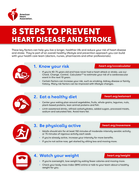
These key factors can help you live a longer, healthier life and reduce your risk of heart disease and stroke. They’re part of an overall healthy lifestyle and prevention approach you can build with your health care team (doctors, nurses, pharmaci
...
sts and other professionals).
more
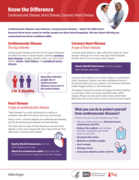
Cardiovascular disease, heart disease, and coronary heart disease may sound similar but they are not one in the same. This fact sheet will help you understand how these conditions differ.
Coronary heart disease (CHD) is when your coronary arteries become narrowed by a build-up of fatty material within their walls. These arteries supply your heart muscle with oxygen-rich blood. CHD is
...
sometimes called ischaemic heart disease.
more
Global progress against cardiovascular disease (CVD) is flatlining.
Though rates of CVD deaths globally have fallen in the last three
decades, this trend has begun to stall and, without concerted
efforts, is at risk of reversing.
Coronary heart disease (CHD) is the single most common cause of death globally. However, with falling CHD mortality rates, an increasingnumber of people live with CHD and may need support to manage their symptoms and improve prognosis. Cardiac rehab
...
ilitation is acomplex multifaceted intervention which aims to improve the health outcomes of people with CHD. Cardiac rehabilitation consists of threecore modalities: education, exercise training and psychological support. This is an update of a Cochrane systematic review previouslypublished in 2011, which aims to investigate the specific impact of the educational component of cardiac rehabilitation.
more
The course aims to cover the types of NCDs and risk factors, the challenges of delivering NCD services in primary health care, elements of WHO technical packages (PEN and HEARTS) for NCDs and how to adapt these packages in primary health care.
The World Health Organization's Global Health Observatory (GHO) provides comprehensive data on noncommunicable diseases (NCDs), including cardiovascular diseases, cancers, chronic respiratory
...
diseases, and diabetes. The portal offers country-specific statistics on NCD mortality rates, risk factors, and national responses, facilitating analysis and comparison across regions. It also includes resources such as publications and tools to support global efforts in NCD prevention and control.
more

The Noncommunicable Diseases (NCD) Data Portal offers comprehensive data on NCDs such as cardiovascular diseases, cancer, diabetes, and chronic respiratory
...
diseases. It provides country-specific information on NCD mortality rates, risk factors, and national responses, facilitating analysis and comparison across regions. The portal also includes resources like publications and tools to support global efforts in NCD prevention and control.
more

A framework for action provides a guide for those involved in the development of the multisectoral action plan. It starts with a wide-ranging vision and, through a series of increasingly specific intentions, brings into focus actions with measurable outcomes that can be taken to achieve that vision.
...
more
To maintain a structured and well-organized implementation plan it is important to have a lead agency or sector. The ministry of health or a similar authority in government will be critical in facilitating development and implementation of the multisectoral action plan.
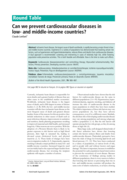
The article "Can we prevent cardiovascular diseases in low- and middle-income countries?" by Claude Lenfant discusses the growing threat of cardiovascular diseases (CVDs) in developing countries. It
...
highlights that while CVD is already the leading cause of death globally, low- and middle-income countries are now facing rising CVD rates due to lifestyle changes associated with urbanization and economic growth. Lenfant advocates for a dual approach: identifying and treating high-risk individuals and promoting broad, population-wide prevention efforts focused on lifestyle changes such as reducing smoking, lowering salt intake, and increasing physical activity. He emphasizes that early, affordable preventive measures are essential to mitigate the impending CVD epidemic in these countries and prevent significant healthcare and economic strain.
more

To maintain a structured and well-organized implementation plan it is important to have a lead agency or sector. The ministry of health or a similar authority in government will be critical in facilitating development and implementation of the multisectoral action plan.

One of the first steps in developing a multisectoral action plan (MSAP) is to use a situation analysis to provide a comprehensive assessment of the health needs, prevailing risks and the context of the area to which the plan will apply. This will help countries, regions, provinces or cities intendi
...
ng to create a multisectoral action plan to align with the global commitments on targeting the four major NCDs: cardiovascular disease, diabetes, cancer and chronic respiratory diseases.
more
