
Filter
440
Text search:
Santé
inclusive
Featured
43
133
Language
Document type
193
98
57
34
26
20
7
4
1
Countries
24
23
22
18
17
16
13
12
10
10
8
8
8
8
8
7
7
6
6
6
6
6
5
5
5
5
5
4
4
4
4
4
4
4
4
4
3
3
3
3
3
2
2
2
2
2
2
2
2
2
2
2
2
1
1
1
1
1
1
1
1
1
1
1
1
1
1
1
1
1
1
1
1
1
1
Authors & Publishers
Publication Years
Category
247
83
71
19
18
18
1
Toolboxes
21
21
18
17
15
15
14
8
7
7
6
6
5
5
4
4
3
3
2
1
1
1
La recherche des contacts – associée à un dépistage rigoureux, à l’isolement et à la prise en charge des cas – est une stratégie clé pour interrompre les chaînes de transmission du SRAS-CoV-2 et réduire la mortalité associée à la COVID-19.

Orientations provisoires, 1er février 2021
La recherche des contacts – associée à un dépistage rigoureux, à l’isolement et à la prise en charge des cas – est une stratégie clé pour interrompre les chaînes de transmission du SRAS-CoV-2 et réduire la mortalité associée
...
Evaluation of the effectiveness of vaccines against COVID-19
INTERIM GUIDANCE 17 MARCH 2021
Le rapport 2020 sur la situation du personnel infirmier dans le monde : investir dans la formation, l’emploi et le leadership est publié alors que le monde assiste à un engagement politique sans précédent en faveur de la couverture sanitaire universelle. Parallèlement, notre capacité de pré
...

Le Plan Stratégique National de Lutte contre le Paludisme 2023–2026 du Togo définit les grandes orientations pour réduire de 65 % l’incidence et la mortalité liées au paludisme d’ici 2026, en comparaison avec les niveaux de 2022. Élaboré par le Programme National de Lutte contre le Pa
...
Le Plan Stratégique National de Lutte contre le Paludisme au Sénégal 2021–2025 a pour objectif de réduire l’incidence et la mortalité liées au paludisme d’au moins 75 % par rapport à 2019 et d’interrompre la transmission locale dans au moins 80 % des districts éligibles. Il repos
...

Version Révisée SEPTEMBRE 2016
Politique et plan stratégique intégré de lutte contre les maladies non transmissibles (PSIMNT) 2012-2015
Le Ministère de la Santé Publique et de la Prévention en collaboration avec les partenaires techniques et financiers, a procédé à l’élaboration du Plan National de Développement Sanitaire quatrième de la Génération (PNDS4), couvrant la
...
Préparatiom et la riposte aux Épidémies er Afrique guide de Décentralisation des capacités de Laboratoire
recommended
L’augmentation en fréquence et en ampleur des urgences de santé publique en Afrique met en évidence
l’importance cruciale d’un dépistage précoce, d’une intervention rapide et d’un accès équitable aux
capacités de laboratoire. Les
...
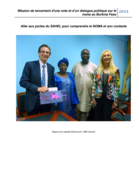
Cette mission menée conjointement par la représentante du Ministère de la Santé en charge du projet, la
responsable EVIPNet de l’OMS à Genève et le directeur de la fondation Winds of Hope visait à établir le lien entre
le Ministère de l
...

Supported decision-making and advance planning: WHO QualityRights Specialized training: course guide
Les modules de formation et d’orientation QualityRights ont été élaborés pour renforcer les connaissances, les compétences et la compréhension des principales parties prenantes sur la manière de promouvoir les droits des personnes en situation de handicap psychosocial, intellectuel ou cogni
...
L’élimination du paludisme nécessite l’engagement de tous. Afin de maintenir les communautés alertes et engagées, nous allons nous appuyer sur des exemples réussis d’engagement communautaire pour élaborer un programme de sensibilisation sur le paludisme en milieu communautaire et ce par
...
Um Manual Programático
A publicação deste documento foi possível graças ao apoio da Comissão Europeia (auxílio Sante 2007141-838). O conteúdo deste documento é de responsabilidade única de A Union e não reflete a opinião da Comissão Eu
...

Les modules de formation et d’orientation QualityRights ont été élaborés pour renforcer les connaissances, les compétences et la compréhension des principales parties prenantes sur la manière de promouvoir les droits des personnes en situation de handicap psychosocial, intellectuel ou cogni
...

Le document, intitulé « Progrès dans la prévention et le contrôle des maladies non transmissibles », rend compte des efforts mondiaux pour réduire l’impact des MNT (maladies non transmissibles), telles que les maladies cardiaques, le cancer, le diabète et les maladies respiratoires chroniq
...
Renforcement de la surveillance et du partage d’informations à l’échelle transfrontalière en Afrique
Le document intitulé « Strategic Framework for Strengthening Cross-Border Surveillance and Information Sharing in Africa » présente une stratégie coordonnée élaborée par Africa CDC afin d’améliorer la surveillance de la santé publique et
...

La présente Stratégie pour des infrastructures sanitaires de qualité en Afrique2021-2030 (SISQA) répond à une demande des gouverneurs de la Banque africaine de développement (la BAD ou la Banque) invitant l’institution à définir son rôle dans la lutte contre les déficits d’infrastructu
...
Le plan stratégique de la RBM Partnership to End Malaria pour 2021-2025 présente les priorités stratégiques du partenariat mondial visant à éliminer le paludisme. Le document se concentre sur trois objectifs stratégiques principaux : optimiser les programmes régionaux et nationaux, maximiser
...

Pregnancy and childbirth during adolescence profoundly affects the lives of millions of girls worldwide, and is a leading cause of maternal mortality and morbidity, and infant and child mortality. Every year, an estimated 21 million girls aged 15–19 years old in low- and middle-income countries be
...
