
Filter
269
Text search:
Pest
Featured
28
83
Language
Document type
103
56
45
32
16
8
4
3
1
1
Countries
13
11
10
9
7
7
7
6
6
5
5
5
4
4
4
4
4
4
3
3
3
3
2
2
2
2
2
2
2
2
2
1
1
1
1
1
1
1
1
1
1
1
1
1
1
1
1
1
1
1
1
1
1
1
1
1
1
1
1
1
1
1
1
1
Authors & Publishers
Publication Years
Category
99
32
26
18
5
3
Toolboxes
51
23
17
13
13
12
10
9
7
6
5
5
5
4
4
4
3
2
1
1
The CAP is instrumental in managing the transition towards a sustainable food system and in strengthening the efforts of European farmers to contribute to the EU’s climate objectives and to protect the environment. Eco-schemes are a new instrument in the CAP to support this transition.
Adresssing climate change impacts on infrastructure: preparing for change. Fact sheet
2nd edition. This Permagarden Technical Manual is a resource for agriculture project staff implementing home garden projects with farmers. The manual explains how the permagarden method addresses soil health, water management and crop protection to create a year-round productive home garden. It incl
...
The main purpose of the meeting was to review tsetse control tools, activities and their contribution to the elimination of gHAT and the monitoring thereof. Seven endemic countries provided reports on recent and ongoing vector control interventions at the national level (Angola, Cameroon, Côte d’
...

This document compiles the recommendations made by the World Health Organization (WHO) and the Pan American Health Organization (PAHO) to help professionals in charge of vector control programs in Latin America and the Caribbean at the national, subnational, and local level update their knowledge in
...

El presente documento reúne un conjunto de recomendaciones formuladas por la Organización Mundial de la Salud (OMS) y la Organización Panamericana de la Salud (OPS) para ayudar, a los profesionales encargados de los programas de control de vectores de Latinoamérica y el Caribe a nivel nacional,
...

The Food and Agriculture Organization of the United Nations (FAO) launched a new Framework for Environmental and Social Management (FESM) to ensure that both people and the environment are protected from any potential impacts of FAO programmes and projects.
“This Framework ensures that our proj
...

This document outlines the best practices for mosquito control and surveillance in United Nations duty stations affected by mosquito-borne diseases. It sets out an integrated vector management (IVM) approach combining environmental, biological, mechanical, chemical and personal protection strategies
...

It is our hope and prayer that the guidance and multiple tools provided herein to manage
the entire lifecycle of a food security program are useful to our food security staff, our
local partners, and our fellow international Cooperating Sponsors throughout the world.

2nd edition. The interagency field handbook on malaria control was developed to set out effective malaria control responses in humanitarian emergencies, particularly during the acute phase when reliance on international humanitarian assistance is greatest. This second edition represents a thorough u
...
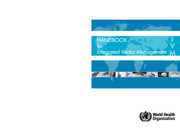
The intention of this handbook on integrated vector management (IVM) is to provide
guidance to the managers of vector-borne disease control programmes, including
comparable officials in health and other sectors involved in vector-borne disease control.
The target audience is managers and official
...

Maintaining proper storage conditions for health commodities is vital to ensuring their quality. Product expiration dates are based on ideal storage conditions and protecting product quality until their expiration date is important for serving customers and conserving resources. Guidelines for the S
...

The present book deals not only with emergency response, but also with measures designed to reduce the impact of disasters on environmental health infrastructure, such as water supply and sanitation facilities. It also aims to strengthen the ability of people to withstand the disruption of their acc
...
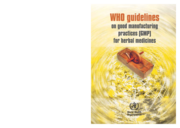
The manufacturing process is one of the key steps where quality control is required to ensure quality of medicinal products, including herbal medicines. Good manufacturing practices (GMP) is one of the most important tools for this measure.


(You need free registration to download the book)
Disasters and public health emergencies can stress health care systems to the breaking point and disrupt delivery of vital medical services. During such crises, hospitals and long-term care facilities may be without power; trained staff, ambulances,
...
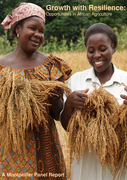
- Resilient Markets
- Resilient Agriculture
- Resilient People
- Political Leadership for Resilient Growth
- The Role of Plant Nutrition in Supporting Food Security
- Micronutrient Malnutrition: Causes, Prevalence, Consequences and Interventions
- Fertilizer Application and Nutraceutical Content in
Health-Functional Foods
- Plant Nutrition and Health Risks Associated with Plant Diseases
- Human Heal
...
A practical guide for hospital administrators, health disaster coordinators, health facility designers, engineers and maintenance staff to achieve Smart Health Facilities by conserving resources, cutting costs, increasing efficiency in operations and reducing carbon emissions
This book is aimed at policymakers in ministries of agriculture and national agricultural research institutes, as well as multilateral development banks and the private sector and provides guidance on various technology strategies and which to pursue as competition grows for land, water, and energy
...
