
Filter
141
Text search:
OpenWHO
Featured
35
9
Language
Document type
48
36
18
14
9
8
3
2
1
1
1
Countries / Regions
15
13
5
4
4
4
3
3
3
3
3
3
2
2
2
2
2
2
2
2
1
1
1
1
1
1
1
1
1
1
1
1
1
1
1
1
1
1
1
1
1
1
1
Authors & Publishers
Publication Years
Category
34
29
18
18
8
2
Toolboxes
62
11
9
8
6
6
5
5
4
3
3
3
2
2
2
2
2
2
2
1
1
1
1
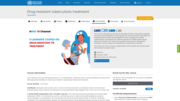
This e-course will guide you through the essentials of latest existing WHO guidelines and policy recommendations on drug-resistant TB. You will also learn more about the rationale behind the WHO recommendations for the management of DR-TB, implementation considerations for different regimens for eli
...
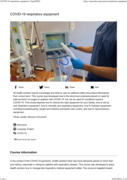
COVID-19 respiratory equipment
recommended
All health workers require knowledge and skills to care for patients safely and protect themselves from undue harm. This course was developed due to the enormous emphasis placed on need for safe provision of oxygen to patients with COVID-19, but can be used for conditions beyond COVID-19. This cours
...
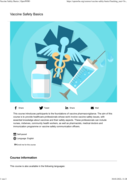
This course introduces participants to the foundations of vaccine pharmacovigilance. The aim of this course is to provide healthcare professionals whose work involve vaccine safety issues, with essential knowledge about vaccines and their safety aspects. These professionals can include nurses, midwi
...
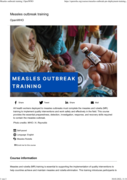
AAll health workers deployed to measles outbreaks must complete the measles and rubella (MR) training to implement quality interventions and work safely and effectively in the field. This channel provides the essential preparedness, detection, investigation, response, and recovery skills required to
...
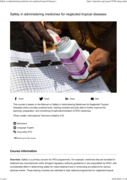
This course is based on the Manual on Safety in Administering Medicines for Neglected Tropical Diseases which provides practical tools, training modules and jobs aids to further improve the planning, preparation, and monitoring of safe administration of NTD medicines.
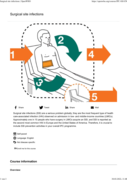
Surgical site infections (SSI) are a serious problem globally; they are the most frequent type of health care-associated infection (HAI) observed on admission in low- and middle-income countries (LMICs). Approximately one in 10 people who have surgery in LMICs acquire an SSI, and SSI is reported as
...
Health workers involved in deployment and implementation of COVID-19 vaccination require vaccine-specific knowledge to ensure safe and efficient vaccine delivery. This training provides key information about COVID-19 vaccines through short instructional videos, vaccine explainers, job aids, topic br
...
The toolkit provides guidance on where to get started, including the structures and resources that should be put in place at the national and health-care facility level, through a stepwise approach in low-resource settings. As the ultimate goal of an AMS programme is sustainable behaviour change in
...

Decontamination of medical devices plays an important role in the prevention of health care-associated infections. It includes cleaning, disinfection and/or sterilization. The processes involved in decontamination are complex, require specific infrastructure and equipment, and involve several sequen
...

Antimicrobial agents like antibiotics are essential to treat some human and animal diseases. Microbes, such as bacteria, can develop resistance to antimicrobials meaning that a drug such as an antibiotic is no longer effective in treating the infection. The development of resistance is caused by the
...
An interdisciplinary approach to address global health challenges such as the Covid-19 pandemic, climate change, loss of biodiversity, human migration has been framed by the One Health approach. This approach is promoted at global level by the Tripartite of the World Health Organisation, the World A
...

Ce document a été élaboré par le Programme des urgences sanitaires de l'Organisation mondiale de la santé comme ressource pour la réponse à la flambée du virus d'Ebola (Ebola) en République démocratique du Congo en mai 2018.
Ce document est destiné à guider le travail de communication d
...

Managing epidemics
recommended
Key facts about major deadly diseases.This manual provides concise and up-to-date knowledge on 15 infectious diseases that have the potential to become international threats, and tips on how to respond to each of them.
You can download an interactive version directly at the website
http://www.who.
...

The goal of the strategy is to prevent seasonal influenza, control the spread of influenza from animals to humans, and prepare for the next influenza pandemic.
The new strategy is the most comprehensive and far-reaching that WHO has ever developed for influenza. It outlines a path to protect popul
...
23 December 2020 This document summarizes WHO recommendations for the rational use of personal protective equipment (PPE) in health care settings and temporary strategies during acute supply shortages. This document also contains 2 Annex sections describing updated PPE use recommendations for health
...

orientaciones provisionales, 23 de diciembre de 2020
En este documento se resumen las recomendaciones de la OMS para utilizar de forma racional los equipos de protección personal (EPP) tanto en los centros sanitarioscomo en los domicilios, así como durante la manipulación
...
WHO published the first COVID-19 Strategic Response and Preparedness Plan (SPRP) on 3 February, 2020. This report highlights the main points of progress that were made up to 30 June 2020 under the three objectives outlined in the SPRP: scaling up international coordination and support; scaling up co
...
