Filter
168
Text search:
American
Lung
Association
Featured
Recommendations
21
New Publications
15
Language
Document type
No document type
72
Studies & Reports
40
Guidelines
29
Manuals
12
Fact sheets
5
Training Material
4
Strategic & Response Plan
3
App
1
Resource Platforms
1
Videos
1
Countries / Regions
Global
22
Western and Central Europe
6
India
4
Russia
4
USA
3
South Africa
3
Ukraine
3
Africa
3
Syria
2
Bangladesh
2
Latin America and the Carribbean
2
Eastern Europe
2
Liberia
1
Ethiopia
1
Ghana
1
Uganda
1
Philippines
1
Iraq
1
Germany
1
Zambia
1
Kenya
1
Cambodia
1
Rwanda
1
Indonesia
1
Malawi
1
Sudan
1
Benin
1
Argentina
1
Brazil
1
Ecuador
1
South–East Asia Region
1
Vietnam
1
Authors & Publishers
Publication Years
Category
Clinical Guidelines
29
Countries
25
Public Health
24
Women & Child Health
9
Pharmacy & Technologies
5
Key Resources
2
Capacity Building
1
Toolboxes
TB
38
NCDs
32
COVID-19
16
HIV
9
Planetary Health
8
Mental Health
7
Specific Hazards
6
Refugee
5
NTDs
5
Caregiver
4
Natural Hazards
3
AMR
3
Ebola & Marburg
2
Conflict
2
Pharmacy
2
Disability
1
Zika
1
Global Health Education
1
2.0 Rapid Response
1

Worldwide, there are about 17 million deaths due to cardiovascular disease (CVD) each year and at least two or three times as many non-fatal events. Raised cholesterol greatly increases the risks of stroke and heart disease, causing a large
health burden across the world. The World Health Organizat
...
Asthma is the most common chronic disease in children, imposing a consistent burden on health system. In recent years, prevalence of asthma symptoms became globally increased in children and adolescents, particularly in Low-Middle Income Countries (LMICs). Host (genetics, atopy) and environmental fa
...

2nd edition

This publication aims to provide updated guidance on the specific use of yellow fever laboratory assays in the context of surveillance to be used across the Global Yellow Fever Laboratory Network for disease surveillance. In the recent years, new commercial assays became available and are now recomm
...

Chapter 8, Prison and Health, published

Non-communicable diseases (NCDs) are of increasing concern for society and national governments, as well as globally due to their high mortality rate. The main risk factors of NCDs can be classified into the categories of self-management, genetic factors, environmental factors, factors of medical co
...
Available in Arabic, Chinese, English, French, Portuguese and Spanish
https://apps.who.int/iris/handle/10665/334254

23 February 2021
This document describes the medical devices required for the clinical management of COVID-19, selected and prioritized according to the latest available evidence and interim guidelines. This includes: oxygen therapy, pulse oximeters, patient monitors, thermometers, infusion and suc
...
Many low- and middle-income countries (LMICs) are undergoing an epidemiological transition. With an improvement in socioeconomic conditions and an aging population, cardiovascular diseases (CVDs), like cardiac arrhythmias, are expected to increase in these countries. However, there are limited studi
...

Risk factors for asthma among schoolchildren who participated in a casecontrol study in urban Uganda
Data on asthma aetiology in Africa are scarce. We investigated the risk factors for asthma among schoolchildren (5–17 years) in urban Uganda. We conducted a case-control study, among 555 cases and 1115 controls. Asthma was diagnosed by study clinicians. The main risk factors for asthma were tertia
...
Birth defects surveillance: quick reference handbook of selected congenital anomalies and infections
This Quick Reference Handbook of Selected Congenital Anomalies and Infections is a companion tool to Birth defects surveillance: a manual for programme managers, and is intended for use by front-line health care professionals who are diagnosing and collecting data on congenital defects and infection
...
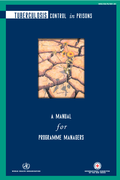
A manual for programme managers.
БОРЬБА С ТУБЕРКУЛЕЗОМ В ТЮРЬМАХ
Руководство для руководителей программ
Inerim Guidance. These guidelines have been developed in recognition that infection with Zika virus may present a risk to blood safety, and in consideration of the declaration on 1 February 2016 by the WHO Director-General of a Public Health Emergency of International Concern with regard to clusters
...
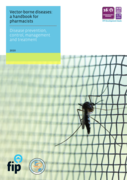
The Pharmaceutical Forum of the Americas (PFA) has previously published guidelines and organised campaigns for community pharmacists on the prevention, detection and control of arbovirus infections in 2018 with a grant from the FIP Foundation for Pharmacy Education and Research. Building on that exp
...

There is growing international consensus that food systems transformation is important to address the challenges of malnutrition in all its forms, the burden of noncommunicable diseases (NCDs), environmental sustainability, increasing inequality and ensuring the welfare of workers and animals. In li
...
Updated 10 August 2020
This document presents an essential medicines list (EML) to manage patients in intensive care units (ICUs) with suspected or confirmed COVID-19 diagnosis, which includes active ingredients with dosage form and concentration, and are preferably in the WHO Model Lists of Essent
...