
Filter
567
Text search:
ACT
Consortium
Featured
43
160
Language
Document type
328
117
45
35
18
11
5
2
2
2
1
1
Countries / Regions
31
27
26
20
18
16
15
12
11
11
10
10
9
8
7
7
7
7
6
6
5
5
5
5
5
5
5
4
4
4
3
3
3
3
3
3
3
3
3
3
3
2
2
2
2
2
1
1
1
1
1
1
1
1
1
1
1
1
1
1
1
1
1
1
1
1
1
Authors & Publishers
Publication Years
Category
204
52
35
26
24
15
4
Toolboxes
58
45
33
32
25
24
21
19
18
14
13
11
10
8
7
7
6
6
6
6
4
2
1
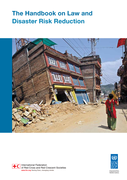
The Handbook on Law and Disaster Risk Reduction (the Handbook) has been developed to provide guidance on how to use the Checklist and conduct related legislative reviews and reform processes. While the methodology for using the Checklist needs to be tailored to each country’s context and respectiv
...
This Training module on malaria elimination has been developed by WHO to support health professionals in planning, managing, monitoring and evaluating malaria elimination programmes.
Supporting exercises: These files are necessary for participants to complete a number of exercises listed in the man
...
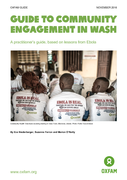
Guide to community engagement in WASH
recommended
A practioner's guide, based on lessons from Ebola.
This guide is a compilation of best practices and key lessons learned through Oxfam’s experience of community engagement during the 2014–15 Ebola response in Sierra Leone and Liberia. It aims to inform public health practitioners and programme
...

The Extending Service Delivery (ESD) project has developed Healthy Timing and Spacing of
Pregnancy: A Trainer’s Reference Guide as a resource for trainers in developing in-service training
for facility-based healthcare providers and community health workers (chws) who already have
some basic ex
...


The school and a community teaching modules are aimed at preventing vector-borne diseases through community participation. Meanwhile, the interactive toolkit is meant to be help raise awareness on health, sanitation and vector control. These materials will help volunteers and practitioners foster di
...

In the battle against diseases like Zika and dengue, knowledge is power. Climate change is shifting the
distribution of mosquitoes and to new areas. Empowering communities is essential in reaching and pro-
tecting the most vulnerable individuals and households. Vector control programmes, community
...

HRH SA 2030 | Draft HR Strategy for the Health Sector: 2012/13 – 2016/17 Consultation Document
Accessed November 2017.

Vol 5 No 27 | ISSN 2039-2117 (online) | ISSN 2039-9340 (print) | The rate of sexual victimization of mentally retarded children is alarming and it goes unnoticed because the perpetrators could be parents, step- parents, relatives, well-respected individuals by family members, neighbours and educator
...
The report surveyed 9 leading bilateral and multilateral education donors in respect of their approach to disability-inclusive education.
