
Filter
5975
Text search:
key
populations
Featured
554
1590
Language
5804
206
124
85
75
39
36
12
6
5
4
3
3
2
2
2
2
2
2
2
2
2
1
1
1
1
1
1
1
1
1
1
1
1
1
1
1
1
1
1
1
1
1
Document type
2834
1318
771
365
333
137
97
69
19
10
8
5
1
Countries
345
178
164
125
116
114
113
112
108
107
104
102
97
95
94
89
84
74
65
63
63
61
56
51
42
41
39
38
37
36
36
35
34
34
32
31
31
30
29
28
27
26
26
26
23
23
21
20
19
19
18
17
17
17
16
15
15
14
14
11
11
11
11
10
10
10
9
9
9
9
8
8
8
7
6
6
5
5
5
5
5
5
5
5
4
4
4
4
4
4
4
4
4
4
4
3
3
3
3
3
3
3
3
3
3
3
3
2
2
2
2
2
2
2
2
2
2
2
2
2
2
2
2
2
2
2
2
1
1
1
1
1
1
1
1
1
1
1
1
1
1
1
1
1
1
1
1
1
1
1
1
1
1
1
1
Authors & Publishers
913
235
185
176
167
115
107
73
67
57
54
43
36
34
33
32
30
30
30
29
24
24
24
23
23
23
22
22
22
21
21
21
20
20
20
20
20
19
18
18
18
17
17
16
16
15
15
15
15
15
15
15
14
14
13
13
13
12
12
12
11
11
11
11
11
10
10
10
10
10
9
9
9
9
9
9
9
9
9
9
9
9
9
9
9
8
8
8
8
8
8
8
8
8
8
8
8
7
7
7
7
7
7
7
7
7
7
7
7
7
7
6
6
6
6
6
6
6
6
6
6
6
6
6
6
6
6
6
6
6
6
6
6
6
5
5
5
5
5
5
5
5
5
5
5
5
5
5
5
5
5
5
5
5
5
5
5
5
5
5
5
5
5
5
5
5
5
5
5
4
4
4
4
4
4
4
4
4
4
4
4
4
4
4
4
4
4
4
4
4
4
4
4
4
4
4
4
4
4
4
4
4
4
4
4
4
4
4
4
4
4
4
4
4
4
4
4
4
4
4
4
4
4
4
4
4
4
4
4
4
4
4
4
4
4
4
4
4
4
4
4
4
3
3
3
3
3
3
3
3
3
3
3
3
3
3
3
3
3
3
3
3
3
3
3
3
3
3
3
3
3
3
3
3
3
3
3
3
3
3
3
3
3
3
3
3
3
3
3
3
3
3
3
3
3
3
3
3
3
3
3
3
3
3
3
3
3
3
3
3
3
3
3
3
3
3
3
3
3
3
3
3
3
3
3
3
3
3
3
3
3
3
3
3
3
3
3
2
2
2
2
2
2
2
2
2
2
2
2
2
2
2
2
2
2
2
2
2
2
2
2
2
2
2
2
2
2
2
2
2
2
2
2
2
2
2
2
2
2
2
2
2
2
2
2
2
2
2
2
2
2
2
2
2
2
2
2
2
2
2
2
2
2
2
2
2
2
2
2
2
2
2
2
2
2
2
2
2
2
2
2
2
2
2
2
2
2
2
2
2
2
2
2
2
2
2
2
2
2
2
2
2
2
2
2
2
2
2
2
2
2
2
2
2
2
2
2
2
2
2
2
2
2
2
2
2
2
2
2
2
2
2
2
2
2
2
2
2
2
2
2
2
2
2
2
2
2
2
2
2
2
2
2
2
2
2
2
2
2
2
2
2
2
2
2
2
2
2
2
2
2
2
2
2
2
2
2
2
2
2
2
2
2
2
2
2
2
2
2
2
2
2
2
2
2
2
2
2
2
2
2
2
2
2
2
2
2
2
2
2
2
2
2
2
2
2
2
2
2
2
2
2
2
2
2
2
2
2
2
2
2
2
2
2
2
2
2
2
2
2
2
2
2
2
2
2
2
2
2
2
2
2
2
2
2
2
2
2
2
2
2
2
2
2
2
2
2
2
2
2
2
2
2
2
2
2
2
2
2
2
2
2
2
2
2
2
2
2
2
2
2
2
2
2
2
2
2
2
2
2
2
2
2
2
2
2
2
2
2
1
1
1
1
1
1
1
1
1
1
1
1
1
1
1
1
1
1
1
1
1
1
1
1
1
1
1
1
1
1
1
1
1
1
1
1
1
1
1
1
1
1
1
1
1
1
1
1
1
1
1
1
1
1
1
1
1
1
1
1
1
1
1
1
1
1
1
1
1
1
1
1
1
1
1
1
1
1
1
1
1
1
1
1
1
1
1
1
1
1
1
1
1
1
1
1
1
1
1
1
1
1
1
1
1
1
1
1
1
1
1
1
1
1
1
1
1
1
1
1
1
1
1
1
1
1
1
1
1
1
1
1
1
1
1
1
1
1
1
1
1
1
1
1
1
1
1
1
1
1
1
1
1
1
1
1
1
1
1
1
1
1
1
1
1
1
1
1
1
1
1
1
1
1
1
1
1
1
1
1
1
1
1
1
1
1
1
1
1
1
1
1
1
1
1
1
1
1
1
1
1
1
1
1
1
1
1
1
1
1
1
1
1
1
1
1
1
1
1
1
1
1
1
1
1
1
1
1
1
1
1
1
1
1
1
1
1
1
1
1
1
1
1
1
1
1
1
1
1
1
1
1
1
1
1
1
1
1
1
1
1
1
1
1
1
1
1
1
1
1
1
1
1
1
1
1
1
1
1
1
1
1
1
1
1
1
1
1
1
1
1
1
1
1
1
1
1
1
1
1
1
1
1
1
1
1
1
1
1
1
1
1
1
1
1
1
1
1
1
1
1
1
1
1
1
1
1
1
1
1
1
1
1
1
1
1
1
1
1
1
1
1
1
1
1
1
1
1
1
1
1
1
1
1
1
1
1
1
1
1
1
1
1
1
1
1
1
1
1
1
1
1
1
1
1
1
1
1
1
1
1
1
1
1
1
1
1
1
1
1
1
1
1
1
1
1
1
1
1
1
1
1
1
1
1
1
1
1
1
1
1
1
1
1
1
1
1
1
1
1
1
1
1
1
1
1
1
1
1
1
1
1
1
1
1
1
1
1
1
1
1
1
1
1
1
1
1
1
1
1
1
1
1
1
1
1
1
1
1
1
1
1
1
1
1
1
1
1
1
1
1
1
1
1
1
1
1
1
1
1
1
1
1
1
1
1
1
1
1
1
1
1
1
1
1
1
1
1
1
1
1
1
1
1
1
1
1
1
1
1
1
1
1
1
1
1
1
1
1
1
1
1
1
1
1
1
1
1
1
1
1
1
1
1
1
1
1
1
1
1
1
1
1
1
1
1
1
1
1
1
1
1
1
1
1
1
1
1
1
1
1
1
1
1
1
1
1
1
1
1
1
1
1
1
1
1
1
1
1
1
1
1
1
1
1
1
1
1
1
1
1
1
1
1
1
1
1
1
1
1
1
1
1
1
1
1
1
1
1
1
1
1
1
1
1
1
1
1
1
1
1
1
1
1
1
1
1
1
1
1
1
1
1
1
1
1
1
1
1
1
1
1
1
1
1
1
1
1
1
1
1
1
1
1
1
1
1
1
1
1
1
1
1
1
1
1
1
1
1
1
1
1
1
1
1
1
1
1
1
1
1
1
1
1
1
1
1
1
1
1
1
1
1
1
1
1
1
1
1
1
1
1
1
1
1
1
1
1
1
1
1
1
1
1
1
1
1
1
1
1
1
1
1
1
1
1
1
1
1
1
1
1
1
1
1
1
1
1
1
1
1
1
1
1
1
1
1
1
1
1
1
1
1
1
1
1
1
1
1
1
1
1
1
1
1
1
1
1
1
1
1
1
1
1
1
1
1
1
1
1
1
1
1
1
1
1
1
1
1
1
1
1
1
1
1
1
1
1
1
1
1
1
1
1
1
1
1
1
1
1
1
1
1
1
1
1
1
1
1
1
1
1
1
1
1
1
1
1
1
1
1
1
1
1
1
1
1
1
1
1
1
1
1
1
1
1
1
1
1
1
1
1
1
1
1
1
1
1
1
1
1
1
1
1
1
1
1
1
1
1
1
1
1
1
1
1
1
1
1
1
1
1
1
1
1
1
1
1
1
1
1
1
1
1
1
1
1
1
1
1
1
1
1
1
1
1
1
1
1
1
1
1
1
1
1
1
1
1
1
1
1
1
1
1
1
1
1
1
1
1
1
1
1
1
1
1
1
1
1
1
1
1
1
1
1
1
1
1
1
1
1
1
1
1
1
1
1
1
1
1
1
1
1
1
1
1
1
1
1
1
1
1
1
1
1
1
1
1
1
1
1
1
1
1
1
1
1
1
1
1
1
1
1
1
1
1
1
1
1
1
1
1
1
1
1
1
1
1
1
1
1
1
1
1
1
1
1
1
1
1
1
1
1
1
1
1
1
1
1
1
1
1
1
1
1
1
1
1
1
1
1
1
1
1
1
1
1
1
1
1
1
1
1
1
1
1
1
1
1
1
1
1
1
1
1
1
1
1
1
1
1
1
1
1
1
1
1
1
1
1
1
1
1
1
1
1
1
1
1
1
1
1
1
1
1
1
1
1
1
1
1
1
1
1
1
1
1
1
1
1
1
1
1
1
1
1
1
1
1
1
1
1
1
1
1
1
1
1
1
1
1
1
1
1
1
1
1
1
1
1
1
1
1
1
1
1
1
1
1
1
1
1
1
1
1
1
1
1
1
1
1
1
1
1
1
1
1
1
1
1
1
1
1
1
1
1
1
1
1
1
1
1
1
1
1
1
1
1
1
1
1
1
1
1
1
1
1
1
1
1
1
1
1
1
1
1
1
1
1
1
1
1
1
1
1
1
1
1
1
1
1
1
1
1
1
1
1
1
1
1
1
1
1
1
1
1
1
1
1
1
1
1
1
1
1
1
1
1
1
1
1
1
1
1
1
1
1
1
1
1
1
1
1
1
1
1
1
1
1
1
1
1
1
1
1
1
1
1
1
1
1
1
1
1
1
1
1
1
1
1
1
1
1
1
1
1
1
1
1
1
1
1
1
1
1
1
1
1
1
1
1
1
1
1
1
1
1
1
1
1
1
1
1
1
1
1
1
1
1
1
1
1
1
1
1
1
1
1
1
1
1
1
1
1
1
1
1
1
1
1
1
1
1
1
1
1
1
1
1
1
1
1
1
1
1
1
1
1
1
1
1
1
1
1
1
1
1
1
1
1
1
1
1
1
1
1
1
1
1
1
1
1
1
1
1
1
1
1
1
1
1
1
1
1
1
1
1
1
1
1
1
1
1
1
1
1
1
1
1
1
1
1
1
1
1
1
1
1
1
1
1
1
1
1
1
1
1
1
1
1
1
1
1
1
1
1
1
1
1
1
1
1
1
1
1
1
1
1
1
1
1
1
1
1
1
1
1
1
1
1
1
1
1
1
1
1
1
1
1
1
1
1
1
1
1
1
1
1
1
1
1
1
1
1
1
1
1
1
1
1
1
1
1
1
1
1
1
1
1
1
1
1
1
1
1
1
1
1
1
1
1
1
1
1
1
1
1
1
1
1
1
1
1
1
1
1
1
1
1
1
1
1
1
1
1
1
1
1
1
1
1
1
1
1
1
1
1
1
1
1
1
1
1
1
1
1
1
1
1
1
1
1
1
1
1
1
1
1
1
1
1
1
1
1
1
1
1
1
1
1
1
1
1
1
1
1
1
1
1
1
1
1
1
1
1
1
1
1
1
1
1
1
1
1
1
1
1
1
1
1
1
1
1
1
1
1
1
1
1
1
1
1
1
1
1
1
1
1
1
1
1
1
1
1
1
1
1
1
1
1
1
1
1
1
1
1
1
1
1
1
1
1
1
1
1
1
1
1
1
1
1
1
1
1
1
1
1
1
1
1
1
1
1
1
1
1
1
1
1
1
1
1
1
1
1
1
1
1
1
1
1
1
1
1
1
1
1
1
1
1
1
1
1
1
1
1
1
1
1
1
1
1
1
1
1
1
1
1
1
1
1
1
1
1
1
1
1
1
1
1
1
1
1
1
1
1
1
1
1
1
1
1
1
1
1
1
1
1
1
1
1
1
1
1
1
1
1
1
1
1
1
1
1
1
1
1
1
1
1
1
1
1
1
1
1
1
1
1
1
1
1
1
1
1
1
1
1
1
1
1
1
1
1
1
1
1
1
1
1
1
1
1
1
1
1
1
1
1
1
1
1
1
1
1
1
1
1
1
1
1
1
1
1
1
1
1
1
1
1
1
1
1
1
1
1
1
1
1
1
1
1
1
1
1
1
1
1
1
1
1
1
1
1
1
1
1
1
1
1
1
1
1
1
1
1
1
1
1
1
1
1
1
1
1
1
1
1
1
1
1
1
1
1
1
1
1
1
1
1
1
1
1
1
1
1
1
1
1
1
1
1
1
1
1
1
1
1
1
1
1
1
1
1
1
1
1
1
1
1
1
1
1
1
1
1
1
1
1
1
1
1
1
1
1
1
1
1
1
1
1
1
1
1
1
1
1
1
1
1
1
1
1
1
1
1
1
1
1
1
1
1
1
1
1
1
1
1
1
1
1
1
1
1
1
1
1
1
1
1
1
1
1
1
1
1
1
1
1
1
1
1
1
1
1
1
1
1
1
1
1
1
1
1
1
1
1
1
1
1
1
1
1
1
1
1
1
1
1
1
1
1
1
1
1
1
1
1
1
1
1
1
1
1
1
1
1
1
1
1
1
1
1
1
1
1
1
1
1
1
1
1
1
1
1
1
1
1
1
1
1
1
1
1
1
1
1
1
1
1
1
1
1
1
1
1
1
1
1
1
1
1
1
1
1
1
1
1
1
1
1
1
1
1
1
1
1
1
1
1
1
1
1
1
1
1
1
1
1
1
1
1
1
1
1
1
1
1
1
1
1
1
1
1
1
1
1
1
1
1
1
1
1
1
1
1
1
1
1
1
1
1
1
1
1
1
1
1
1
1
1
1
1
1
1
1
1
1
1
1
1
1
1
1
1
1
1
1
1
1
1
1
1
1
1
1
1
1
1
1
1
1
1
1
1
1
1
1
1
1
1
1
1
1
1
1
1
1
1
1
1
1
1
1
1
1
1
1
1
1
1
1
1
1
1
1
1
1
1
1
1
1
1
1
1
1
1
1
1
1
1
1
1
1
1
1
1
1
1
1
1
1
1
1
1
1
1
1
1
1
1
1
1
1
1
1
1
1
1
1
1
1
1
1
1
1
1
1
1
1
1
1
1
1
1
1
1
1
1
1
1
1
1
1
1
1
1
1
1
1
1
1
1
1
1
1
1
1
1
1
1
1
1
1
1
1
1
1
1
1
1
1
1
1
1
1
1
1
1
1
1
1
1
1
1
1
1
1
1
1
1
1
1
1
1
1
1
1
1
1
1
1
1
1
1
1
1
1
1
1
1
1
1
1
1
1
1
1
1
1
1
1
1
1
1
1
1
1
1
1
1
1
1
1
1
1
1
1
1
1
1
1
1
1
1
1
1
1
1
1
1
1
1
1
1
1
1
1
1
1
1
1
1
1
1
1
1
1
1
1
1
1
1
1
1
1
1
1
1
1
1
1
1
1
1
1
1
1
1
1
1
1
1
1
1
1
1
1
1
1
1
1
1
1
1
1
1
1
1
1
1
1
1
1
1
1
1
1
1
1
1
1
1
1
1
1
1
1
1
1
1
1
1
1
1
1
1
1
1
1
1
1
1
1
1
1
1
1
1
1
1
1
1
1
1
1
1
1
1
1
1
1
1
1
1
1
1
1
1
1
1
1
1
1
1
1
1
1
1
1
1
1
1
1
1
1
1
1
1
1
1
1
1
1
1
1
1
1
1
1
1
1
1
1
1
1
1
1
1
1
1
1
1
1
1
1
1
1
1
1
1
1
1
1
1
1
1
1
1
1
1
1
1
1
1
1
1
1
1
1
1
1
1
1
1
1
1
1
1
1
1
1
1
1
1
1
1
1
1
1
1
1
1
1
1
1
1
1
1
1
1
1
1
1
1
1
1
1
1
1
1
1
1
1
1
1
1
1
1
1
1
1
1
1
1
1
1
1
1
1
1
1
1
1
1
1
1
1
1
1
1
1
1
1
1
1
1
1
1
1
1
1
1
1
1
1
1
1
1
1
1
1
1
1
1
1
1
1
1
1
1
1
1
1
1
1
1
1
1
1
1
1
1
1
1
1
1
1
1
1
1
1
1
1
1
1
1
1
1
1
1
1
1
1
1
1
1
1
1
1
1
1
1
1
1
1
1
1
1
1
1
1
1
1
1
1
1
1
1
1
1
1
1
1
1
1
1
1
1
1
1
1
1
1
1
1
1
1
1
1
1
1
1
1
1
1
1
1
1
1
1
1
1
1
1
1
1
1
1
1
1
1
1
1
1
1
1
1
1
1
1
1
1
1
1
1
1
1
1
1
1
1
1
1
1
1
1
1
1
1
1
1
1
1
1
1
1
1
1
1
1
1
1
1
1
1
1
1
1
1
1
1
1
1
1
1
1
1
1
1
1
1
1
1
1
1
1
1
1
1
1
1
1
1
1
1
1
1
1
1
1
1
1
1
1
1
1
1
1
1
1
1
1
1
1
1
1
1
1
1
1
1
1
1
1
1
1
1
1
1
1
1
1
1
1
1
1
1
1
1
1
1
1
1
1
1
1
1
1
1
1
1
1
1
1
1
1
1
1
1
1
1
1
1
1
1
1
1
1
1
1
1
1
1
1
1
1
1
1
1
1
1
1
1
1
1
1
1
1
1
1
1
1
1
1
1
1
1
1
1
1
1
1
1
1
1
1
1
1
1
1
1
1
1
1
1
1
1
1
1
1
1
1
1
1
1
1
1
1
1
1
1
1
1
1
1
1
1
1
1
1
1
1
1
1
1
1
1
1
1
1
1
1
1
1
1
1
1
1
1
1
1
1
1
1
1
1
1
1
1
1
1
1
1
1
1
1
1
1
1
1
1
1
1
1
1
1
1
1
1
1
1
1
1
1
1
1
1
1
1
1
1
1
1
1
1
1
1
1
1
1
1
1
1
1
1
1
1
1
1
1
1
1
1
1
1
1
1
1
1
1
1
1
1
1
1
1
1
1
1
1
1
1
1
1
1
1
1
1
1
1
1
1
1
1
1
1
1
1
1
1
1
1
1
1
1
1
1
1
1
1
1
1
1
1
1
1
1
1
1
1
1
1
1
1
1
1
1
1
1
1
1
1
1
1
1
1
1
1
1
1
1
1
1
1
1
1
1
1
1
1
1
1
1
1
1
1
1
1
1
1
1
1
1
1
1
1
1
1
1
1
1
1
1
1
1
1
1
1
1
1
1
1
1
1
1
1
1
1
1
1
1
1
1
1
1
1
1
1
1
1
1
1
1
1
1
1
1
1
1
1
1
1
1
1
1
1
1
1
1
1
1
1
1
1
1
1
1
1
1
1
1
1
1
1
1
1
1
1
1
1
1
1
1
1
1
1
1
1
1
1
1
1
1
1
1
1
1
1
1
1
1
1
1
1
1
1
1
1
1
1
1
1
1
1
1
1
1
1
1
1
1
1
1
1
1
1
1
1
1
1
1
1
1
1
1
1
1
1
1
1
1
1
1
1
1
1
1
1
1
1
1
1
1
1
1
1
1
1
1
1
1
1
1
1
1
1
1
1
1
1
1
1
1
1
1
1
1
1
1
1
1
1
1
1
1
1
1
1
1
1
1
1
1
1
1
1
1
1
1
1
1
1
1
1
1
1
1
1
1
1
1
1
1
1
1
1
1
1
1
1
1
1
1
1
1
1
1
1
1
1
1
1
1
1
1
1
1
1
1
1
1
1
1
1
1
1
1
1
1
1
1
1
1
1
1
1
1
1
1
1
1
1
1
1
1
1
1
1
1
1
1
1
1
1
1
1
1
1
1
1
1
1
1
1
1
1
1
1
1
1
1
1
1
1
1
1
1
1
1
1
1
1
1
1
1
1
1
1
1
1
1
1
1
1
1
1
1
1
1
1
1
1
1
1
1
1
1
1
1
1
1
1
1
1
1
1
1
1
1
1
1
1
1
1
1
1
1
1
1
1
1
1
1
1
1
1
1
1
1
1
1
1
1
1
1
1
1
1
1
1
1
1
1
1
1
1
1
1
1
1
1
1
1
1
1
1
1
1
1
1
1
1
1
1
1
1
1
1
1
1
1
1
1
1
1
1
1
1
1
1
1
1
1
1
1
1
1
1
1
1
1
1
1
1
1
1
1
1
1
1
1
1
1
1
1
1
1
1
1
1
1
1
1
1
1
1
1
1
1
1
1
1
1
1
1
1
1
1
1
1
1
1
1
1
1
1
1
1
1
1
1
1
1
1
1
1
1
1
1
1
1
1
1
1
1
1
1
1
1
1
1
1
1
1
1
1
1
1
1
1
1
1
1
1
1
1
1
1
1
1
1
1
1
1
1
1
1
1
1
1
1
1
1
1
1
1
1
1
1
1
1
1
1
1
1
1
1
1
1
1
1
1
1
1
1
1
1
1
1
1
1
1
1
1
1
1
1
1
1
1
1
1
Publication Years
2190
3381
385
18
1
Category
2113
480
391
385
312
95
38
3
Toolboxes
585
434
298
297
285
250
191
175
151
149
141
132
128
122
118
113
102
100
98
57
49
46
42
32
15
5
2

WHO updated recommendations on HIV clinical management: recommendations for a public health approach
recommended
This document provides an overview of the updated World Health Organization recommendations for HIV clinical management, which focus on optimizing antiretroviral therapy, preventing vertical transmission, and enhancing tuberculosis prevention among individuals with HIV. These updates are intended to
...
support global initiatives aimed at ending AIDS as a public health threat by 2030. Key changes include the introduction of new antiretroviral drugs and regimens, revised postnatal prophylaxis and breastfeeding guidelines for managing infants at risk of vertical transmission, and the endorsement of shorter tuberculosis preventive treatments to improve efficacy and adherence.
more

Progress report and road map. Countries included in this report: Algeria, Afghanistan, Bahrain, Djibouti, Egypt, the Islamic Republic of Iran, Iraq, Jordan, Kuwait, Lebanon, Libya, Morocco, Oman, Pakistan, Qatar, State of Palestine, Saudi Arabia, Somalia, Sudan, the Syrian Arab Republic, Tunisia, Un
...
ited Arab Emirates, Yemen.
To support countries in the region to achieve triple elimination goals, this report collects and assesses national policies and key indicators on EMTCT efforts against WHO criteria for validation of the EMTCT of HIV, syphilis and HBV. Based on analysis and consultations with national policymakers, the report provides a Road Map for countries at different stages of readiness to follow towards triple elimination goals.
more

Guide to revision of national pandemic influenza preparedness plans - Lessons learned from the 2009 A(H1N1) pandemic
Brown C., Ciotti M., Hegermann-Lindencrone M., et al
European Centre for Disease Prevention and Control (ECDC), WHO Regional Office for Europe
(2017)
C_WHO
The document “Guide to revision of national pandemic influenza preparedness plans – Lessons learned from the 2009 A(H1N1) pandemic” provides guidance for countries on how to improve and update their national pandemic preparedness plans. It is based on lessons learned from the 2009 influenza pa
...
ndemic and aims to help governments strengthen their readiness for future pandemics. The report outlines key components of effective pandemic planning, including risk assessment, coordination between sectors, communication strategies, healthcare system preparedness, vaccination and antiviral strategies, and business continuity planning. It also emphasizes the importance of international cooperation and flexible planning that can adapt to different pandemic scenarios. Overall, the guide serves as a framework to support countries in developing stronger, more coordinated responses to future influenza pandemics.
more
The NIAID Pandemic Preparedness Plan describes the strategy of the National Institute of Allergy and Infectious Diseases (NIAID) to strengthen research and development for future pandemic threats. The plan focuses on identifying and studying viruses with the potential to cause epidemics or pandemics
...
and developing medical countermeasures such as vaccines, therapeutics and diagnostics. A key concept is the research on “prototype pathogens,” which represent virus families that may cause future outbreaks, allowing scientists to prepare tools and knowledge in advance. The document also outlines the importance of surveillance, epidemiological research, technological innovation, clinical trials and international collaboration to enable a faster and more effective response to emerging infectious diseases. Overall, the plan aims to improve scientific preparedness so that new health threats can be detected earlier and controlled more rapidly.
more

The document is a report by an expert group that presents a framework for improving future pandemic preparedness and emergency response, particularly in the context of India but with relevance to global health systems. It analyzes lessons learned from COVID-19 and past epidemics, identifies
...
key weaknesses in areas such as governance, surveillance, data management, research, and coordination, and proposes a comprehensive strategy to address them. The report emphasizes the importance of early detection, strong public health infrastructure, coordinated governance, scientific innovation, and international collaboration. A central idea is the ability to respond effectively within the first 100 days of an outbreak by having systems, resources, and policies already in place. Overall, it aims to strengthen resilience and ensure faster, more efficient responses to future health crises.
more

Medical evacuation in emergencies
recommended
A guidance for medical teams and specialized care teams.
This guidance aims to provide a comprehensive framework for the safe and context-adapted coordination, clinical care, operations support and logistics relevant to governments, national authorities, including ministries of health, civil protec
...
tion and civil defence, national and international Emergency Medical Teams (EMTs), nongovernmental organizations (NGOs), Emergency Medical Services (EMS) and other key stakeholders operating in the medevac space, or wishing to build this kind of capacity. It defines minimum standards and recommendations for the development and classification of respective specialized care teams (SCTs). This is particularly relevant for contexts without pre-existing or functional prehospital or medevac systems, and can support country-level capacity building, regional and sub-regional planning, and the development of SCTs.
more
Adolescent girls and young women (AGYW) remain disproportionately affected by HIV in Eastern and Southern Africa (ESA), with 26 per cent of new infections attributed to this population. AGYW face many personal, social and structural barriers to access, uptake and use of traditional HIV prevention me
...
thods. Oral Pre-exposure Prophylaxis (PrEP) is proven to be highly effective as an additional prevention choice for reducing the risk of HIV acquisition, including for AGYW. Successful uptake and adherence to PrEP is critical in its effectiveness as an HIV prevention method, however, the current demand for PrEP by AGYW is low with suboptimal adherence.
Within the ESA region, there is currently great impetus to address these challenges and scale up PrEP for AGYW. A critical aspect of this is to leverage the learnings and evidence from implementation of how to improve the demand and quality of PrEP programming for this population. Improving the Quality of Pre-Exposure Prophylaxis Implementation for Adolescent Girls and Young Women in Eastern and Southern Africa examines the current efforts in the region to accelerate and scale up evidence-based PrEP delivery platforms. The implementation brief provides current knowledge and builds on WHO guidance to provide key considerations for implementation, including driving demand and improving quality, as well as focus on wider combination prevention and integration agendas.
more

A case study of the role of an Essential Health Benefit in the delivery of integrated health services in Zambia
Luwabelwa, M.; Banda, P; Palale M.; Chama-Chiliba, C.
Regional Network for Equity in Health in east and southern Africa (EQUINET)
(2017)
C1
Regional Network for Equity in Health in east and southern Africa (EQUINET): Disussion Paper 111
The health services delivery system in Zambia is pyramid in structure, with primary healthcare (PHC) services at community level, at the base, followed by first and second level hospitals at distric ... t and provincial levels, respectively, and third level (tertiary) services at national level. Notably, primary health services are free in Zambia and health service providers are either governmentowned or not-for-profit facilities.
Over the years, resource constraints have affected the quality and extent of healthcare services at all levels, requiring the mobilisation of additional resources for the sector. In doing so, prioritisation was high on the agenda of health sector reform. The EHB, therefore, prioritises interventions with the highest impact on the population, enabling policy makers to revisit priority diseases and conditions and to cost the services provided at each level of facility. Other key issues in developing the EHB in Zambia have included the need to have cost-effective services and cost per capita of services for more systematic budgeting, to rank interventions and to validate and cost the health benefit package as a whole. more
The health services delivery system in Zambia is pyramid in structure, with primary healthcare (PHC) services at community level, at the base, followed by first and second level hospitals at distric ... t and provincial levels, respectively, and third level (tertiary) services at national level. Notably, primary health services are free in Zambia and health service providers are either governmentowned or not-for-profit facilities.
Over the years, resource constraints have affected the quality and extent of healthcare services at all levels, requiring the mobilisation of additional resources for the sector. In doing so, prioritisation was high on the agenda of health sector reform. The EHB, therefore, prioritises interventions with the highest impact on the population, enabling policy makers to revisit priority diseases and conditions and to cost the services provided at each level of facility. Other key issues in developing the EHB in Zambia have included the need to have cost-effective services and cost per capita of services for more systematic budgeting, to rank interventions and to validate and cost the health benefit package as a whole. more
The 2020 Report analyzes global health spending for 190 countries from 2000 to 2018 and provides insights as to the health spending trajectory from the MDG era to the SDG era prior to the crisis of 2020. The report shows that global spending on health continually rose between 2000 and 2018 and reach
...
ed US$ 8.3 trillion or 10% of global GDP. The data also show that out-of-pocket spending has remained high in low and lower-middle income countries, representing greater than 40% of total health spending in 2018. We also report and summarize the data on expenditures for PHC, as well as by disease and intervention, including for immunization. The report also analyzes the available data on budget allocation in response to the COVID-19 crisis. In addition, we combine World Bank/IMF projections of the macroeconomic and fiscal impact of the crisis with an analysis of the historical determinants of health spending patterns and UHC indicators, and based on this, we draw out the likely implications of 2020 for future health spending, highlighting key policy and monitoring concerns.
more
This report is the first of its kind. It brings together various data sets to present the current status of hand hygiene, highlight lagging progress, and call governments and supporting agencies to action, offering numerous inspiring examples of change.
During the COVID-19 pandemic, hand hygiene
...
received unprecedented attention and became a central pillar in national COVID prevention strategies. However, concern with hand hygiene should not only be as temporary public health measure in times of crisis, but as a vital everyday behaviour that contributes to health and economic resilience. Hand hygiene is a highly cost-effective investment, providing outsized health benefits for relatively little cost.
Despite efforts to promote hand hygiene, the rates of access to hand hygiene facilities remain stubbornly low. If current rates of progress continue, by the end of the SDG era in 2030, 1.9 billion people will still lack facilities to wash their hands at home.
This report presents a compelling case for investment in five key ‘accelerators’ as a pathway towards achieving hand hygiene for all – governance, financing, capacity development, data and information, and innovation. These accelerators are identified under the UN-Water SDG 6 Global Acceleration Framework.
more

Objectives: This paper reviews the mental health policies that have been implemented in Chile in response to the COVID-19 pandemic and the international context of countries' responses. Even before the start of the pandemic, there were significant barriers to access mental health services in Chile,
...
coupled with a scenario of nationwide social unrest and protests that questioned the legitimacy of public institutions; now the rapidly worsening outbreaks of COVID-19 are exacerbating the pre-existing mental health crisis.
Methods: We conducted a bibliometric and content analysis of the Chilean mental health public policies implemented during the COVID-19 pandemic and then compared these policies with international experiences and emerging scientific evidence on the mental health impact of pandemics.
Results: Our analysis of the policies identifies five crucial points of action developed in Chile: (i) an established framework to address mental health in emergency and disaster situations; (ii) a timely COVID-19 Mental Health Action Plan; (iii) inclusion of mental health in the public health agenda; (iv) development of a presidential strategy during the pandemic for comprehensive mental health and well-being; and (v) emerging research assessing the mental health implications of COVID-19.
Conclusions: In Chile, the public policy responses to address the mental health consequences of the COVID-19 pandemic has been characterized by the coordinated implementation of mental health plans, ranging from a health sectoral initiative to inter-agency and intersectoral efforts. However, it is imperative that increased funding is allocated to mental health, and efforts should be made to promote the participation of people with lived experiences and communities in the design and implementation of the proposed actions. This aspect could be of key importance to social peace and community recovery after the pandemic.
more

The 2018 NDHS is a national sample survey that provides up-to-date information on demographic and health indicators. The sample was selected using a stratified, two-stage cluster design, with enumeration areas (EAs) as the sampling units for the first stage. The second stage was a complete listing o
...
f households carried out in each of the 1,400 selected EAs. The target groups were women age 15-49 and men age 15-59
in randomly selected households across Nigeria. A representative sample of approximately 42,000 households was selected for the survey. One-third of the households (14,000) were selected for malaria, anaemia, and genotype testing of children age 6-59 months. Also, in the subsample of households selected
for the men’s survey, one eligible woman in each household was randomly selected for additional questions regarding domestic violence. Specifically, information was collected on fertility levels, marriage, fertility preferences, awareness and use of family planning methods, child feeding practices, nutritional status of women and children, adult and childhood mortality, awareness and attitudes regarding
HIV/AIDS, and female genital mutilation. The survey also assessed the nutritional status (according to weight and height measurements) of women and children in these households. In addition to presenting national estimates, the report provides estimates of key indicators for both rural and urban areas, the country’s six geopolitical zones and 36 states, and the Federal Capital Territory (FCT).
more

Non-communicable diseases (NCDs) are the second common cause of death in sub-Saharan Africa (SSA) accounting for about 35% of all deaths, after a composite of communicable, maternal, neonatal, and nutritional diseases. Despite prior perception of low NCDs mortality rates, current evidence suggests t
...
hat SSA is now at the dawn of the epidemiological transition with contemporary double burden of disease from NCDs and communicable diseases. In SSA, cardiovascular diseases (CVDs) are the most frequent causes of NCDs deaths, responsible for approximately 13% of all deaths and 37% of all NCDs deaths. Although ischemic heart disease (IHD) has been identified as the leading cause of CVDs mortality in SSA followed by stroke and hypertensive heart disease from statistical models, real field data suggest IHD rates are still relatively low. The neglected endemic CVDs of SSA such as endomyocardial fibrosis and rheumatic heart disease as well as congenital heart diseases remain unconquered. While the underlying aetiology of heart failure among adults in high-income countries (HIC) is IHD, in SSA the leading causes are hypertensive heart disease, cardiomyopathy, rheumatic heart disease, and congenital heart diseases. Of concern is the tendency of CVDs to occur at younger ages in SSA populations, approximately two decades earlier compared to HIC. Obstacles hampering primary and secondary prevention of CVDs in SSA include insufficient health care systems and infrastructure, scarcity of cardiac professionals, skewed budget allocation and disproportionate prioritization away from NCDs, high cost of cardiac treatments and interventions coupled with rarity of health insurance systems. This review gives an overview of the descriptive epidemiology of CVDs in SSA, while contrasting with the HIC and highlighting impediments to their management and making recommendations.
more

Small drinking-water supplies commonly experience operational, managerial, technical and resourcing challenges that impact their ability to deliver safe and reliable services. The needs and opportunities associated with these supplies therefore warrant explicit consideration in policies and regulati
...
ons.
These Guidelines, specifically tailored to small water supplies, build on over 60 years of guidance by the World Health Organization (WHO) on drinking-water quality and safety. They focus on establishing drinking-water quality regulations and standards that are health based and context appropriate; on proactively managing risks through water safety planning and sanitary inspections; and on carrying out independent surveillance. The guidance is intended primarily for decision-makers at national and subnational levels with responsibility for developing regulatory frameworks and support programmes related to these activities. Other stakeholders involved in water service provision will also benefit from the guidance in this document.
Designed to be practical and accessible, these Guidelines offer clear guidance that is rooted in the principle of progressive improvement. State-of-the-art recommendations and implementation guidance are provided, drawn from a comprehensive evidence review and established good practices. Additionally, case examples are provided from countries and areas around the world to demonstrate how the guidance in this publication has been implemented in practice in a wide variety of contexts.
Together with WHO’s 2024 Sanitary inspection packages – a supporting tool for the Guidelines for drinking-water quality: small water supplies, these Guidelines update and supersede WHO’s 1997 Guidelines for drinking-water quality. Volume 3: surveillance and control of community supplies. Key changes to this updated publication include a greater focus on preventive risk management and a broader range of small water supplies covered, including those managed by households, communities and professional entities.
more

39 examples of field practices, and learnings from 20 countries, for all phases of humanitarian response. The report shows that deliberate and proactive action is required to ensure that persons with disabilities from all constituencies are systematically included and meaningfully participate in DRR
...
and humanitarian preparedness, response and recovery. It draws lessons from field practices, but does not provide technical guidance. The newly published IASC Guidelines are the reference document to seek in-depth theoretical and technical information.
more
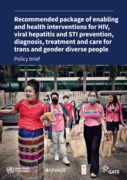
Policy brief. In this policy brief, we give an update on those parts of the guidelines which are relevant for trans and gender diverse people.

Polic brief. In this policy brief, we give an update on those parts of the guidelines which are relevant for men who have sex with men.
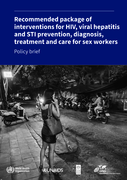
Policy brief. In this policy brief, we give an update on those parts of the guidelines which are relevant for sex workers
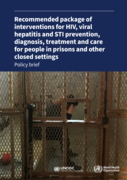
Polic brief. In this policy brief, we give an update on those parts of the guidelines which are relevant for people in prisons and other closed setting

These guidelines were developed through an interagency process with participation by United Nations (UN) organiza-
tions, nongovernmental organizations, the International Red Cross and Red Crescent Movement and the International
Organization for Migration.
