
Filter
2822
Text search:
Health
Cluster,
WHO
Featured
266
845
Language
2637
115
55
43
37
32
18
13
6
6
5
4
4
4
3
3
2
2
2
2
2
2
1
1
1
1
1
1
1
1
1
1
1
1
1
1
1
1
1
1
1
1
1
1
1
1
Document type
1469
499
364
169
139
71
56
34
11
8
1
1
Countries
125
79
78
71
71
68
62
59
58
55
51
48
47
45
45
43
42
41
38
37
36
34
34
30
30
29
26
25
21
21
21
19
19
18
16
15
15
15
14
14
14
13
13
13
13
13
13
11
11
11
10
10
10
10
9
9
9
8
8
7
7
6
6
6
6
5
4
4
4
4
4
4
4
3
3
3
3
3
3
3
3
3
2
2
2
2
2
2
2
2
2
2
2
2
2
2
2
2
1
1
1
1
1
1
1
1
1
1
1
1
1
1
1
1
1
1
1
1
1
1
1
1
1
1
1
1
1
1
1
1
Authors & Publishers
390
120
96
86
74
68
67
35
34
28
26
25
24
22
19
18
16
15
15
15
13
13
13
13
12
12
11
11
10
10
10
10
10
9
9
9
9
9
9
8
8
8
8
8
8
8
7
7
7
7
7
7
6
6
6
6
6
6
6
6
6
6
5
5
5
5
5
5
5
5
5
5
5
5
5
5
5
5
5
4
4
4
4
4
4
4
4
4
4
4
4
4
4
4
4
4
4
4
4
4
4
4
4
4
4
4
4
4
3
3
3
3
3
3
3
3
3
3
3
3
3
3
3
3
3
3
3
3
3
3
3
3
3
3
3
3
3
3
3
3
3
3
3
3
3
3
3
3
3
3
3
3
3
3
3
3
3
3
3
3
3
3
3
3
3
3
3
3
3
3
3
3
3
3
3
3
3
3
3
3
3
3
2
2
2
2
2
2
2
2
2
2
2
2
2
2
2
2
2
2
2
2
2
2
2
2
2
2
2
2
2
2
2
2
2
2
2
2
2
2
2
2
2
2
2
2
2
2
2
2
2
2
2
2
2
2
2
2
2
2
2
2
2
2
2
2
2
2
2
2
2
2
2
2
2
2
2
2
2
2
2
2
2
2
2
2
2
2
2
2
2
2
2
2
2
2
2
2
2
2
2
2
2
2
2
2
2
2
2
2
2
2
2
2
2
2
2
2
2
2
2
2
2
2
2
2
2
2
2
2
2
2
2
2
2
2
2
2
2
2
2
2
2
2
2
2
2
2
2
2
2
2
2
2
2
2
2
2
2
2
2
2
2
1
1
1
1
1
1
1
1
1
1
1
1
1
1
1
1
1
1
1
1
1
1
1
1
1
1
1
1
1
1
1
1
1
1
1
1
1
1
1
1
1
1
1
1
1
1
1
1
1
1
1
1
1
1
1
1
1
1
1
1
1
1
1
1
1
1
1
1
1
1
1
1
1
1
1
1
1
1
1
1
1
1
1
1
1
1
1
1
1
1
1
1
1
1
1
1
1
1
1
1
1
1
1
1
1
1
1
1
1
1
1
1
1
1
1
1
1
1
1
1
1
1
1
1
1
1
1
1
1
1
1
1
1
1
1
1
1
1
1
1
1
1
1
1
1
1
1
1
1
1
1
1
1
1
1
1
1
1
1
1
1
1
1
1
1
1
1
1
1
1
1
1
1
1
1
1
1
1
1
1
1
1
1
1
1
1
1
1
1
1
1
1
1
1
1
1
1
1
1
1
1
1
1
1
1
1
1
1
1
1
1
1
1
1
1
1
1
1
1
1
1
1
1
1
1
1
1
1
1
1
1
1
1
1
1
1
1
1
1
1
1
1
1
1
1
1
1
1
1
1
1
1
1
1
1
1
1
1
1
1
1
1
1
1
1
1
1
1
1
1
1
1
1
1
1
1
1
1
1
1
1
1
1
1
1
1
1
1
1
1
1
1
1
1
1
1
1
1
1
1
1
1
1
1
1
1
1
1
1
1
1
1
1
1
1
1
1
1
1
1
1
1
1
1
1
1
1
1
1
1
1
1
1
1
1
1
1
1
1
1
1
1
1
1
1
1
1
1
1
1
1
1
1
1
1
1
1
1
1
1
1
1
1
1
1
1
1
1
1
1
1
1
1
1
1
1
1
1
1
1
1
1
1
1
1
1
1
1
1
1
1
1
1
1
1
1
1
1
1
1
1
1
1
1
1
1
1
1
1
1
1
1
1
1
1
1
1
1
1
1
1
1
1
1
1
1
1
1
1
1
1
1
1
1
1
1
1
1
1
1
1
1
1
1
1
1
1
1
1
1
1
1
1
1
1
1
1
1
1
1
1
1
1
1
1
1
1
1
1
1
1
1
1
1
1
1
1
1
1
1
1
1
1
1
1
1
1
1
1
1
1
1
1
1
1
1
1
1
1
1
1
1
1
1
1
1
1
1
1
1
1
1
1
1
1
1
1
1
1
1
1
1
1
1
1
1
1
1
1
1
1
1
1
1
1
1
1
1
1
1
1
1
1
1
1
1
1
1
1
1
1
1
1
1
1
1
1
1
1
1
1
1
1
1
1
1
1
1
1
1
1
1
1
1
1
1
1
1
1
1
1
1
1
1
1
1
1
1
1
1
1
1
1
1
1
1
1
1
1
1
1
1
1
1
1
1
1
1
1
1
1
1
1
1
1
1
1
1
1
1
1
1
1
1
1
1
1
1
1
1
1
1
1
1
1
1
1
1
1
1
1
1
1
1
1
1
1
1
1
1
1
1
1
1
1
1
1
1
1
1
1
1
1
1
1
1
1
1
1
1
1
1
1
1
1
1
1
1
1
1
1
1
1
1
1
1
1
1
1
1
1
1
1
1
1
1
1
1
1
1
1
1
1
1
1
1
1
1
1
1
1
1
1
1
1
1
1
1
1
1
1
1
1
1
1
1
1
1
1
1
1
1
1
1
1
1
1
1
1
1
1
1
1
1
1
1
1
1
1
1
1
1
1
1
1
1
1
1
1
1
1
1
1
1
1
1
1
1
1
1
1
1
1
1
1
1
1
1
1
1
1
1
1
1
1
1
1
1
1
1
1
1
1
1
1
1
1
1
1
1
1
1
1
1
1
1
1
1
1
1
1
1
1
1
1
1
1
1
1
1
1
1
1
1
1
1
1
1
1
1
1
1
1
1
1
1
1
1
1
1
1
1
1
1
1
1
1
1
1
1
1
1
1
1
1
1
1
1
1
1
1
1
1
1
1
1
1
1
1
1
1
1
1
1
1
1
1
1
1
1
1
1
1
1
1
1
1
1
1
1
1
1
1
1
1
1
1
1
1
1
1
1
1
1
1
1
1
1
1
1
1
1
1
1
1
1
1
1
1
1
1
1
1
1
1
1
1
1
1
1
1
1
1
1
1
1
1
1
1
1
1
1
1
1
1
1
1
1
1
1
1
1
1
1
1
1
1
1
1
1
1
1
1
1
1
1
1
1
1
1
1
1
1
1
1
1
1
1
1
1
1
1
1
1
1
1
1
1
1
1
1
1
1
1
1
1
1
1
1
1
1
1
1
1
1
1
1
1
1
1
1
1
1
1
1
1
1
1
1
1
1
1
1
1
1
1
1
1
1
1
1
1
1
1
1
1
1
1
1
1
1
1
1
1
1
1
1
1
1
1
1
1
1
1
1
1
1
1
1
1
1
1
1
1
1
1
1
1
1
1
1
1
1
1
1
1
1
1
1
1
1
1
1
1
1
1
1
1
1
1
1
1
1
1
1
1
1
1
1
1
1
1
1
1
1
1
1
1
1
1
1
1
1
1
1
1
1
1
1
1
1
1
1
1
1
1
1
1
1
1
1
1
1
1
1
1
1
1
1
1
1
1
1
1
1
1
1
1
1
1
1
1
1
1
1
1
1
1
1
1
1
1
1
1
1
1
1
1
1
1
1
1
1
1
1
1
1
1
1
1
1
1
1
1
1
1
1
1
1
1
1
1
1
1
1
1
1
1
1
1
1
1
1
1
1
1
1
1
1
1
1
1
1
1
1
1
1
1
1
1
1
1
1
1
1
1
1
1
1
1
1
1
1
1
1
1
1
1
1
1
1
1
1
1
1
1
1
1
1
1
1
1
1
1
1
1
1
1
1
1
1
1
1
1
1
1
1
1
1
1
1
1
1
1
1
1
1
1
1
1
1
1
1
1
1
1
1
1
1
1
1
1
1
1
1
1
1
1
1
1
1
1
1
1
1
1
1
1
1
1
1
1
1
1
1
1
1
1
1
1
1
1
1
1
1
1
1
1
1
1
1
1
1
1
1
1
1
1
1
1
1
1
1
1
1
1
1
1
1
1
1
1
1
1
1
1
1
1
1
1
1
1
1
1
1
1
1
1
1
1
1
1
1
1
1
1
1
1
1
1
1
1
1
1
1
1
1
1
1
1
1
1
1
1
1
1
1
1
1
1
1
1
1
1
1
1
1
1
1
1
1
1
1
1
1
1
1
1
1
1
1
1
1
1
1
1
1
1
1
1
1
1
1
1
1
1
1
1
1
1
1
1
1
1
1
1
1
1
1
1
1
1
1
1
1
1
1
1
1
1
1
1
1
1
1
1
1
1
1
1
1
1
1
1
1
1
1
1
1
1
1
1
1
1
1
1
1
1
1
1
1
1
1
1
1
1
1
1
1
1
1
1
1
1
1
1
1
1
1
1
1
1
1
1
1
1
1
1
1
1
1
1
1
1
1
1
1
1
1
1
1
1
1
1
1
1
1
1
1
1
1
1
1
1
1
1
1
1
1
1
1
1
1
1
1
1
1
1
1
1
1
1
1
1
1
1
1
1
1
1
1
1
1
1
1
1
1
1
1
1
1
1
1
1
1
1
1
1
1
1
1
1
1
1
1
1
1
1
1
1
1
1
1
1
1
1
1
1
1
1
1
1
1
1
1
1
1
1
1
1
1
1
1
1
1
1
1
1
1
1
1
1
1
1
1
1
1
1
1
1
1
1
1
1
1
1
1
1
1
1
1
1
1
1
1
1
1
1
1
1
1
1
1
1
1
1
1
1
1
1
1
1
1
1
1
1
1
1
1
1
1
1
1
1
1
1
1
1
1
1
1
1
1
1
1
1
1
1
1
1
1
1
1
1
1
1
1
1
1
1
1
1
1
1
1
1
1
1
1
1
1
1
1
1
1
1
1
1
1
1
1
1
1
1
1
1
1
1
1
1
1
1
1
1
1
1
1
1
1
1
1
1
1
1
1
1
1
1
1
1
1
1
1
1
1
1
1
1
1
1
1
1
1
1
1
1
1
1
1
1
1
1
1
1
1
1
1
1
1
1
1
1
1
1
1
1
1
1
1
1
1
1
1
1
1
1
1
1
1
1
1
1
1
1
1
1
1
1
1
1
1
1
1
1
1
1
1
1
1
1
1
1
1
1
1
1
1
1
1
1
1
1
1
1
1
1
1
1
1
1
1
1
1
1
1
1
1
1
1
1
1
1
1
1
1
1
1
1
1
1
1
1
1
1
1
1
1
1
1
1
1
1
1
1
1
1
1
1
1
1
1
1
1
1
1
1
1
1
1
1
1
1
Publication Years
962
1677
179
4
Category
1203
265
194
148
144
33
14
Toolboxes
327
196
165
108
101
85
69
68
67
63
60
55
44
44
43
41
38
35
32
25
21
19
18
17
6
2
1
2nd edition - Published in 2003, the first WHO/HAI medicine prices manual Medicine Prices – A
New Approach to Measurement Draft for field-testing provides a draft methodology and tools to conduct national medicine prices and availability surveys
...
. This second edition of the survey manual has been updated to reflect the wealth of practical
experience in conducting medicine prices and availability surveys garnered in the project’s first two phases.
more
The Handbook is primarily addressed to child protection coordination teams, which may include coordinators, co-leads and information managers, the guidance is equally valid for all members of the child protection coordination group, including national and international nongovernmental organizations
...
(NGOs), government representatives and other members, who seek to achieve an effective and coordinated response
more
On 31st December 2019, the World Health Organization (WHO) China Country Office was informed of cases of pneumonia of unknown etiology (unknown cause) detected in Wuhan City, Hubei Province of China
...
. On 7th January 2020, Chinese authorities identified a new strain of Coronavirus as the causative agent for the disease. The virus has been renamed by WHO as SARS-CoV-2 and the disease caused by it as COVID-19. The disease since its first detection in China has now spread to over 200 countries/territories, with reports of local transmission happening in more than 160 of these countries/territories. As per WHO (as of 1st April, 2020), there has been a total of 823626 confirmed cases and 40598 deaths due to COVID-19 worldwide.
In India, as on 2nd April, 2020, 1965 confirmed cases (including 51 foreign nationals) and 50 deaths reported from 29 States/UTs. Large number of cases has been reported from Delhi, Karnataka, Kerala, Maharashtra, Rajasthan, Tamil Nadu, Telangana and Uttar Pradesh.
more

The Covid-19 pandemic has the significant potential to affect the quality and scale up of nutrition, health and other lifesaving interventions. The restrictions on mobility and recommendations on social distancing will affect the way we work in our
...
nutrition programmes and measures are needed to mitigate the potential negative impact.
more
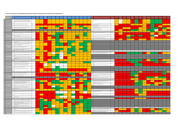
Priority Countries Consolidated Ebola Virus Disease Preparedness Checklist and Dashbord
World Health Organization
(2015)
The dashboard is based on assessments made by the International Preparedness Strengthening missions to 14 priority countries against each of the activities outlined in the WHO EVD Checklist at the time of each mission. Updates indicating progress a
...
gainst each of the indicators will be added on an ongoing basis.
more

This intervention will be limited to the initial phase of India reporting only (i) travel related cases and (ii) focal clusters arising from a travel related/unrelated case where cluster containment strategy is adopted (iii) Persons coming from COVI
...
D-19 affected areas where local and community transmission is evident.
more
Regional Guidelines for the Management of Severe Falciparum Malaria in Small Hospitals
Polrat Wilairatana, Srivicha Krudsood, Ma. Sandra B. Tempongko et al.
WHO South-East Asia New Delhi
(2006)
C1
These are two parallel guidelines, one for small hospitals and another one for large hospitals. In view of heavy burden of malaria and prevalence of drug resistant falciparum malaria in the South-East Asia Region, the guidelines were developed for use by medical personnel
...
who treat severe malaria patients, referred from lower-level health facilities. The guidelines were developed by the WHO Regional Office for South-East Asia and the WHO Collaborating Centre for the Clinical Management of Malaria, Faculty of Tropical Medicine, Mahidol University, Thailand. The guidelines are based on a review of current evidence, existing WHO guidelines and experience in the management of malaria in the Region.
more
This report recounts the experiences of 27 physicians and other health workers in Syria (all but two of them Syrian) who struggle to provide trauma care and
...
health services to a population under assault.
more
The Facilitator's Guide provides instruction and suggestions for teaching the training modules for the Technical Guidelines for Integrated Disease Surveillance and Response in the Africa Region, 2nd edition. This training is intended for district level hea
...
lth officers who conduct IDSR activities. The course is laid out in 7 modules that walk participants through the Technical Guidelines (TGs) chapter by chapter. By the end of the course, participants will be familiar with the TGs and capable of utilizing them appropriately in their position
more
Guidelines for social mobilization
TB and poverty; TB and children; TB and women; TB, migrants and refugees; TB and prisons
WHO/CDS/STB/2001.9
Original: English; Distribution: Limited

The roadmap describes the actions needed to
achieve the three development goals for TB
vaccines set by the WHO:
1. A safe, effective and affordable TB vaccine
for adolescents and adults.
2. An affordable TB vaccine for neonates and
infants wit
...
h improved safety and efficacy.
3. A therapeutic vaccine to improve TB
treatment outcomes
more

2nd edition. The interagency field handbook on malaria control was developed to set out effective malaria control responses in humanitarian emergencies, particularly during the acute phase when reliance on international humanitarian assistance is greatest. This second edition represents a thorough u
...
pdating and revision of the first edition. The structure remains similar, but includes an additional chapter on humanitarian coordination. All chapters have been revised to reflect changes in best practices, improvements in technologies, availability of new tools, and changes in WHO recommendations.
more

Background: Cardiovascular disease (CVD), mainly heart attack and stroke, is the
leading cause of premature mortality in low and middle income countries (LMICs).
Identifying and managing individuals at high risk of CVD is an important strategy to prevent and control CVD, in addition to multisector
...
al population-based interventions to reduce CVD risk factors in the entire population.
Methods: We describe key public health considerations in identifying and managing individuals at high risk of CVD in LMICs.
Results: A main objective of any strategy to identify individuals at high CVD risk is to maximize the number of CVD events averted while minimizing the numbers of
individuals needing treatment. Scores estimating the total risk of CVD (e.g. ten-year risk of fatal and non-fatal CVD) are available for LMICs, and are based on the main CVD risk factors (history of CVD, age, sex, tobacco use, blood pressure, blood cholesterol and diabetes status). Opportunistic screening of CVD risk factors enables identification of persons with high CVD risk, but this strategy can be widely applied in low resource settings only if cost effective interventions are used (e.g. the WHO Package of Essential NCD interventions for primary health care in low resource settings package) and if treatment (generally for years) can be sustained, including continued availability ofaffordable medications and funding mechanisms that allow people to purchase medications without impoverishing them (e.g. universal access to health care). Thisalso emphasises the need to re-orient health systems in LMICs towards chronic diseases management.
Conclusion: The large burden of CVD in LMICs and the fact that persons with high
CVD can be identified and managed along cost-effective interventions mean that
health systems need to be structured in a way that encourages patient registration, opportunistic screening of CVD risk factors, efficient procedures for the management of chronic conditions (e.g. task sharing) and provision of affordable treatment for those with high CVD risk. The focus needs to be in primary care because that is where most of the population can access health care and because CVD programmes can be run effectively at this level.
more
Pneumonia kills more children than any other illness – more than AIDS, malaria and measles combined. Over 2 million children die from pneumonia each year, accounting for almost 1 in 5 under five deaths worldwide. Yet, little attention is paid to this disease. This joint UNICEF/
...
WHO report examines the epidemiological evidence on the burden and distribution of pneumonia and assesses current levels of treatment and prevention. It is a call to action to reduce pneumonia mortality, a key step towards the achievement of the millennium development goal on child mortality.
more
Workplace Pandemic Preparedness. Training Manual
recommended
Ministry of Health Ghana; NADMO Ghana
GiZ Deutsche Gesellschaft für Internationale Zusammenarbeit
(2013)
C1
A training manual for identifying, assessing, preventing and controlling the risks of pandemics in the workplace. This training manual has been developed for both medical and non-medical personnel who may be called upon to lead emergency response,
...
(eg epidemic outbreak, etc), ensure effective containment whiles work continues and essential goods and services continue to be supplied.
The manual provides insight into some of the local epidemics experienced in Ghana such as Cholera, Cerebrospinal meningitis (CSM) and Influenza(s), the causes, signs and symptoms and preventive measures with a view to increasing knowledge among management, staff and their families as well as immediate communities within which they work.
more
Estimating the size of key affected populations (KAP) provides important data for planning and implementing an effective response to the HIV epidemic. In the Philippines, these KAP include males who have sex with males (MSM), female sex workers (FSW
...
), and injecting drug users (IDU). Given the difficulty in reaching these populations, as well as their high mobility, the process consequently entailed a specific methodology to directly estimate the size of KAP.
The national estimate of MSM was 531,500 or 2.2% (1.8%-3.2%) of males aged 15-49. Within this MSM estimate, figures for transgender women (TGW) and male transactional sex workers (MSW) were determined. The national estimate for TGW was 122,800 or about 0.50% (0.40%-0.75%) of males aged 15-49, and 23% of the MSM population. Meanwhile, MSW comprised 0.35% (0.29%-0.53%) of the male population aged 15-49 and 16% of the MSM population, giving a best estimate of 86,600.
The estimate of combined RFSW and FFSW was 66,100 or 0.28% (0.19%-0.40%) of females aged 15-49. Meanwhile, there are approximately 10,000 to 21,700 IDU or 0.04%-0.09% of males aged 15-49. more
The national estimate of MSM was 531,500 or 2.2% (1.8%-3.2%) of males aged 15-49. Within this MSM estimate, figures for transgender women (TGW) and male transactional sex workers (MSW) were determined. The national estimate for TGW was 122,800 or about 0.50% (0.40%-0.75%) of males aged 15-49, and 23% of the MSM population. Meanwhile, MSW comprised 0.35% (0.29%-0.53%) of the male population aged 15-49 and 16% of the MSM population, giving a best estimate of 86,600.
The estimate of combined RFSW and FFSW was 66,100 or 0.28% (0.19%-0.40%) of females aged 15-49. Meanwhile, there are approximately 10,000 to 21,700 IDU or 0.04%-0.09% of males aged 15-49. more
Updated guidance. The guidance provides useful information to staff working in prisons, as well as to health and prison authorities, explaining how to prevent and address a potential outbreak of COVID-19. In addition, it aims to protect the
...
health and well-being of all those who live and work in, and visit, these settings and the general population at large. People deprived of their liberty, and living or working in enclosed environments in close proximity, are likely to be more vulnerable to the COVID-19 disease than the general population. Moreover, correctional facilities may amplify and enhance COVID-19 transmission beyond their walls.
more
Management of Dead Bodies After Disasters: A Field Manual For First Responders. (Arabic Version)
recommended
Second edition. This revised edition incorporates experience gained in recent catastrophes, such as the 2013 Typhoon Haiyan in the Philippines, the 2014/15 Ebola epidemic in West Africa and the 2015 earthquake in Nepal. It also contains a number of annexes, which cover such topics as handling the bo
...
dies of people who died from an infectious disease, burial planning and using DNA analysis in mass fatality events
more
Proper and dignified management of the dead in disasters is one of the three key pillars of humanitarian response and a fundamental factor in facilitating identification of the deceased and helping families discover the fate of their loved ones. This second and updated edition of this hugely success
...
ful manual provides practical and easy-to-follow guidelines on the recovery, documentation and storage of the remains of individuals who have died in disasters, helping first responders ensure that the dead are treated with respect and that information crucial for their subsequent identification is recorded. This revised edition incorporates experience gained in recent catastrophes, such as the 2013 Typhoon Haiyan in the Philippines, the 2014/15 Ebola epidemic in West Africa and the 2015 earthquake in Nepal.
more

he National Department of Health (NDOH) presents this Malaria Elimination Strategic
Plan 2019-2023 for the Republic of South Africa. The strategy comes at an important time
as the Southern African Development Community (SADC) heads of state have r
...
ecently
renewed the commitment to eliminate malaria in Botswana, Eswatini, Namibia and South
Africa by 2020 and in the whole SADC region by 2030, with the target of zero local malaria
cases and deaths. South Africa has made steady progress towards this elimination goal
through the implementation of evidence-based malaria policies aligned to the World Health
Organization’s (WHO) Global Technical Strategy.
more
