Filter
1819
Text search:
2030
agenda
Featured
Recommendations
116
New Publications
421
Language
Document type
No document type
715
Studies & Reports
592
Strategic & Response Plan
188
Guidelines
174
Manuals
85
Training Material
23
Fact sheets
17
Situation Updates
10
Resource Platforms
10
Infographics
3
Brochures
1
Online Courses
1
Countries / Regions
Global
167
Kenya
85
Latin America and the Carribbean
79
Myanmar / Burma
38
Africa
36
Zambia
32
Western and Central Europe
32
India
28
South Africa
25
Asia
24
Ethiopia
22
Namibia
22
South–East Asia Region
19
Liberia
18
Ukraine
18
Bangladesh
16
Malawi
16
East and Southern Africa
15
Eastern Europe
15
Sierra Leone
14
Nigeria
12
Uganda
12
Germany
12
Indonesia
12
Ghana
11
Brazil
11
Colombia
11
West and Central Africa
11
Middle East and North Africa
11
Paraguay
11
Venezuela
11
Congo, Democratic Republic of
10
Philippines
10
Tanzania
10
Argentina
10
Cambodia
9
Guinea
8
Syria
8
Rwanda
8
Eastern Europe and Central Asia
8
Mozambique
7
Russia
7
Senegal
6
Cameroon
6
Nepal
6
Peru
6
Western Pacific Region
6
Laos
6
Pakistan
5
South Sudan
5
Thailand
5
Yemen
5
Vietnam
5
Côte d’Ivoire / Ivory Coast
4
Somalia
4
Benin
4
Lesotho
4
Sri Lanka
4
North America
4
Burkina Faso
3
Zimbabwe
3
Haiti
3
Afghanistan
3
China
3
Bolivia
3
Iran
3
Mali
2
USA
2
Togo
2
Iraq
2
Jordan
2
Lebanon
2
Chad
2
Sudan
2
Central African Republic
2
Burundi
2
Ecuador
2
Botswana
2
Greece
2
Guatemala
2
Mexico
2
Chile
2
Albania
2
Timor Leste/ East Timor
2
Tajikistan
2
Moldova
2
Jamaica
2
Guinea-Bissau
1
Morocco
1
Saudi Arabia
1
Niger
1
Egypt
1
Gambia
1
Papua New Guinea
1
Eswatini/ Swaziland
1
Honduras
1
El Salvador
1
Angola
1
Nicaragua
1
Bhutan
1
North Korea
1
Armenia
1
Southern Africa
1
Bulgaria
1
Estonia
1
Georgia
1
Uruguay
1
Turkmenistan
1
Japan
1
Mauritius
1
Tunisia
1
Spain
1
Authors & Publishers
Publication Years
Category
Countries
585
Public Health
163
Women & Child Health
136
Key Resources
101
Clinical Guidelines
84
Capacity Building
24
Pharmacy & Technologies
6
Toolboxes
Planetary Health
181
HIV
155
Mental Health
147
Global Health Education
119
COVID-19
97
Disability
95
TB
76
Health Financing Toolbox
68
NCDs
62
Caregiver
58
NTDs
52
Refugee
42
AMR
35
Malaria
34
Conflict
32
Polio
16
2.0 Rapid Response
12
Natural Hazards
11
Rapid Response
11
Pharmacy
10
Ebola & Marburg
8
Cholera
7
Social Ethics
7
Zika
2
Testimonies from Humanitarian Workers with Disabilities.
By reading the first-hand accounts, we hear how persons with disabilities, not through any particular talent or skill but from unique knowledge gained through life experience, are ideally placed to provide insights, ideas and leadership, to s
...
The Myanmar National Framework seeks to achieve people-centered, inclusive, and sustainable socioeconomic development in the face of disasters triggered by natural hazards and climate change. The framework articulates a common understanding, proposes a coherent approach, and identifies potential opp
...
Concentrations of the major greenhouse gases, CO2 , CH4 , and N2 O, continued to increase despite the temporary reduction in emissions in 2020 related to measures taken in response to COVID-19.
2020 was one of the three warmest years on record. The past six years, including 2020, have been the si
...
The Malaria Ministerial Conference, co-hosted by WHO and the Government of Cameroon on 6 March 2024, brought together more than 400 stakeholders, including Ministers of Health and senior representatives from the African countries hardest hit by malaria, global health leaders, scientists, civil socie
...
A historic funding crisis is threatening to unravel decades of progress unless countries can make radical shifts to HIV programming and funding. The report highlights the impact that the sudden, large-scale funding cuts from international donors are having on countries most affected by HIV. Yet it a
...
Access to safe, effective and quality-assured health products and technologies is crucial for achieving universal health coverage and primary health care goals. The continued growth of the aging population; increasing burden of noncommunicable diseases; growing burden of mental health issues; climat
...
Every year, nearly 250 million people move across borders temporarily or permanently for a job opportunity, studying, to flee a crisis back home, or for other reasons. Another 750 million move for similar reasons within the borders of their countries. With the understanding that human mobility affec
...
The marathon to eradicate polio is on its final lap: the world is more than 99% of the way to success. After millennia of living with poliovirus and suffering the paralysis it causes, today nearly all the world’s people live in polio-free countries; two of the three strains of wild poliovirus (WPV
...
A regional guide for governments in Asia and the Pacific to review, update and develop policies to address antimicrobial resistance and antimicrobial use in animal production
Groupe indépendant d’experts de la redevabilité de l’initiative Chaque femme, chaque enfant. (2020). Dans la tourmente de la pandémie de COVID-19: la santé de la femme, de l’enfant et de l’adolescent dans le contexte de la couverture sanitaire universelle et des objectifs de dével
...
Noncommunicable diseases (NCDs) – chief among them, cardiovascular diseases (heart disease and stroke), cancer, diabetes and chronic respiratory diseases – along with mental health, cause nearly three quarters of deaths in the world. Their drivers are social, environmental, commercial and geneti
...
These guidelines have been compiled for education ministries or other educational leaders (including development partners, non-governmental or private organizations working with schools or directly with caregivers) who want to adapt and adopt resources to support the marginalized caregivers of child
...
A Review of Existing Policy Frameworks.
Report III Conversations on Planetary Health
Espacio para la Infancia es una revista sobre el desarrollo
de la primera infancia que trata temas específicos relacionados
con el desarrollo de los niños pequeños, y en concreto
desde su perspectiva psicosocial. Es una publicación
semestral de la Fundación Bernard van Leer.
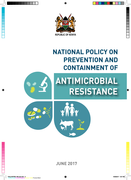
Antimicrobial resistance (AMR) is a global threat that requires urgent collaborative action within and among countries. AMR makes standard treatments ineffective and facilitates the spread of antimicrobial resistant infections rendering communities vulnerable. The Ministry of Health (MOH) and Minist
...