
Filter
7144
Text search:
emergency
use
Featured
Recommendations
726
New Publications
1910
Language
Document type
No document type
3741
Studies & Reports
1156
Guidelines
1043
Manuals
447
Strategic & Response Plan
297
Fact sheets
177
Training Material
119
Situation Updates
92
Infographics
28
Resource Platforms
19
Brochures
15
Online Courses
6
Videos
3
App
1
Countries / Regions
Global
315
India
285
Kenya
196
Sierra Leone
188
Liberia
174
Ethiopia
150
Nigeria
141
South Africa
137
Uganda
133
Myanmar / Burma
133
Syria
132
Nepal
123
Western and Central Europe
113
Bangladesh
110
Africa
103
Latin America and the Carribbean
98
Rwanda
95
Ukraine
91
Tanzania
90
Congo, Democratic Republic of
87
Zambia
85
Malawi
85
Ghana
80
South Sudan
80
Guinea
73
Namibia
68
Mozambique
54
Brazil
54
Philippines
53
Yemen
51
Haiti
50
Zimbabwe
48
West and Central Africa
48
Middle East and North Africa
42
South–East Asia Region
42
Senegal
40
Germany
39
Lesotho
39
East and Southern Africa
39
Russia
39
Indonesia
35
Eastern Europe
34
Asia
31
Venezuela
30
Pakistan
28
Burkina Faso
27
Eastern Europe and Central Asia
27
Afghanistan
26
Cambodia
25
Eswatini/ Swaziland
25
Sudan
23
Central African Republic
23
Lebanon
22
Botswana
21
Somalia
20
Mali
19
Cameroon
17
Jordan
17
Colombia
16
Western Pacific Region
16
Vietnam
15
USA
14
Thailand
14
China
13
Moldova
13
Iraq
12
Turkey
12
Madagascar
12
Laos
12
Angola
11
Côte d’Ivoire / Ivory Coast
10
Ecuador
9
Chile
9
Palestine
9
Iran
9
Peru
8
Burundi
8
Libya
8
Sri Lanka
8
Togo
7
Gambia
7
Benin
7
Paraguay
7
Guinea-Bissau
6
Chad
6
Papua New Guinea
6
Poland
6
Albania
6
Southern Africa
6
Niger
5
Egypt
5
North Macedonia
5
Greece
5
Bhutan
5
Tajikistan
5
United Kingdom
5
Portugal
5
Malaysia
4
Singapore
4
Argentina
4
Hungary
4
Bolivia
4
Mexico
4
Romania
4
Kazakhstan
4
Jamaica
4
Japan
4
Spain
4
Saudi Arabia
3
Vanuatu
3
Serbia
3
Croatia
3
Fiji
3
Armenia
3
Timor Leste/ East Timor
3
Kyrgyzstan
3
North America
3
Mauritania
2
Switzerland
2
Honduras
2
Italy
2
Djibouti
2
Qatar
2
Bulgaria
2
Estonia
2
Slovakia
2
Uzbekistan
2
Georgia
2
Gabon
2
Mauritius
2
South Korea
2
Belarus
2
Morocco
1
Dominican Republic
1
Austria
1
El Salvador
1
Guatemala
1
Nicaragua
1
Solomon Islands
1
North Korea
1
Mongolia
1
Canada
1
Lithuania
1
Australia
1
Turkmenistan
1
Belgium
1
France
1
Maldives
1
Tunisia
1
Morocco
1
Azerbaijan
1
Israel
1
Bosnia and Herzegovina
1
Oman
1
Authors & Publishers
Publication Years
Category
Countries
2658
Key Resources
594
Clinical Guidelines
432
Women & Child Health
413
Public Health
328
Capacity Building
156
Pharmacy & Technologies
57
Annual Report MEDBOX
1
Toolboxes
COVID-19
959
Mental Health
479
HIV
438
Ebola & Marburg
326
Conflict
313
Planetary Health
218
Rapid Response
199
Caregiver
190
Disability
180
Natural Hazards
172
Refugee
172
TB
170
Health Financing Toolbox
105
NCDs
105
2.0 Rapid Response
105
Global Health Education
103
Pharmacy
101
AMR
97
Specific Hazards
86
Zika
84
Cholera
76
NTDs
73
Polio
50
Malaria
50
Social Ethics
15
Typhoon
8
South Sudan
2

In Tanzania, institutional efforts to combat HIV/AIDS started in 1985 by establishing a National Taskforce within the Ministry of Health. This was so because the HIV/AIDS epidemic was first perceived as a health problem, and the initial control efforts were formulated and based within the health sec
...

Tuberculosis cases, TB deaths
The guide explains how vaccines work and answers your common questions as well as providing up-to-date information on the current approved COVID-19 vaccinations in the UK.
This guide was written in January 2021 and updated in March 2021 and is accurate at the time of publishing. Information will b
...
To realize Agenda 2030, aid agencies, private philanthropies, and their partners in the Global South need better data to monitor how official development finance (ODF) dollars advance the Sustainable Development Goals (SDGs) and avoid missing the mark. In this report, we summarize the results of a n
...

This paper presents a bibliometric analysis of the literature on private health aid and official health assistance between 2000 and 2022. It provides an overview of the sites and themes in the literature pertaining to development assistance in health, and collates the significant policy recommendati
...

In the last three decades, health financialization has surged in
several creative ways, yet this growing phenomenon remains surprisingly
unknown, and neglected, in the global health arena. Financialization in the
health domain could be described as the uncontrolled expansion of finance along vari
...

Africa’s health sector is facing an unprecedented financing crisis, driven by a sharp decline of 70% in Official Development Assistance (ODA) from 2021 to 2025 and deep-rooted structural vulnerabilities. This collapse is placing immense pressure on Africa’s already fragile health systems as ODA
...

Achieving financial risk protection for the whole population requires significant financing for health. Health systems in low- and middle-income countries (LMIC) are plagued with persistent underfunding, and recent reductions in official development assistance have been registered. To create fiscal
...

For this report, the Task Force commissioned
additional background papers on health taxes to
update the evidence, assess short-term revenue
potential, and understand the role of health taxes
in the current era of multiple crises. We find that
health taxes continue to be underutilized despite th
...

The National Strategic Plan for Malaria Elimination in India (2023-2027) focuses on achieving malaria elimination by 2030, in alignment with the Global Technical Strategy. The document outlines the strategies, targets, and goals for malaria elimination, aiming for zero indigenous malaria cases by 20
...

In 2022, Namibia had an estimated population of 2.6 million people, where 51 per cent per cent are females and 52.5 per cent of households in urban areas, with fast-growing urban informal settlements which lack access to basic services. Namibia has a young population; 42 per cent are children (0-17
...

In 2008 the Ministry of Health and Social Services (MOHSS) commissioned a national health and social service system review which found that although some progress has been made in primary health care, provision of health services did not go beyond the health facilities, irrespective of the fast dist
...
Zambia has completed the implementation of the National TB Strategic Plan (2017-2021) that set in motion the TB elimination agenda in Zambia through coordinated and accelerated TB response. During this period, the National TB and Leprosy Programme (NTLP) registered tremendous success.
The NTLP is
...

4th edition, Reference Manual

The National Strategic Plan for Malaria Elimination 2021–2025 outlines Bangladesh’s roadmap to achieve zero indigenous malaria cases by 2030, with an interim goal to reduce transmission to near-zero levels by 2025. The strategy builds upon earlier successes in malaria control and shifts focus to
...
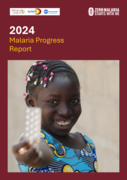
According to the WHO, there were an estimated 251 million malaria cases (95% of global cases) and 579,414 malaria deaths (97% of global deaths) in African Union Member States in 2023. 76% of these deaths were children under the age of five.

The National Strategic Plan on Malaria Prevention and Elimination Period 2021 – 2025 seeks to build on the previous national successes of the National Institute of Malariology, Parasitology, and Entomology (NIMPE) while addressing current challenges to reduce the overall burden of malaria in the S
...

Malaria remains a significant public health concern in the SADC region, accounting for 20% of childhood deaths, as well as prompting numerous outpatient visits and hospitalisations. Around three-quarters of the population, including 35 million children under the age of five and 8.5 million pregnant
...
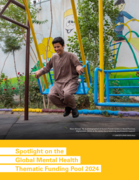
Promoting and protecting the mental health and psychosocial wellbeing of children, adolescents, and their caregivers remains undamental to achieving the Sustainable Development Goals (SDGs), with a direct contribution to SDG 3 (Good Health and Well- eing). In 2024, UNICEF accelerated the scale-up o
...

The health impacts of climate change are no longer a distant threat. They are being felt here and now and becoming more extreme.
To address these threats, the WHO Asia-Pacific Centre for Environment and Health in the Western Pacific Region (ACE) was established in 2019 through a partnership with
...
