Filter
1641
Text search:
Natural
disaster
Featured
168
461
Language
Document type
914
277
140
135
79
36
24
16
10
5
2
2
1
Countries / Regions
97
91
66
47
37
36
26
26
24
22
21
19
19
17
16
16
16
16
16
14
11
11
11
11
10
9
9
9
9
9
9
9
8
8
7
7
7
7
7
6
6
6
6
5
5
5
5
5
4
4
4
4
4
4
3
3
3
3
3
3
2
2
2
2
2
2
2
2
2
2
2
2
2
2
2
2
1
1
1
1
1
1
1
1
1
1
1
1
1
1
1
1
1
1
1
1
1
1
1
1
1
1
1
1
1
Authors & Publishers
Publication Years
Category
520
339
70
64
38
38
4
1
Toolboxes
177
160
152
99
91
86
79
63
47
39
32
24
21
17
13
12
11
11
9
8
7
7
6
5
5
2
The COVID-19 pandemic is a multiplier of vulnerability, compounding threats to food insecurity, while exposing weaknesses in food and health systems. It is severely undermining the capacity of communities to cope in times of crisis and has become a stress test for political and economic stability.
Этот документ представляет собой обновление
рекомендаций «Уход на дому за пациентами с легкой
формой заболевания COVID‑19 и тактика ведения
контактных лиц», опублÐ
...
This Guidance Document provides practical assistance to Country Offices scaling up programmes to manage SAM in young children. It outlines a step-by-step process through which countries can analyse their current situation, identify barriers and bottlenecks through the MoRES approach, and plan action
...
Summary of the Ethopian country office of WHO on COVID-19 activities.
7 Febr. 2021
As COVID-19 continues to wreak havoc in countries – decimating people’s livelihoods, and leaving health systems struggling to provide healthcare and vaccines for the entire population - governments and donors should look to the Church as a partner. The essential Church networks, tr
...

Background paper 10
The Independent Panel for Pandemic Preparedness and Response
May 2021
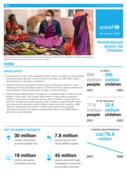

Food and nutrition security in the Democratic Republic of the Congo is subject to the relentless impact of conflict, epidemics and climate events that have persisted in the country for decades, further compounded by the global COVID-19 pandemic. Lack of infrastructure and investment in agriculture,
...
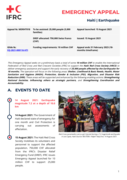
Early damage assessments indicate that at least 800,000 people could be directly exposed to minor to severe damages, including communication, access, security, loss of livelihoods, infrastructure, and health services could be impacted.
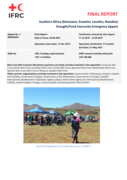
In the last quarter of 2019 Southern African Regional Interagency Standing Committee Africa (RIASCO) reported that more than 11 million people were experiencing crisis or emergency levels of food insecurity in nine Southern African countries1 due to deepening drought and climate related crisis. The
...

From the start of the COVID-19 pandemic until August 2021, extreme weather events have affected at least 139.2 million people and killed at least 17,242 people in at least 433 unique events. These figures are certainly an underestimate, as they do not include estimates of numbers of people affected
...
The Impacts of Climate Change on Human Health
in the United States: A Scientific Assessment
Climate change is a significant threat to the health of the American people. This scientific assessment examines how climate change is already affecting human health and the changes that may occur in the fu
...
The Planetary Health Report Card is a student-driven, metric-based initiative to inspire planetary health and sustainable healthcare education engagement in medical schools. In addition to inspiring expansion of medical school curricula, we hope to inspire medical schools to expand research efforts,
...
Nature Sustainability | VOL 2 | APRIL 2019 | 267–273 | www.nature.com/natsustain

Globalization and Health (2021) 17:74 https://doi.org/10.1186/s12992-021-00722-3
Open access book describing tools for engaging communities in resilience strategies
Based on practical experience from participatory positive futures visioning in nine Latin American and US cities
For students and professionals of different sectors including sustainability, engineering, ec
...

Best Practices Report.PART 1 Primary Protection: Enhancing Health Care Resilience for a Changing Climatei Primary Protection: EnhancingU.S. Department of Health and Human Services
Climate Smart Agriculture provides an excellent opportunity for the transformation by uniting agriculture, development and climate change under a common agenda through integrating the three dimensions of sustainable development (economic, social and environmental) by jointly addressing food security
...