
Filter
684
Text search:
latrine
Featured
89
263
Language
Document type
440
78
60
35
26
17
9
8
7
2
1
1
Countries
39
33
30
29
26
25
25
24
23
19
16
15
15
15
14
14
13
11
11
10
9
8
7
6
6
6
6
5
5
5
5
4
4
4
4
3
3
2
2
2
2
1
1
1
1
1
1
1
1
1
1
1
1
1
1
1
1
1
1
Authors & Publishers
Publication Years
Category
337
123
30
26
25
24
1
1
Toolboxes
60
51
43
25
24
23
17
13
10
8
7
7
6
5
3
2
2
1
1
1
Infection prevention and control (IPC) in a CTC/ CTU IPC are all practical measures taken in the healthcare facility to prevent harm caused by infections to patients, health workers and communities.
The main goal of IPC in the cholera response is to
• To reduce transmission of health care-as
...
A Guide to Inclusive Education 2023
recommended
Refugee children with disabilities experience a reality of exclusion and marginalisation that makes them among the most vulnerable displaced persons in the world. Excluded from participation in social activities and access to school, not only because of their disability, but especially because of so
...

Cholera is an acute gastrointestinal infection caused by the bacterium Vibrio Cholerae serogroup O1 or O139, and is often linked to unsafe drinking water, lack of proper sanitation and personal hygiene. It adversely affects mostly the poor and vulnerable populations in countries, which are already d
...

The document is a comprehensive practical guide for managing cholera epidemics. It includes detailed instructions on outbreak investigation, control measures, case management, and the organization of treatment facilities. It emphasizes strategies such as rehydration therapy, water sanitation, hygien
...
Ce guide a été conçu pour l'évaluation de nouveaux contextes et l'élaboration des recommandations adaptées à ces contextes visant à améliorer la consommation d'aliments riches en fer et en vitamine A en utilisant les ressources disponibles localement (les résultats comportementaux de cet e
...
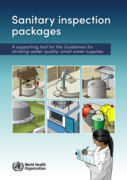
A sanitary inspection is a simple, on-site evaluation (traditionally using a checklist) to help identify and support the management of priority risk factors that may lead to contamination of a drinking-water supply. Sanitary inspections are a well-established and widely-applied practice. They can su
...

Since the Alma Ata Declaration in 1978, community health volunteers (CHVs) have been at the forefront, providing health services, especially to underserved communities, in low-income countries. However, consolidation of CHVs position within formal health systems has proved to be complex and continue
...

Safe sanitation is essential for health, from preventing infections to improving and maintaining mental and social
well-being. Lack of adequate sanitation contributes to diarrhoeal diseases, parasitic infections, and undernutrition, as
well as posing significant risks and causing anxiety, especial
...

This interim operational guide outlines infection prevention, control, and water, sanitation, and hygiene measures for home care and isolation of mpox in resource-limited settings. It focuses on practical strategies to manage and prevent the spread of the virus when persons with mpox are isolated at
...

The rapid assessment tool (RAT) is meant to assess health facilities within mpox-affected areas that have at least one inpatient bed. Depending on time and resources available, certain facilities may be prioritized during an mpox outbreak. The RAT evaluates 16 infection prevention and control (IPC)
...

Trachoma is the world’s leading infectious cause of blindness. It is one of 18 neglected
tropical diseases (NTDs) that affect over one billion of the world’s poorest people.

Twenty-Fourth Annual Trachoma Control Program Review, Summary Proceedings

Indoor residual spraying (IRS) involves applying residual insecticide to potential vector resting sites on the interior surfaces of human dwellings or other buildings. The main aim of IRS is to kill vectors before they are able to transmit pathogens to humans. When carried out correctly, IRS has his
...

The "National Guideline for Cholera Surveillance and Outbreak Response" by the Ethiopian Public Health Institute (EPHI) provides a comprehensive approach to combating cholera outbreaks in Ethiopia. It emphasizes the importance of a multisectoral approach, including case management, WASH measures, an
...
The '100 Health Messages for Children to Learn & Share' is an educational resource developed by Children for Health. It is aimed at children aged 8–14, particularly young adolescents (aged 10–14), who often care for younger siblings. The set contains 100 simple, accurate and adaptable health mes
...

This document outlines the plan for a continental cholera prevention and control with the implementation framework for the Cholera IMST, detailing its governance structure, strategic priorities, and operational modalities

A job aid for cadres supporting adolescents living with HIV (ages 15-19) in Orphans and Vulnerable
Children (OVC) Programs

We can't stop at almost. 2025 Goalkeeper Report
recommended
2025 is the first year of this century where child deaths will increase.
But we can stop this reversal before it becomes a trend, even in a time of tight budgets.
With proven solutions and next-generation innovations that do more with less, we can save millions of children's lives, protect the pro
...
A job aid for cadres supporting caregivers of children and adolescents living with HIV (ages 0-14) in Orphans and Vulnerable Children (OVC) Programs

The manual elaborates on a wide rang of logistics management issues such as carrying assessements, procurement, storing, transporting and distribution of emergency supplies
