
Filter
2739
Text search:
early
recovery
Featured
296
713
Language
2648
69
59
43
41
22
19
10
6
6
6
5
4
3
3
3
3
3
3
3
3
2
2
2
2
2
2
2
2
2
2
2
2
2
2
1
1
1
1
1
1
1
1
1
1
1
1
1
1
1
1
1
1
1
1
1
1
Document type
1431
478
353
194
151
51
38
30
7
3
2
1
Countries
145
114
105
84
71
60
48
48
43
41
40
38
37
36
36
34
34
33
28
27
27
27
26
25
22
22
21
19
19
19
17
16
15
14
13
12
12
11
11
10
9
9
9
9
9
9
8
8
8
8
7
7
7
7
6
6
6
5
5
5
5
5
4
4
4
4
4
4
4
3
3
3
3
3
3
3
3
3
3
3
3
3
2
2
2
2
2
2
2
2
2
2
2
2
2
2
2
2
2
1
1
1
1
1
1
1
1
1
1
1
1
1
1
1
1
1
1
1
1
1
1
1
1
1
Authors & Publishers
360
107
91
65
57
56
55
35
35
23
21
19
18
17
16
16
14
13
13
13
12
12
11
11
11
11
11
10
10
9
9
9
9
9
9
9
9
8
8
8
8
8
8
7
7
7
7
7
7
7
7
6
6
6
6
6
6
6
6
6
6
6
6
6
5
5
5
5
5
5
5
5
5
5
5
5
5
5
5
5
4
4
4
4
4
4
4
4
4
4
4
4
4
4
4
4
4
4
4
4
4
4
4
4
4
4
4
4
4
4
4
4
4
4
4
3
3
3
3
3
3
3
3
3
3
3
3
3
3
3
3
3
3
3
3
3
3
3
3
3
3
3
3
3
3
3
3
3
3
3
3
3
3
3
3
3
3
3
3
3
3
3
3
3
3
3
3
3
3
3
3
3
3
2
2
2
2
2
2
2
2
2
2
2
2
2
2
2
2
2
2
2
2
2
2
2
2
2
2
2
2
2
2
2
2
2
2
2
2
2
2
2
2
2
2
2
2
2
2
2
2
2
2
2
2
2
2
2
2
2
2
2
2
2
2
2
2
2
2
2
2
2
2
2
2
2
2
2
2
2
2
2
2
2
2
2
2
2
2
2
2
2
2
2
2
2
2
2
2
2
2
2
2
2
2
2
2
2
2
2
2
2
2
2
2
2
2
2
2
2
2
2
2
2
2
2
2
2
2
2
2
2
2
2
2
2
2
2
2
2
2
2
2
2
2
2
2
2
2
2
2
2
2
2
2
2
2
2
2
2
1
1
1
1
1
1
1
1
1
1
1
1
1
1
1
1
1
1
1
1
1
1
1
1
1
1
1
1
1
1
1
1
1
1
1
1
1
1
1
1
1
1
1
1
1
1
1
1
1
1
1
1
1
1
1
1
1
1
1
1
1
1
1
1
1
1
1
1
1
1
1
1
1
1
1
1
1
1
1
1
1
1
1
1
1
1
1
1
1
1
1
1
1
1
1
1
1
1
1
1
1
1
1
1
1
1
1
1
1
1
1
1
1
1
1
1
1
1
1
1
1
1
1
1
1
1
1
1
1
1
1
1
1
1
1
1
1
1
1
1
1
1
1
1
1
1
1
1
1
1
1
1
1
1
1
1
1
1
1
1
1
1
1
1
1
1
1
1
1
1
1
1
1
1
1
1
1
1
1
1
1
1
1
1
1
1
1
1
1
1
1
1
1
1
1
1
1
1
1
1
1
1
1
1
1
1
1
1
1
1
1
1
1
1
1
1
1
1
1
1
1
1
1
1
1
1
1
1
1
1
1
1
1
1
1
1
1
1
1
1
1
1
1
1
1
1
1
1
1
1
1
1
1
1
1
1
1
1
1
1
1
1
1
1
1
1
1
1
1
1
1
1
1
1
1
1
1
1
1
1
1
1
1
1
1
1
1
1
1
1
1
1
1
1
1
1
1
1
1
1
1
1
1
1
1
1
1
1
1
1
1
1
1
1
1
1
1
1
1
1
1
1
1
1
1
1
1
1
1
1
1
1
1
1
1
1
1
1
1
1
1
1
1
1
1
1
1
1
1
1
1
1
1
1
1
1
1
1
1
1
1
1
1
1
1
1
1
1
1
1
1
1
1
1
1
1
1
1
1
1
1
1
1
1
1
1
1
1
1
1
1
1
1
1
1
1
1
1
1
1
1
1
1
1
1
1
1
1
1
1
1
1
1
1
1
1
1
1
1
1
1
1
1
1
1
1
1
1
1
1
1
1
1
1
1
1
1
1
1
1
1
1
1
1
1
1
1
1
1
1
1
1
1
1
1
1
1
1
1
1
1
1
1
1
1
1
1
1
1
1
1
1
1
1
1
1
1
1
1
1
1
1
1
1
1
1
1
1
1
1
1
1
1
1
1
1
1
1
1
1
1
1
1
1
1
1
1
1
1
1
1
1
1
1
1
1
1
1
1
1
1
1
1
1
1
1
1
1
1
1
1
1
1
1
1
1
1
1
1
1
1
1
1
1
1
1
1
1
1
1
1
1
1
1
1
1
1
1
1
1
1
1
1
1
1
1
1
1
1
1
1
1
1
1
1
1
1
1
1
1
1
1
1
1
1
1
1
1
1
1
1
1
1
1
1
1
1
1
1
1
1
1
1
1
1
1
1
1
1
1
1
1
1
1
1
1
1
1
1
1
1
1
1
1
1
1
1
1
1
1
1
1
1
1
1
1
1
1
1
1
1
1
1
1
1
1
1
1
1
1
1
1
1
1
1
1
1
1
1
1
1
1
1
1
1
1
1
1
1
1
1
1
1
1
1
1
1
1
1
1
1
1
1
1
1
1
1
1
1
1
1
1
1
1
1
1
1
1
1
1
1
1
1
1
1
1
1
1
1
1
1
1
1
1
1
1
1
1
1
1
1
1
1
1
1
1
1
1
1
1
1
1
1
1
1
1
1
1
1
1
1
1
1
1
1
1
1
1
1
1
1
1
1
1
1
1
1
1
1
1
1
1
1
1
1
1
1
1
1
1
1
1
1
1
1
1
1
1
1
1
1
1
1
1
1
1
1
1
1
1
1
1
1
1
1
1
1
1
1
1
1
1
1
1
1
1
1
1
1
1
1
1
1
1
1
1
1
1
1
1
1
1
1
1
1
1
1
1
1
1
1
1
1
1
1
1
1
1
1
1
1
1
1
1
1
1
1
1
1
1
1
1
1
1
1
1
1
1
1
1
1
1
1
1
1
1
1
1
1
1
1
1
1
1
1
1
1
1
1
1
1
1
1
1
1
1
1
1
1
1
1
1
1
1
1
1
1
1
1
1
1
1
1
1
1
1
1
1
1
1
1
1
1
1
1
1
1
1
1
1
1
1
1
1
1
1
1
1
1
1
1
1
1
1
1
1
1
1
1
1
1
1
1
1
1
1
1
1
1
1
1
1
1
1
1
1
1
1
1
1
1
1
1
1
1
1
1
1
1
1
1
1
1
1
1
1
1
1
1
1
1
1
1
1
1
1
1
1
1
1
1
1
1
1
1
1
1
1
1
1
1
1
1
1
1
1
1
1
1
1
1
1
1
1
1
1
1
1
1
1
1
1
1
1
1
1
1
1
1
1
1
1
1
1
1
1
1
1
1
1
1
1
1
1
1
1
1
1
1
1
1
1
1
1
1
1
1
1
1
1
1
1
1
1
1
1
1
1
1
1
1
1
1
1
1
1
1
1
1
1
1
1
1
1
1
1
1
1
1
1
1
1
1
1
1
1
1
1
1
1
1
1
1
1
1
1
1
1
1
1
1
1
1
1
1
1
1
1
1
1
1
1
1
1
1
1
1
1
1
1
1
1
1
1
1
1
1
1
1
1
1
1
1
1
1
1
1
1
1
1
1
1
1
1
1
1
1
1
1
1
1
1
1
1
1
1
1
1
1
1
1
1
1
1
1
1
1
1
1
1
1
1
1
1
1
1
1
1
1
1
1
1
1
1
1
1
1
1
1
1
1
1
1
1
1
1
1
1
1
1
1
1
1
1
1
1
1
1
1
1
1
1
1
1
1
1
1
1
1
1
1
1
1
1
1
1
1
1
1
1
1
1
1
1
1
1
1
1
1
1
1
1
1
1
1
1
1
1
1
1
1
1
1
1
1
1
1
1
1
1
1
1
1
1
1
1
1
1
1
1
1
1
1
1
1
1
1
1
1
1
1
1
1
1
1
1
1
1
1
1
1
1
1
1
1
1
1
1
1
1
1
1
1
1
1
1
1
1
1
1
1
1
1
1
1
1
1
1
1
1
1
1
1
1
1
1
1
1
1
1
1
1
1
1
1
1
1
1
1
1
1
1
1
1
1
1
1
1
1
1
1
1
1
1
1
1
1
1
1
1
1
1
1
1
1
1
1
1
1
1
1
1
1
1
1
1
1
1
1
1
1
1
1
1
1
1
1
1
1
1
1
1
1
1
1
1
1
1
1
1
1
1
1
1
1
1
1
1
1
1
1
1
1
1
1
1
1
1
1
1
1
1
1
1
1
1
1
1
1
1
1
1
1
1
1
1
1
1
1
1
1
1
1
1
1
1
1
1
1
1
1
1
1
1
1
1
1
1
1
1
1
1
1
1
1
1
1
1
1
1
1
1
1
1
1
1
1
1
1
1
1
1
1
1
1
1
1
1
1
1
1
1
1
1
1
1
1
1
1
1
1
1
1
1
1
1
1
1
1
1
1
1
1
1
1
1
1
1
1
1
1
1
1
1
1
1
1
1
1
1
1
1
1
1
1
1
1
1
1
1
1
1
1
1
1
1
1
1
1
1
1
1
1
1
1
1
1
1
1
1
1
1
1
1
1
1
1
1
1
1
1
1
1
1
1
1
1
1
1
1
1
1
1
1
1
1
1
1
1
1
1
1
1
1
1
1
1
1
1
1
1
1
1
1
1
1
1
1
1
1
1
1
1
1
1
1
1
1
1
1
1
1
1
1
1
1
1
1
1
1
1
1
1
1
1
1
1
1
1
1
1
1
1
1
1
1
1
1
1
1
1
1
1
1
1
1
1
1
1
1
1
1
1
1
1
1
1
1
1
1
1
1
1
1
1
1
1
1
1
1
1
1
1
1
1
1
1
1
1
1
1
1
1
1
1
1
1
1
1
1
1
1
1
1
1
1
1
1
1
1
1
1
1
1
1
1
1
1
1
1
1
1
1
1
1
1
1
1
1
1
1
1
1
1
1
1
1
1
1
1
1
1
1
1
1
1
1
1
1
1
1
1
1
1
1
1
1
1
1
1
1
1
1
1
1
1
1
1
1
1
1
1
1
1
1
1
1
1
1
1
1
1
1
1
1
1
1
1
1
1
1
1
1
1
1
1
1
1
1
1
1
1
1
1
1
1
1
1
1
1
1
1
1
1
1
1
1
1
1
1
1
1
1
1
1
1
1
1
1
1
1
1
1
1
1
1
1
1
1
1
1
1
1
1
1
1
1
Publication Years
927
1539
254
16
3
Category
907
296
169
142
114
60
12
Toolboxes
369
327
160
157
122
114
87
86
70
49
49
48
46
44
40
39
36
25
23
18
18
16
15
9
7
6
1

According to the latest available estimates, more than 1 in 7 adolescents aged 10–19 is estimated to live with a diagnosed mental disorder globally. Almost 46,000 adolescents die from suicide each year, among the top five causes of death for their age group. Meanwhile, wide gaps persist between me
...
ntal health needs and mental health funding. The report finds that about 2 per cent of government health budgets are allocated to mental health spending globally.
The full report , excecutive summary, brief reports are available in English, French, Spanish and Arabic athttps://www.unicef.org/reports/state-worlds-children-2021?utm_source=referral&utm_medium=media&utm_campaign=sowc-web
more
Nursing Times [online]; 117: 11, 18-21.

From the start of the COVID-19 pandemic until August 2021, extreme weather events have affected at least 139.2 million people and killed at least 17,242 people in at least 433 unique events. These figures are certainly an underestimate, as they do not include estimates of numbers of people affected
...
by extreme temperatures, or mortality during drought events.
One dimension of the compound risk of COVID-19 and climate extremes was the additional challenge of preparing for and responding to disasters during the pandemic, such as the constraints of physical distancing during evacuations and response operations.
more

History has shown that governments tend to deprioritize environmental commitments during times of financial and public crises as they work to mitigate immediate needs—and the age of COVID-19 has been no different. Even though human interaction with wildlife is believed to be the cause of the pande
...
mic, the focus on COVID’s fallout has deprioritized the importance of reversing the damage humans have done to the planet.
COVID has had a multifaceted and detrimental effect on environmental conservation. Not only has funding been diverted to deal with the pandemic, conservation-oriented organizations are operating with minimal staff or have closed entirely. People whose daily work it is to advance environmental science and protect the land and water have become ill or have been forced to stay home because of travel restrictions. Plastic use is at an all-time high.
The good news is that there is an unprecedented opportunity for philanthropy to recharge the effort to protect the planet. This Giving Smarter Guide examines the state of environmental philanthropy, and provides an overview of potential strategic starting points for philanthropy and impact capital to play a role in saving the planet. In addition to offering recommendations specific to the COVID-19 response, the Center for Strategic Philanthropy also asks the questions that philanthropists should consider at the start of their journey into the field of conservation philanthropy.
more
English Analysis on World about Agriculture, Climate Change and Environment, Drought, Flood and more; published on 27 Oct 2021 by GCA
A implementation Matrix approved by the Cabinet of the Government of South Africa


Tuberculosis (TB) is the deadliest infectious disease in most low- and middle-income countries, claiming more than 4,000 lives each day. The unprecedented COVID-19 pandemic has seriously impacted people with pre-existing health conditions. People with TB are usually more vulnerable to other infectio
...
ns, including the novel coronavirus, due to pre-existing lung damage. They are also at higher risk of developing complications from COVID-19.
more
Global food insecurity has markedly increased over the last two-years due to conflict, economic and political instability, displacement, environmental degradation and disasters, and major disruptions to global food systems because of the Covid-19 pandemic. In 2021, levels of hunger surpassed all pre
...
vious records with close to 193 million people acutely food insecure and in need of urgent assistance across 53 countries and territories. This represents an increase of nearly 40 million people compared to what was previously considered a record level high in 2020.
more
This report presents the findings from a ‘deep dive’ undertaken by UNICEF East Asia and the Pacific Regional Office to consider the experiences in Cambodia, Indonesia, the Lao People’s Democratic Republic, Malaysia, Myanmar, the Philippines and the Pacific. The target audience for this report
...
includes OPDs and humanitarian actors at global, regional, and country levels.
more
This manual is to assist health care providers and laboratory scientists to diagnose mycobacterium ulcerans disease (Buruli ulcer). The manual aims to achieve a better understanding of the clinical presentation and its diagnosis. The methods described are tailored to various levels of care and avail
...
able resources to improve the diagnosis and surveillance of the disease.
more
PLOS One November 20, 2020 https://doi.org/10.1371/journal.pone.0241799 . The first autochthonous case of chikungunya virus (CHIKV) infection in Brazil was in September 2014 in the State of Amapá, and from there it rapidly spread across the country. The present study was conducted in 2016 in the st
...
ate of Rio Grande do Norte, and the aims were to describe the epidemiological and the clinical aspects of the CHIKV outbreak.
more

In one of his final essays, statesman and former United Nations secretary general Kofi Annan said, ‘Snakebite is the most important tropical disease you’ve never heard of’. Mr. Annan firmly believed that victims of snakebite envenoming should be recognised and afforded greater efforts at impro
...
ved prevention, treatment, and rehabilitation. During the last years of his life, he advocated strongly for the World Health Organisation (WHO) and the global community to give greater priority to this disease of poverty and its victims.
more

A lot has happened this year. While we continued to tackle the COVID-19 pandemic, we were hit by disease outbreaks and
humanitarian crises. Yet, despite these challenges, we marched on, resolute in resolving critical health systems issues to increase
access to quality healthcare services. To furth
...
er our vision and bring concrete actions to reality, under
the leadership of the Government of South Sudan, we developed the Health Sector Strategic Plan to define the strategic
approaches, key interventions, mapping resource needs, and the implementation framework to strengthen the health system
to deliver essential quality health services equitably for 2023 to 2027. For WHO, this Plan will usher in a new reality -- access
to lifesaving or health-promoting interventions is doable and possible, making the health sector fairer, especially for those
unable to pay
more
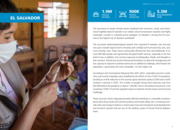
The recurrence of severe climate events combined with economic, social, and institutional fragilities leave El Salvador in an utterly critical humanitarian situation and highly vulnerable. Located in a disaster-prone subregion, El Salvador is among the 20 countries at the highest risk of disasters w
...
orldwide. The successive hydrometeorological hazards that impacted El Salvador over the past two years include tropical storms Amanda and Cristóbal and hurricanes Eta, Iota, and,
more recently, Julia. These storms profoundly affected the lives and livelihoods of almost 900 000 people and significantly disrupted health services, especially at the first level of care. In addition, the country’s exposure to earthquakes, floods, and droughts is also constant. Infrastructural and institutional limitations to deal with emergencies and
low capacity to respond to adverse events are an additional challenge, which leaves the population—particularly the most vulnerable—at even higher risk.
more

According to most recent data, the world economy grew by 3.1 per cent in 2022. To many, the rebound
suggested that a soft landing was possible in 2023, and that the key problems of the year 2022 – rising
prices, supply-chain disruptions and recession risks – have been addressed. As a result, t
...
he very first
months of 2023 were viewed with optimism by decision-makers, as it appeared that the anti-inflationary
stance of the central banks had set a path to price stabilization without causing a major disruption to
growth.
more
Evidenced-based multidisciplinary collaborative strategies are required to improve global mental health and avert possible catastrophic effects of the COVID-19 pandemic through the effects of economic recessions and social disruptions on already fragile populations with little or no social protectio
...
n. A concerted global partnership is needed to stabilise the struggling health-care systems of many low-income and middle-income countries
more

This paper is motivated by the global spread of the coronavirus referred to as COVID-19 and its efect on Sub-Saharan African (SSA) economies. The International Monetary Fund (IMF) has alluded to the COVID-19 not only afecting the global health but also trade and tourism, commodity prices, and fnanci
...
al conditions that calls for an additional policy response to support demand and ensure an adequate supply of credit
more

Buruli ulcer (BU) is a bacterial skin infection that is caused by Mycobacterium ulcerans and mainly affects people who reside in the rural areas of Africa and in suburban and beach resort communities in Australia.
