
Filter
1056
Text search:
Santé
de
l’enfant
Featured
51
390
Language
Document type
628
171
93
47
34
29
20
12
11
4
3
3
1
Countries
83
54
54
42
40
37
36
35
31
31
31
28
27
27
26
23
23
21
20
20
19
19
18
17
17
17
16
16
11
10
9
9
8
8
7
7
6
6
6
6
6
5
5
5
5
5
4
4
4
4
4
4
4
4
3
3
3
3
3
3
3
2
2
2
2
2
2
2
1
1
1
1
1
1
1
1
1
1
1
1
1
1
1
1
1
1
1
1
Authors & Publishers
Publication Years
Category
869
195
39
18
17
12
Toolboxes
49
40
27
26
13
12
9
8
7
7
6
6
5
3
3
3
3
3
2
1
1
1

The maternal deaths audit is one of the three major strategies recommended by WHO for the
reduction of maternal and neonatal mortality.
Objective: To measure the impact of maternal death and nears miss review on maternal mortality and morbidity
after 7 years of practice at the University Hospital
...

An information package for school staff

BMC Public Health (2019) 19:1608
https://doi.org/10.1186/s12889-019-7853-3
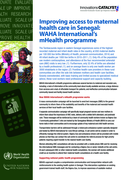
WAHA International’s mHealth programme addresses several barriers to maternal and neonatal care, including: a lack of information at the community level about locally available services; a large distance from services and a lack of affordable transport for patients; and ineffective communication b
...

Accessed on 02.02.2020
Child marriage is a serious Violation of human Rights and a severe form of child abuse, and disproportionately affects girls.

This Country Profile provides comprehensive information on FGM in Senegal, detailing current research on FGM and providing information on the political, anthropological and sociological contexts in which FGM is practised. It also reflects on how to strengthen anti-FGM programmes and accelerate the
...

Female genital mutilation/cutting (FGM/C) refers to “all procedures involving partial or total removal of the female external genitalia or other injury to the female genital organs for non-medical reasons.”1 FGM/C is a violation of girls’ and women’s human rights and is condemned by many int
...

In 2016, Senegal made a minimal advancement in efforts to eliminate the worst forms of child labor. In June, the Government launched an initiative to remove tailbés from the street and prosecute marabouts that perpetrate crimes against their students; however, no marabouts were prosecuted during th
...
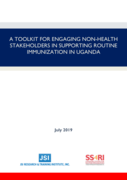
The toolkit presents step-by-step guidance that district health teams (DHTs), district leaders, MOH/UNEPI, immunisation partners, and civil society organisations (CSOs) can use to engage NHS and maximise the benefits of their participation in strengthening RI through activities such as community dia
...
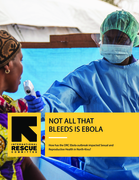
Not all that bleeds is Ebola
recommended
How has the DRC Ebola outbreak impacted Sexual and Reproductive Health in North-Kivu?
Recommendations (more specifics found in the assessment):
1. Sexual and reproductive health needs and services are to be embedded in the EVD response from the outset.
2. Reduce delays at every stage of the patie
...

Female genital mutilation/cutting (FGM/C) refers to “all procedures involving partial
or total removal of the female external genitalia or other injury to the female
genital organs for non-medical reasons.”FGM/C is a violation of girls’ and women’s
human rights and is condemned by many in
...


Accessed on 03.03.2020
The country recognizes the importance of family planning as they focus on achieving a demographic dividend. In order to improve the service delivery and supply chain, Senegal is strengthening its data management and reporting. Domestic resource mobilization for family plannin
...

With an FGM prevalence of 75.8% among women aged 15-491, Burkina Faso is classified by UNICEF2 as a ‘moderately high prevalence’ country.
FGM is practised across all regions, ethnic groups and religions in Burkina Faso. There are distinct regional variations; FGM prevalence ranges from 54.8%
...


Afghanistan has one of the largest populations per capita of persons with disabilities in the world. At least one in five Afghan households includes an adult or child with a serious physical, sensory, intellectual, or psychosocial disability. More than 40 years of war have left more than one million
...
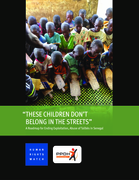
For over a decade, Senegalese and international journalists, human rights advocates, and child protection experts have documented and denounced the ongoing exploitation, abuse and neglect of children living in many of Senegal’s traditional Quranic schools, or daaras. Thousands of these children, k
...
