Filter
623
Filtered Results: 623
Text search:
Transforming
India
Featured
Recommendations
58
New Publications
150
Language
Document type
No document type
325
Studies & Reports
126
Guidelines
79
Manuals
41
Strategic & Response Plan
23
Training Material
19
Fact sheets
4
Resource Platforms
3
Situation Updates
2
Infographics
1
Countries / Regions
India
93
Global
40
Nepal
14
Asia
11
Bangladesh
11
Myanmar / Burma
11
South–East Asia Region
10
Kenya
9
Nigeria
9
Africa
7
Latin America and the Carribbean
6
Ethiopia
6
Syria
5
Senegal
5
South Africa
5
Uganda
5
Tanzania
4
Western and Central Europe
4
Ukraine
3
Congo, Democratic Republic of
3
Namibia
3
Zambia
3
Liberia
3
Pakistan
3
Lesotho
2
Ghana
2
Laos
2
Afghanistan
2
Zimbabwe
2
Guinea
2
USA
2
Haiti
2
Vietnam
2
Somalia
2
Tajikistan
1
Thailand
1
Mexico
1
El Salvador
1
Benin
1
Sierra Leone
1
Rwanda
1
Burkina Faso
1
Malawi
1
Mozambique
1
Armenia
1
Cambodia
1
Venezuela
1
Jordan
1
West and Central Africa
1
Middle East and North Africa
1
Western Pacific Region
1
Eastern Europe and Central Asia
1
North America
1
East and Southern Africa
1
Bolivia
1
Argentina
1
Eastern Europe
1
Moldova
1
Sri Lanka
1
Yemen
1
Palestine
1
Central African Republic
1
Mali
1
Libya
1
Botswana
1
South Sudan
1
Indonesia
1
Authors & Publishers
Publication Years
Category
Countries
184
Key Resources
53
Public Health
47
Women & Child Health
47
Clinical Guidelines
40
Capacity Building
13
Pharmacy & Technologies
8
Toolboxes
Mental Health
64
Planetary Health
46
COVID-19
44
HIV
42
TB
33
Disability
32
Global Health Education
29
Caregiver
25
Health Financing Toolbox
17
Natural Hazards
16
Pharmacy
12
NCDs
11
Refugee
10
NTDs
10
Conflict
10
Rapid Response
9
AMR
7
Specific Hazards
6
Malaria
6
Ebola & Marburg
5
Social Ethics
5
Cholera
4
2.0 Rapid Response
4
Polio
2
Typhoon
1

The UNICEF-GAIN Partnership Project
The report notes that iodine deficiency is a leading cause of preventable brain damage worldwide. Insufficient iodine during pregnancy and infancy results in neurological and psychological deficits, reducing a child’s IQ by 8 to 10 points. This translates ...
The report notes that iodine deficiency is a leading cause of preventable brain damage worldwide. Insufficient iodine during pregnancy and infancy results in neurological and psychological deficits, reducing a child’s IQ by 8 to 10 points. This translates ...
The WHO Pharmaceuticals Newsletter provides you with the latest information on the safety of medicinal products and regulatory actions taken by authorities around the world.
In addition, this edition includes summary and recommendations from the virtual meeting of the members of the WHO Programme f...
Globally each year, millions of people suffer illness or lose their lives because the vaccines, medicines and diagnostic tests that they need are either unavailable or unaffordable – and this lack of access to medicine is acute in low- and middle-in-
come countries (LMICs). While the COVID-19 pan...
The report aims to capture lessons from the COVID-19 pandemic and to highlight the opportunity for more ambitious global action: expanding sustainable access to vaccines for all towards
the Immunization Agenda 2030 and pandemic prevention, preparedness and response efforts. The report is organized ...
In-and Out-Patient Treatment

The Director’s guide contains all the information that the course director needs in order to plan and prepare for the course, to decide which modules and sessions will be included in the training, and to select trainers and participants, starting several months before the actual training. It conta...

Disaster Recovery Toolkit

A survival guide for clinicans.
3rd edition.
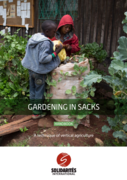
You are currently intervening or wishing to intervene in a dense urban context to
respond to issues of food security and improve livelihood conditions? This handbook
is for you!
Following the evaluation of all of its sack-gardening projects, SOLIDARITÉS
INTERNATIONAL (SI) wished to formalise...