
Filter
828
Text search:
Rehabilitation
Division
Featured
65
271
Language
Document type
602
80
63
44
24
6
5
2
2
Countries / Regions
65
46
29
29
26
25
22
22
19
19
14
12
12
11
11
11
11
10
10
9
9
9
9
8
8
8
8
8
8
7
6
6
6
6
5
5
5
5
5
4
4
4
4
3
3
3
3
3
3
2
2
2
2
2
2
2
2
2
2
2
2
2
1
1
1
1
1
1
1
1
1
1
1
1
1
1
1
1
1
1
1
1
1
1
1
1
Authors & Publishers
Publication Years
Category
403
63
37
35
27
12
3
Toolboxes
118
102
35
24
24
18
16
15
15
12
12
11
8
7
7
6
5
3
3
3
2
2
2
1
1
1

This handbook builds on lessons learned from surveys implemented 2015-2017 and advice provided by the Global task force on TB patient cost surveys. It provides a standardized methodology for conducting health facility-based cross-sectional surveys to assess the direct and indirect costs incurred by
...
DOI10.5281/zenodo.344972
Once identified as vulnerable, applicants enjoy specific rights and safeguards in the asylum process under EU law. Vulnerability should therefore trigger additional or tailored support to ensure that people have the necessary conditions to bring forward a claim for protection.
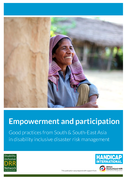
Good practices from South & South-East Asia in disability inclusive disaster risk management
Special Issue: Special Education in Sub-Saharan Africa | This special issue of our Communication*Support*World*Network*Newsletter attempts to share practical ideas and information about special education for children with disabilities in sub-Saharan Africa. Our intent is to begin a dialogue among th
...
Background paper for the Oslo Summit on Education for Development
Guidance Note A DFID practice paper
n 2015, Member States of the United Nations adopted the 2030 Agenda for Sustainable Development and its accompanying Sustainable Development Goals (SDGs), with the third goal of the agenda focusing on health – good health and well-being. This has the attainment of universal health coverage (UHC) a
...

Reflections from disability research using the ICF in Afghanistan and Cambodia | Working Paper Series: No. 11
As the Convention of the Rights of Children recognizes, children are human beings with a distinct set of rights, and not the passive objects of care and charity. They deserve to be full participants in society, and to live lives free of poverty. But for children, living in poverty is particularly im
...
Families and Societies Working Paper Series Changing families and sustainable societies: Policy contexts and diversity over the life course and across generations

This brief focuses on disability rights in the ASEAN countries, namely Brunei Darussalam, Cambodia, Indonesia, Lao People’s Democratic
Republic (PDR), Malaysia, Myanmar, the Philippines, Singapore, Thailand and Viet Nam.
As the culminating volume in the DCP3 series, volume 9 will provide an overview of DCP3 findings and methods, a summary of messages and substantive lessons to be taken from DCP3, and a further discussion of cross-cutting and synthesizing topics across the first eight volumes. The introductory chapte
...
Bulletin of the World Health Organization, 2001, 79 (4)
Kenya has great potential for enhancing education for individuals with intellectual disabilities. The fact that it has recognized the need to care for learners with special needs is commendable. In comparison to many African countries, Kenya and Nigeria are ahead in developing programs for special e
...
