Filter
211
Text search:
pharmaceutical
regulatory
authority
Featured
Recommendations
16
New Publications
60
Language
Document type
No document type
109
Studies & Reports
42
Guidelines
31
Strategic & Response Plan
13
Manuals
8
Fact sheets
3
Resource Platforms
2
Training Material
1
Brochures
1
Situation Updates
1
Countries / Regions
Ethiopia
13
Ghana
9
Kenya
9
South Africa
9
India
8
Uganda
7
Zimbabwe
7
Tanzania
6
Malawi
6
Zambia
5
Rwanda
5
Liberia
3
Nigeria
3
Nepal
3
Syria
3
Bangladesh
3
Botswana
3
Western and Central Europe
3
Eastern Europe
3
Global
3
Sierra Leone
2
Senegal
2
Cameroon
2
South–East Asia Region
2
Philippines
1
Pakistan
1
Jordan
1
Chad
1
Cambodia
1
Papua New Guinea
1
Sudan
1
Benin
1
Namibia
1
Eswatini/ Swaziland
1
North Macedonia
1
Ukraine
1
Lesotho
1
East and Southern Africa
1
West and Central Africa
1
Middle East and North Africa
1
Asia
1
Albania
1
Timor Leste/ East Timor
1
Gabon
1
Denmark
1
Maldives
1
Authors & Publishers
Publication Years
Category
Countries
109
Clinical Guidelines
9
Pharmacy & Technologies
9
Key Resources
8
Women & Child Health
5
Public Health
4
Capacity Building
1
Toolboxes
AMR
29
Pharmacy
28
COVID-19
15
TB
11
HIV
9
Mental Health
6
Rapid Response
4
NTDs
3
Conflict
2
Refugee
2
Specific Hazards
2
Global Health Education
2
Natural Hazards
1
Zika
1
Planetary Health
1
Health Financing Toolbox
1
NCDs
1
Malaria
1
2.0 Rapid Response
1
This interagency report provides recommendations for assuring quality of medicines during key activities of country-level procurement agencies, namely prequalification of pharmaceutical products and manufacturers; purchase of
...
Survey of the Quality of Selected Antimalarial Medicines Circulating in Six Countries of Sub-Saharan Africa
recommended
The survey aimed at evaluating the quality of selected antimalarials in six countries of sub-Saharan Africa (Cameroon, Ethiopia, Ghana, Kenya, Nigeria and the United Republic of Tanzania). These countries have been supported by WHO to strengthen their
...
The purpose of these guidelines is to help health workers to participate in the process of continuous surveillance of safety and efficacy of the pharmaceutical products which are used in clinical practice, thus help to achieve the ultimate goal to m
...
The intent of these guidelines is to develop a holistic, coordinated, proactive and technology driven strategy for management of biological disasters through a culture of prevention, mitigation and preparedness to generate a prompt and effective response in the event of an emergency. Th
...
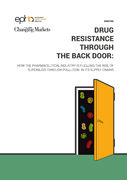
This publication describes an arduous campaign to tackle the use of antimicrobials - specifically antibiotics - in the Danish swine-producing sector thanks to the collaboration between the regulatory sector within the Ministry of Environment and Foo
...
The framework is to be used as a reference guide, applied according to local priorities and needs, and targeted at academic institutions, educators, accreditation bodies, regulatory agencies and other users. The ultimate aim is to ensure that all he
...
Comprehensive Reviews in Food Science and Food Safety, Vol.12 (2013) pp.234-248
In 2006, the Institute of Food Technologists (IFT) published an Expert Report entitled “Antimicrobial Resistance: Implications for the Food System” (IFT 2006). That report summarized current scientific knowledge pe
...
This third booklet of the World Drug Report 2022 has a dual focus: opioids and cannabis.
The first chapter of the booklet provides an overview of opioids as a group of substances and their patterns of non-medical use at the global level. It also reviews the latest trends in the global supply of opi
...
This field study to measure access to and use of medicines was undertaken in GHANA in May-June 2008. The study assessed information on the socio-economic level of households, and access to and use of medicines for acute and chronic conditions as well as opinions and perceptio
...
Drug Advisory Board
These guidelines for the National Pharmacovigilance and Medicine Information System in Rwanda have been developed to ensure that safe, efficacious and quality medicines are made available to all Rwandans.
Antibiotics and other antimicrobial agents are invaluable life savers, particularly in resource-limited countries where infectious diseases are abundant. Both uncomplicated and severe infections are potentially curable as long as the aetiological agents are susceptible to the
...
Communication to Healthcare Professionals Mar-2020
This guideline is intended to assist healthcare professionals in the participation of very important process of continuous surveillance of safety and efficacy of the health products which are used in their clinical practice. Continuous evaluation o
...
Southern Med Review (2009)2;1:2-6
COVID-19 Vaccines: 1 Safety Surveillance 2 Manual
While there is no indication that pregnant women have an increased susceptibility to infection with SARS-CoV-2, there is evidence that pregnancy may increase the risk of severe illness and mortality from COVID-19 disease in comparison with non-pregn
...
The increasing global trend of Antimicrobial resistance (AMR) has gradually emerged as a major public health challenge for the entire world. AMR has spread to almost all countries and regions, including Pakistan owing to the “misuse and overuse” of Antimicrobials, contributing to the increasing
...
The manufacturing process is one of the key steps where quality control is required to ensure quality of medicinal products, including herbal medicines. Good manufacturing practices (GMP) is one of the most important tools for this measure.