
Filter
1542
Text search:
hypertension
Featured
173
414
Language
Document type
713
307
290
83
53
42
26
11
5
5
2
1
1
1
Countries
137
63
56
51
34
33
30
27
27
25
25
24
23
22
22
21
19
18
17
16
15
15
14
14
12
12
11
11
10
9
9
9
8
7
7
7
7
6
6
6
5
5
5
5
5
5
5
4
4
4
4
4
4
4
4
3
3
3
3
3
3
3
3
3
2
2
2
2
2
2
2
2
2
2
1
1
1
1
1
1
1
1
1
1
1
1
1
1
1
1
1
1
1
1
1
1
1
1
1
1
1
1
1
1
1
Authors & Publishers
Publication Years
Category
730
193
163
98
44
33
4
1
Toolboxes
174
155
104
55
41
35
35
34
28
28
27
21
14
14
12
7
7
6
5
4
4
3
2
1
1
Retention of knowledge and application within the community one year later
The primary audience of these recommendations includes healthcare providers who are responsible for developing national and local health protocols (particularly those related to hypertensive disorders of pregnancy), and those directly providing care to pregnant women and their newborns, including mi
...
CONCLUSIONS: The roles performed by CHWs are broad, varied and essential for diabetes and hypertension management. However, basic knowledge about diabetes and hypertension remains poor while trainin
...
Part of Comprehensive Primary Health Care
Technical package for cardiovascular disease management in primary health care.

Comprehensive Primary Health Care has an important role in the primary and secondary prevention of several disease conditions, including non-communicable diseases which today contribute to over 60% of the mortality in India. The provision of Comprehensive primary health care reduces morbidity, disab
...
Indian Hypertension Control Initiative (IHCI) is a 5-year initiative involving the Ministry of Health & Family Welfare, Indian Council of Medical Research, State Governments, and WHO-India.
This guide helps pharmacists to understand their role in the hypertension program. From maintaining hypertensive drug stock, to drug dispensing, to recording and reporting, to awareness generation with patients.
This guide can be used to train nurses in the field to succeed in their role in the hypertension program. It teaches how to screen patients correctly, register and follow-up with patients, retrieve defaulters, record patient visits, and to report da
...
This guide can be used to train medical officers to ensure BP is measured for all adults visiting the OPD, treat all patients with high BP, initiate treatment as per protocol, counsel patients for follow-up, refer patients to local care, and report data.
This guide can be used to train ANM staff in the field to succeed in their role in the hypertension program. It teaches how to screen patients correctly, register and follow-up with patients, retrieve defaulters, record patient visits, and to report
...
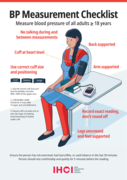
These are one pagers for the NCD staff to refer as check points during measuring blood pressure for 18 year & above or 30 years & above patients based on the state's requirement
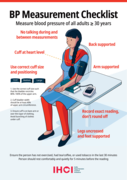
These are one pagers for the NCD staff to refer as check points during measuring blood pressure for 18 year & above or 30 years & above patients based on the state's requirement.
These are the materials used for disseminating information, provide education and to establish proper communication within the community about hypertension management.
The "Measure It" page on the Southern African Hypertension Society's website emphasizes the importance of regular blood pressure monitoring. It encourages individuals to measure their blood pressure consistently to detect
...

— com base na informação disponível a 28 de Fevereiro de 2021
Rapid Policy Brief Series Series 14: COVID-19 and hypertension
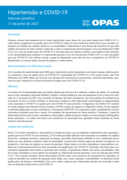
Hypertension and COVID-19: Scientific report - 17 June 2021
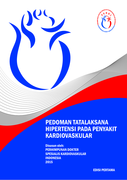
Guidelines for Therapy and Management of Hypertension in Cardiovascular Disease in Indonesia
The recommendations cover the level of blood pressure to start medication, what type of medicine or combination of medicines to use, the target blood pressure level, and how often to have follow-up checks on blood pressure. In addition, the guideline provides the basis for how physicians and other h
...

People with underlying noncommunicable diseases (NCDs) such as hypertension, diabetes, cardiovascular disease, chronic respiratory disease and cancer have a high risk for developing severe and even fatal COVID-19. It is important for them to strictl
...
